Tarot Card Meanings
There are seventy-eight cards in a tarot deck, and every one of them is a mirror held at a slightly different angle. Twenty-two Major Arcana cards trace the large movements of a life — beginnings, ordeals, reckonings, arrivals — while fifty-six Minor Arcana cards attend to the texture of ordinary days: the work, the love, the arguments, the small recoveries.
Each card carries two faces. Drawn upright, it speaks plainly; drawn reversed, the same energy turns inward — delayed, muted, or asking for a harder honesty. Neither face is good or bad. The cards do not decide for you; they give you language for what you already sense but have not yet said aloud.
At Mystical Sparkle the practice is simple: Ask. Draw. Reflect. Ask one honest question, draw your free daily card, read its meaning slowly, and write three sentences about what it raises. Everything below — all 78 meanings, upright and reversed, plus more than 3,000 card combinations — exists to serve that quiet daily ritual.
Major Arcana
The twenty-two archetypal cards, numbered 0 through XXI — the Fool's journey from the cliff edge to the completed circle.
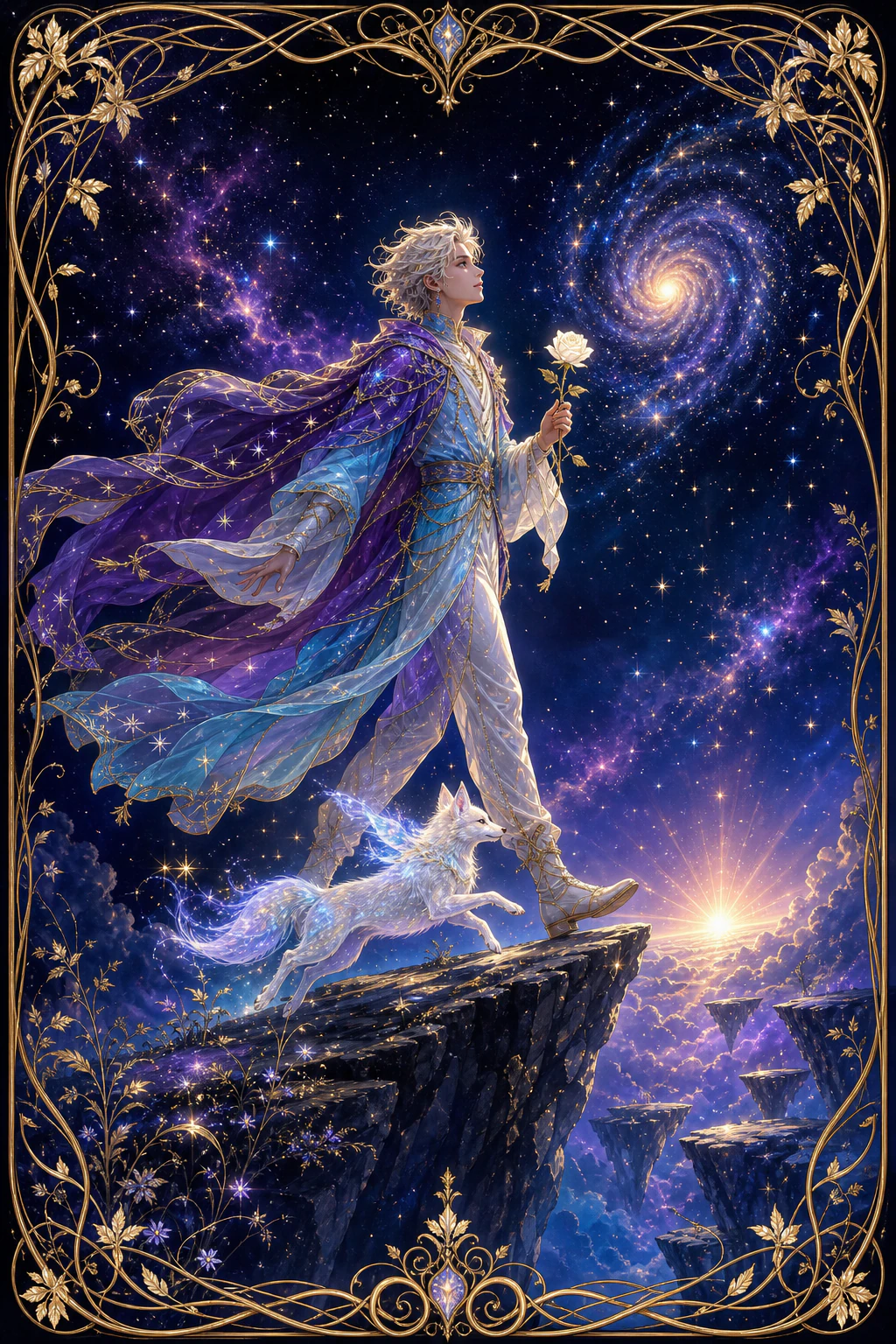 The Foolnew beginnings · innocence · adventure
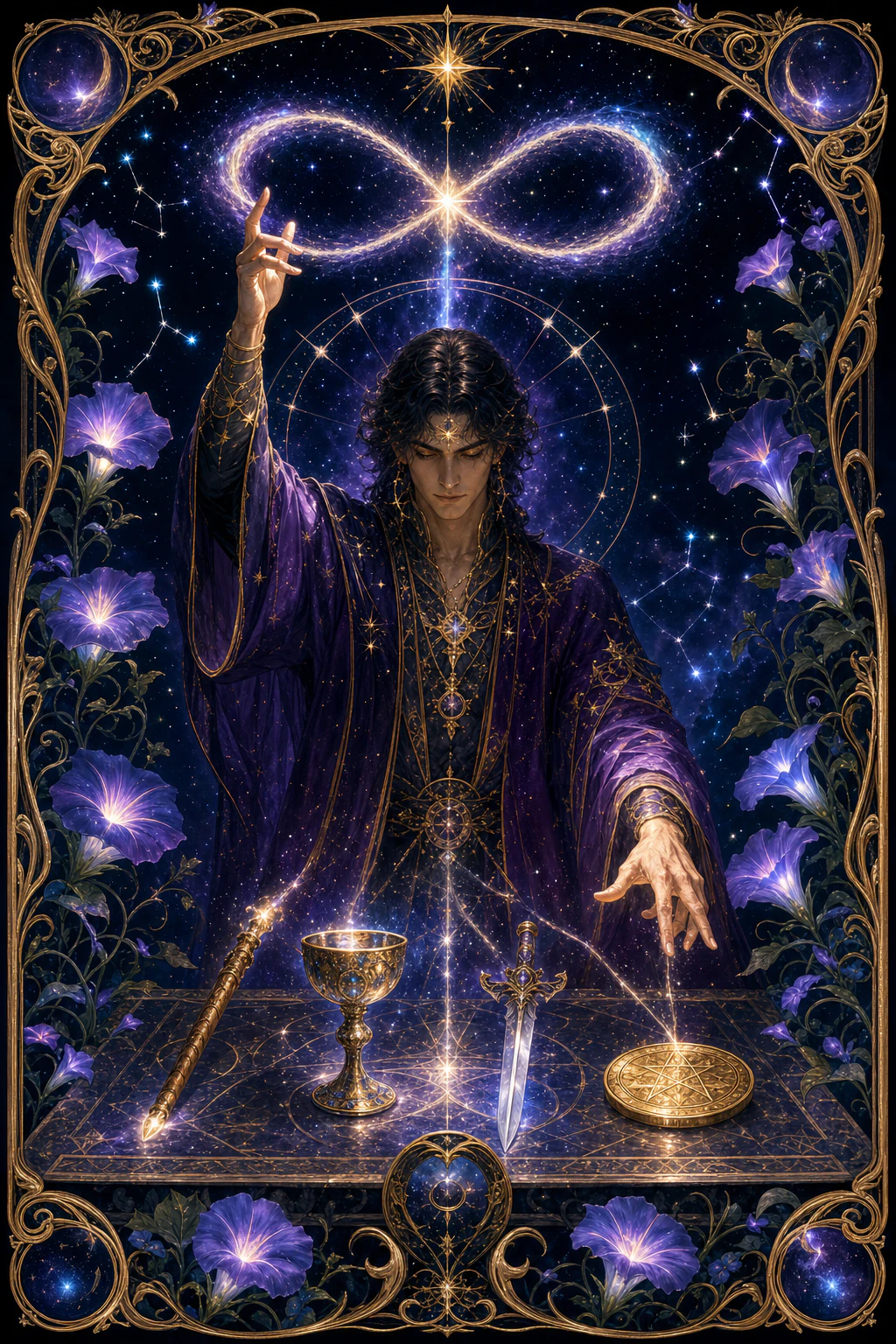 The Magicianmanifestation · power · skill
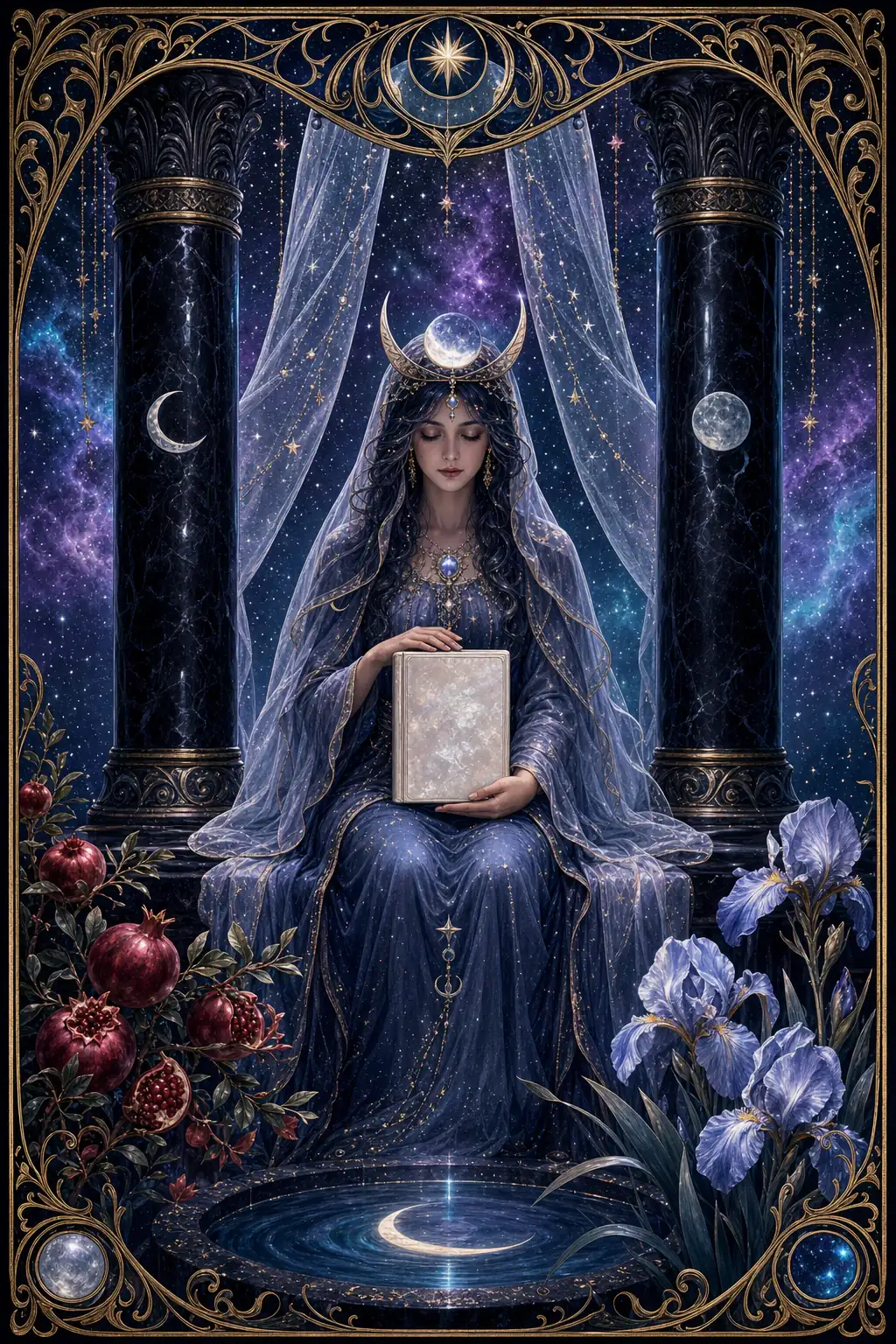 The High Priestessintuition · mystery · wisdom
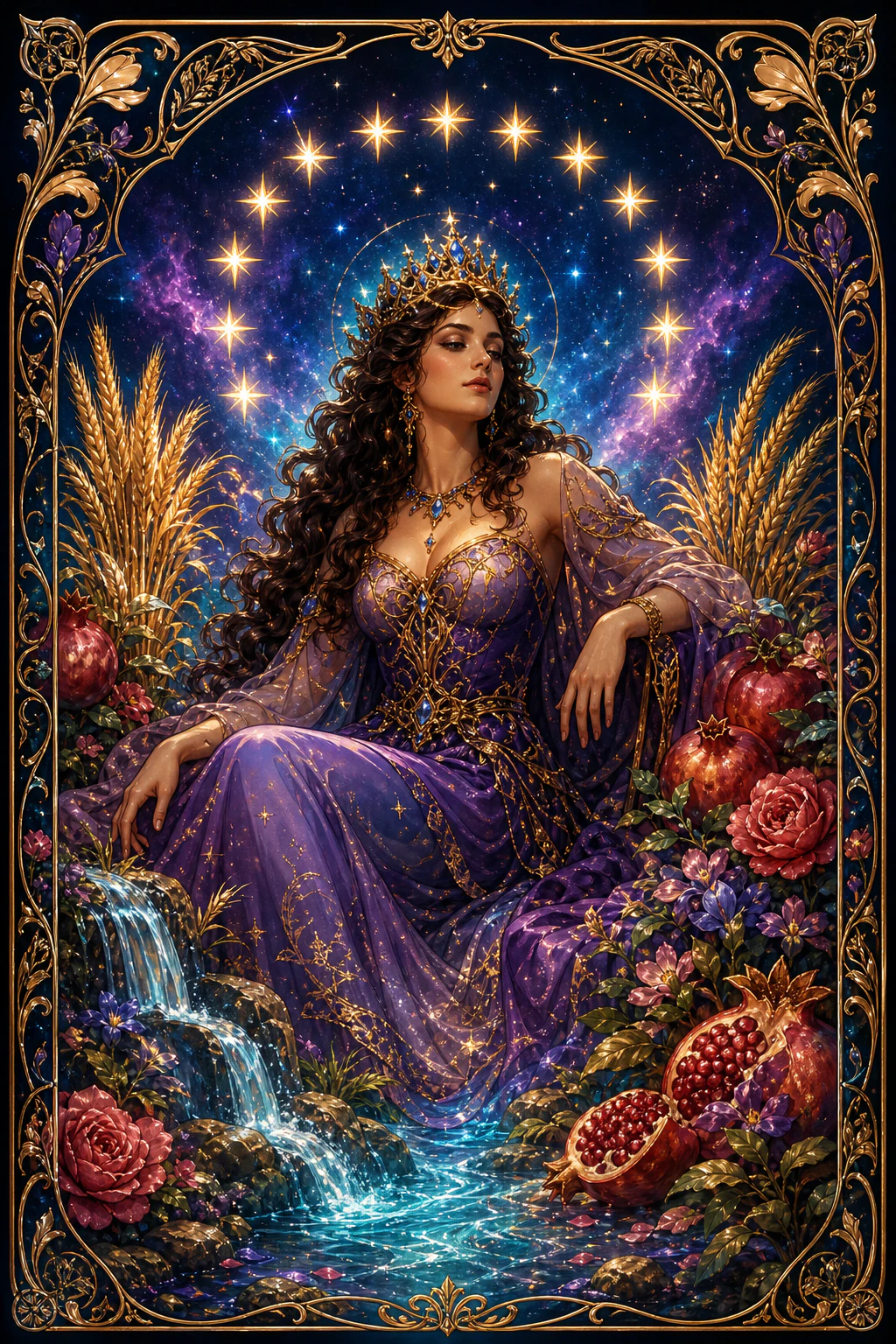 The Empressabundance · nurturing · creativity
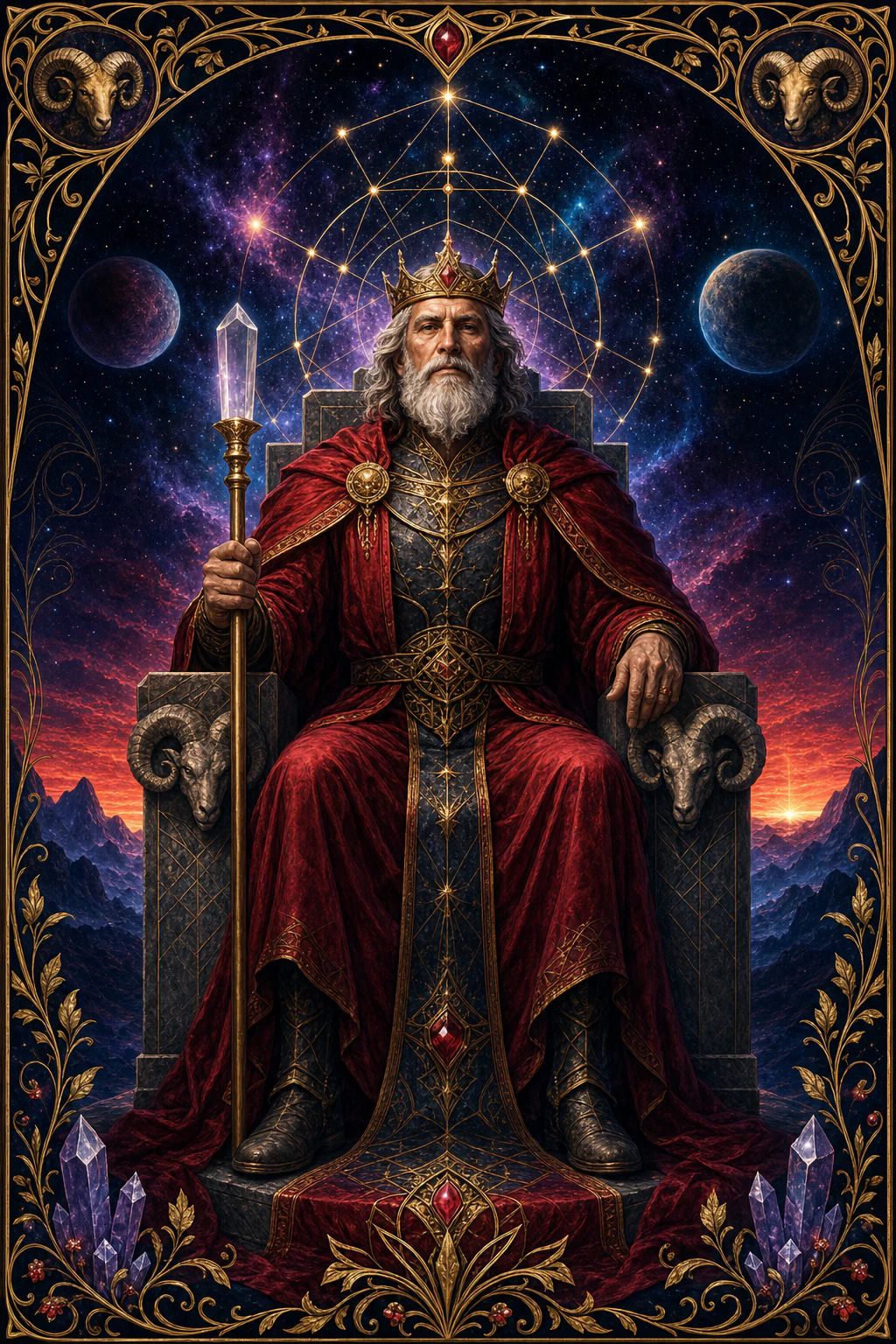 The Emperorauthority · leadership · stability
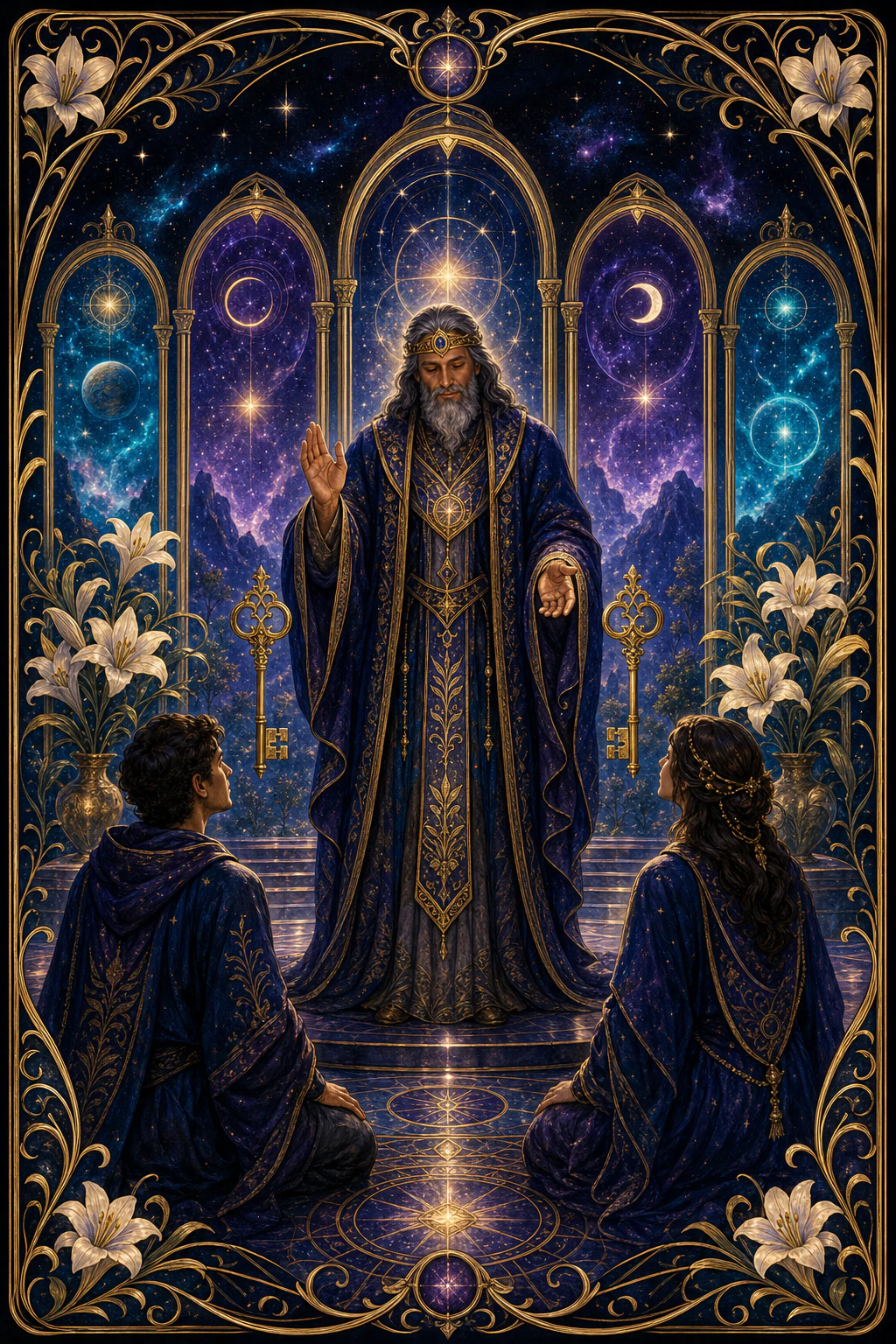 The Hierophanttradition · conformity · morality
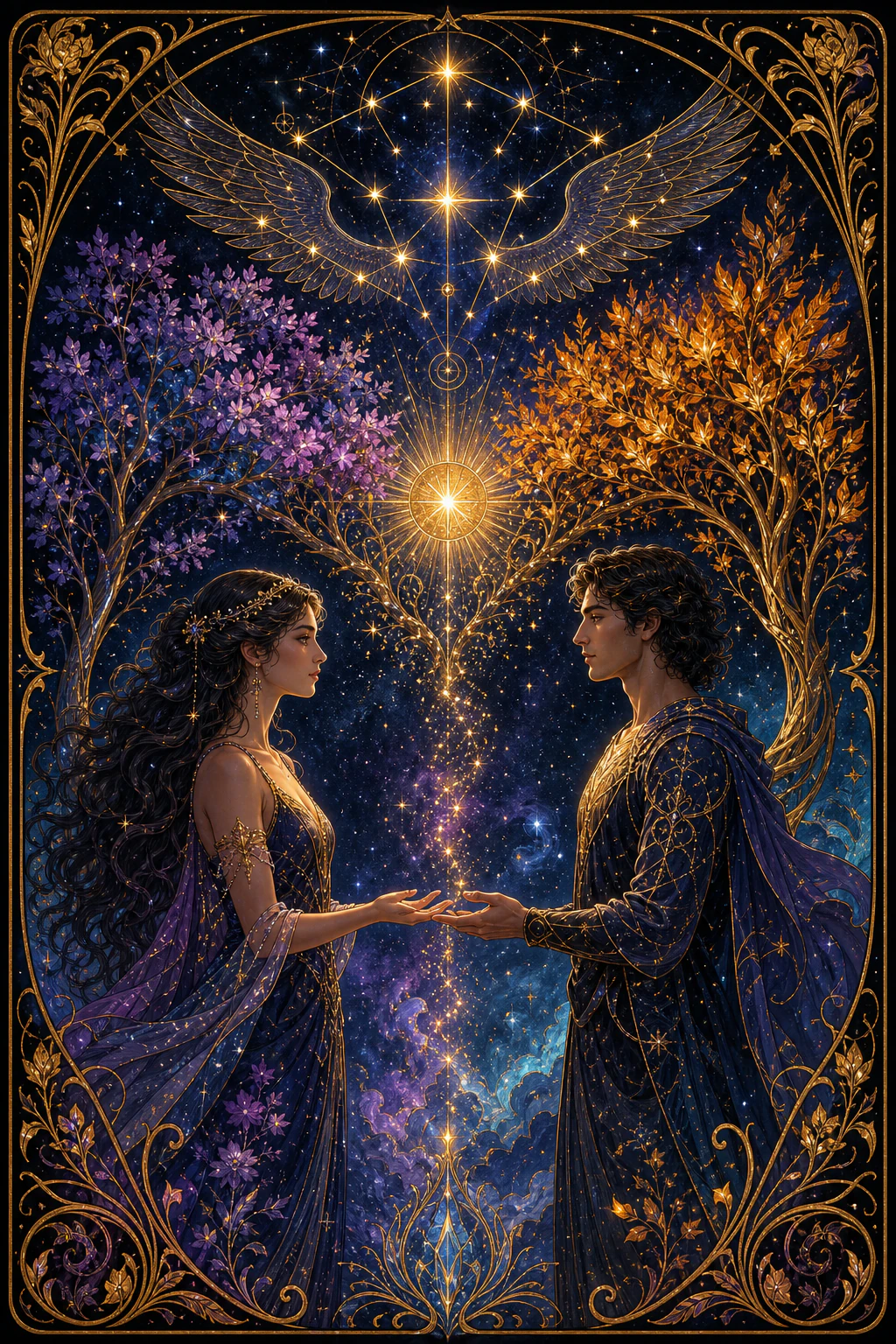 The Loverslove · relationships · choices
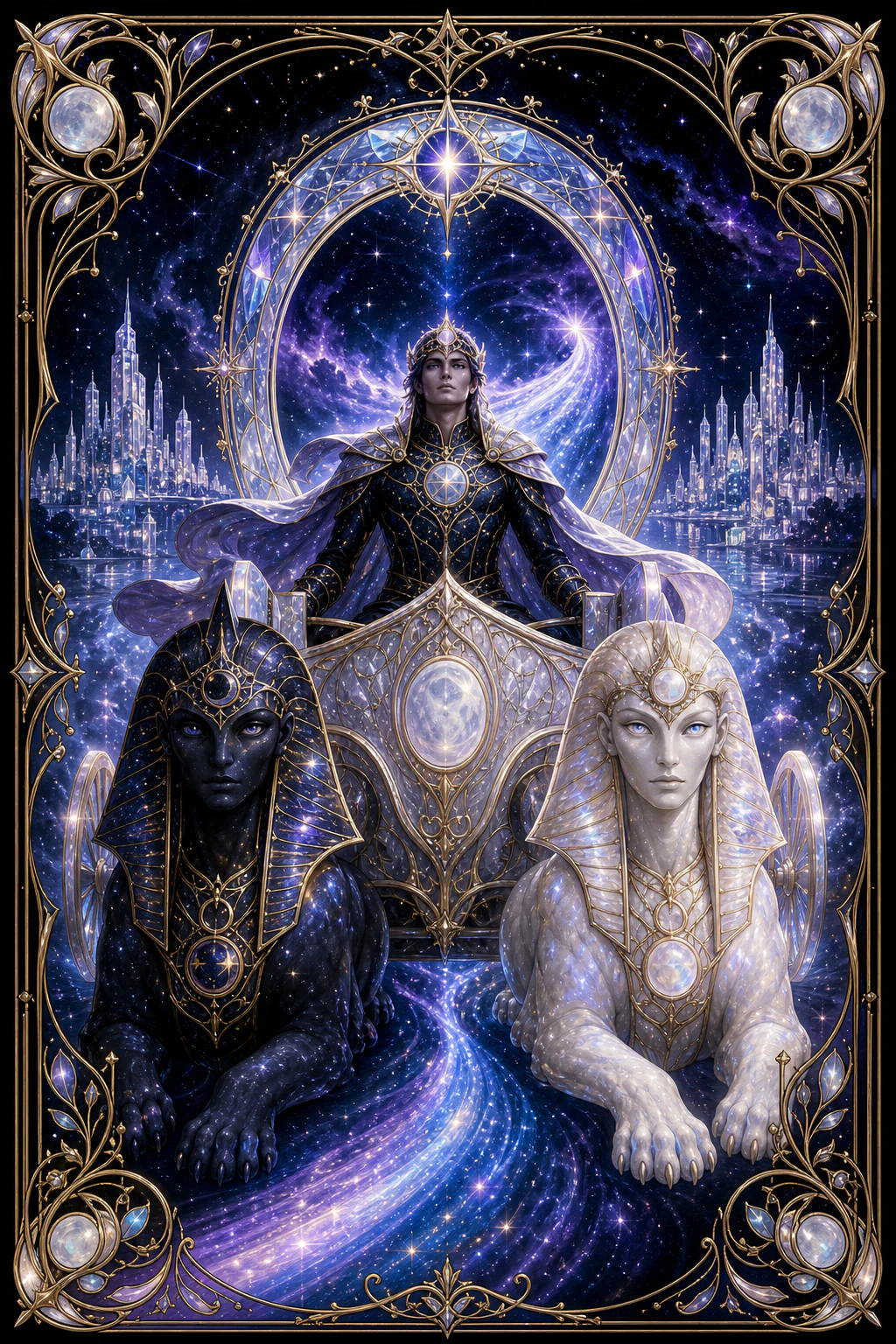 The Chariotwillpower · determination · success
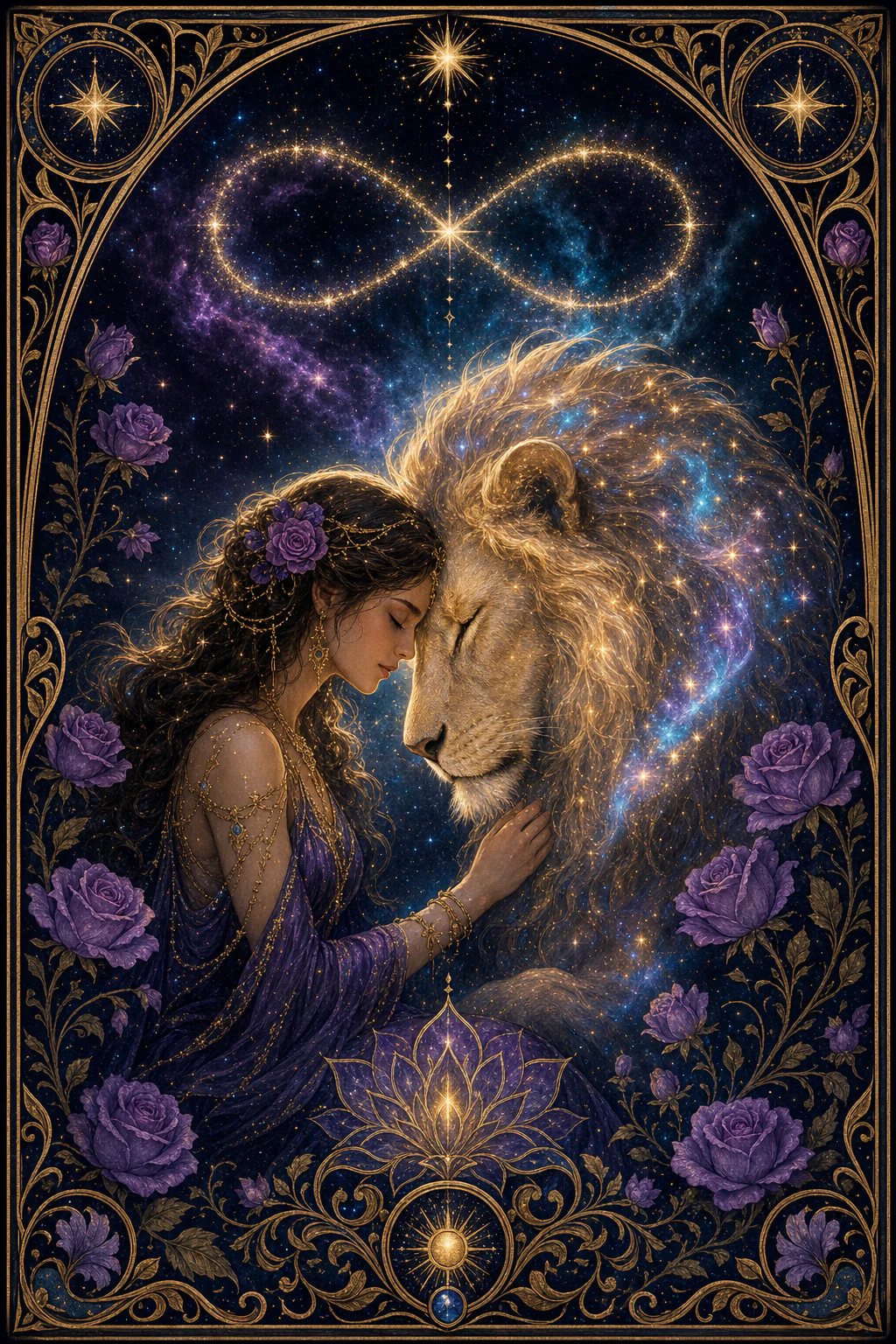 Strengthstrength · courage · compassion
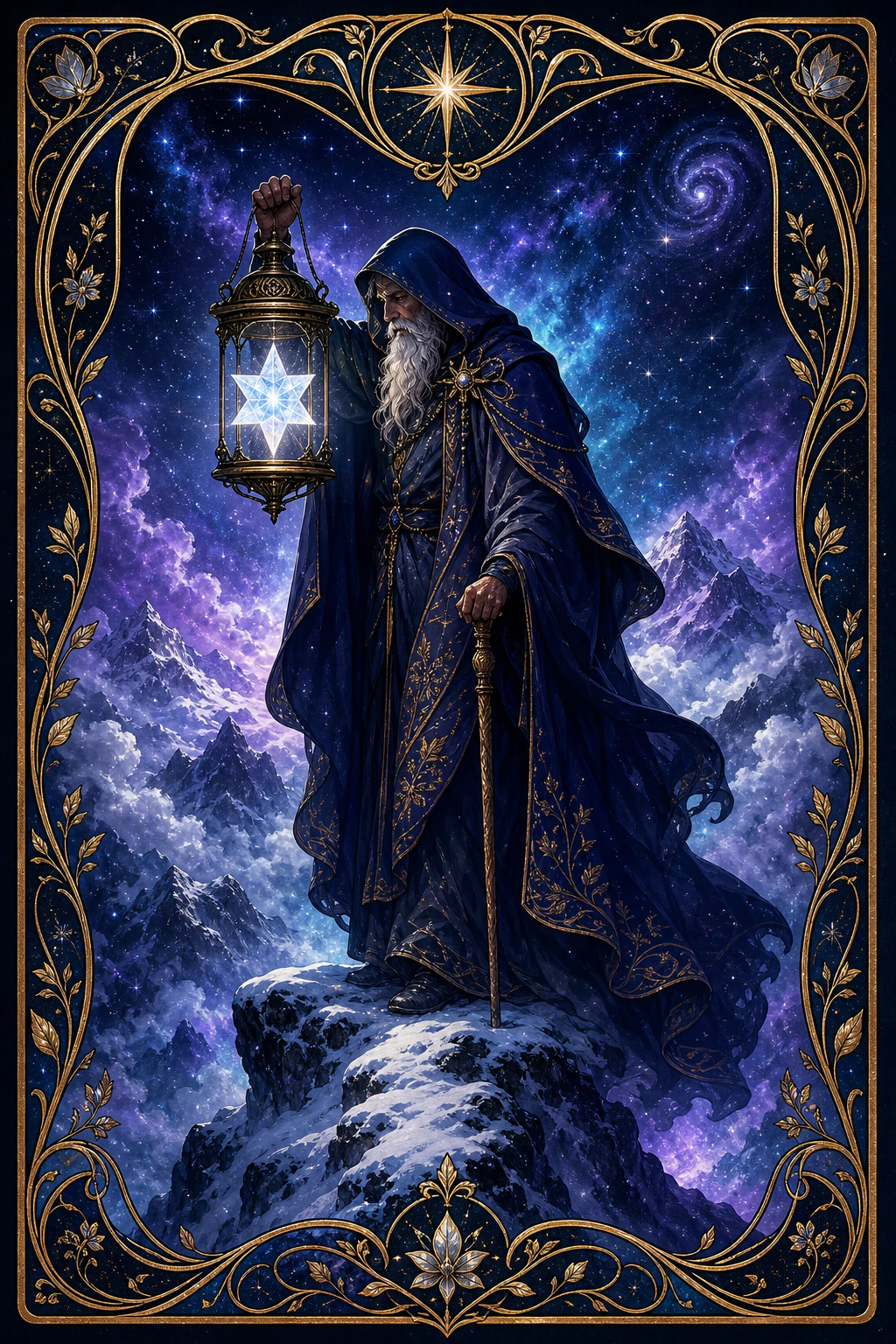 The Hermitintrospection · solitude · guidance
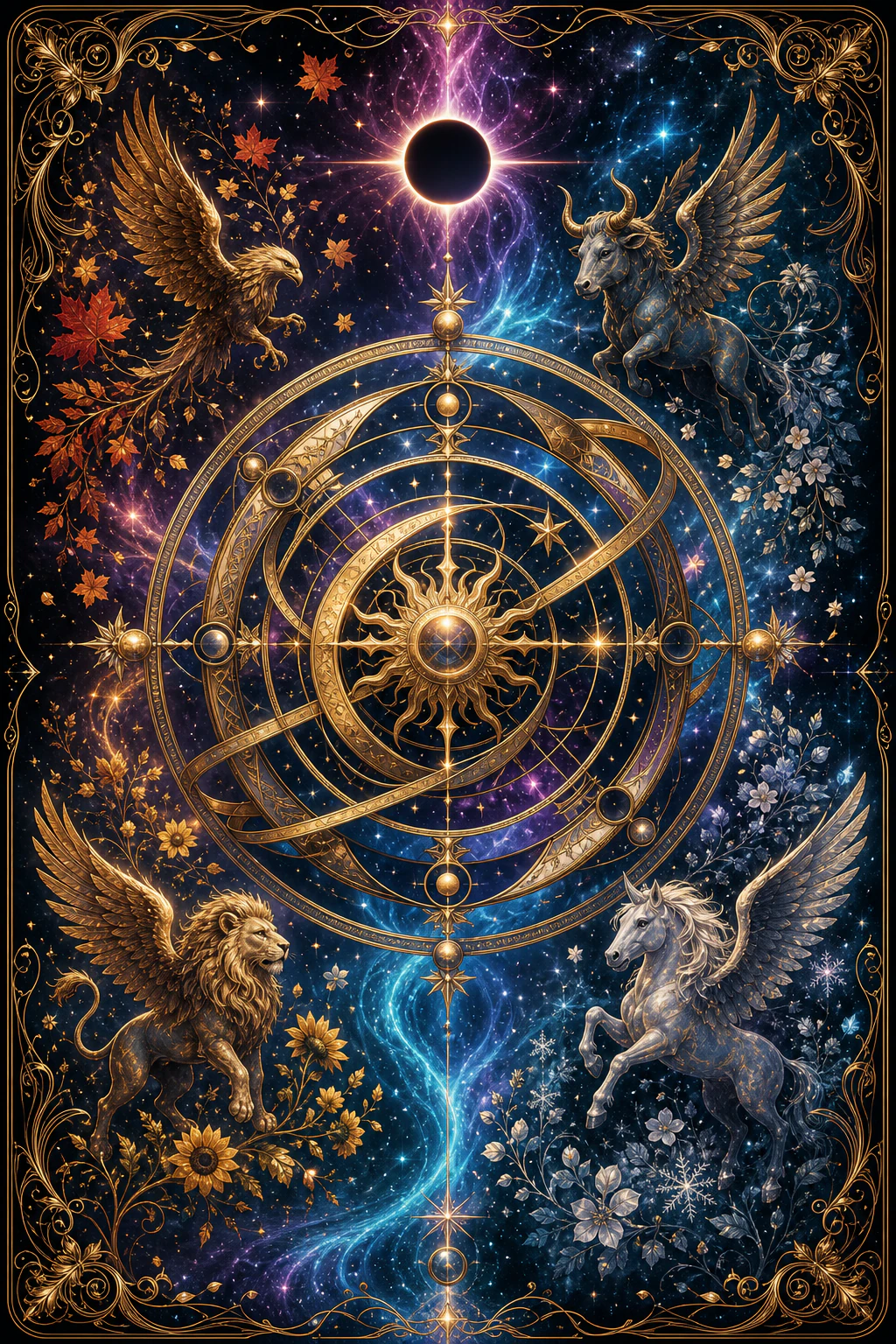 Wheel of Fortuneluck · karma · destiny
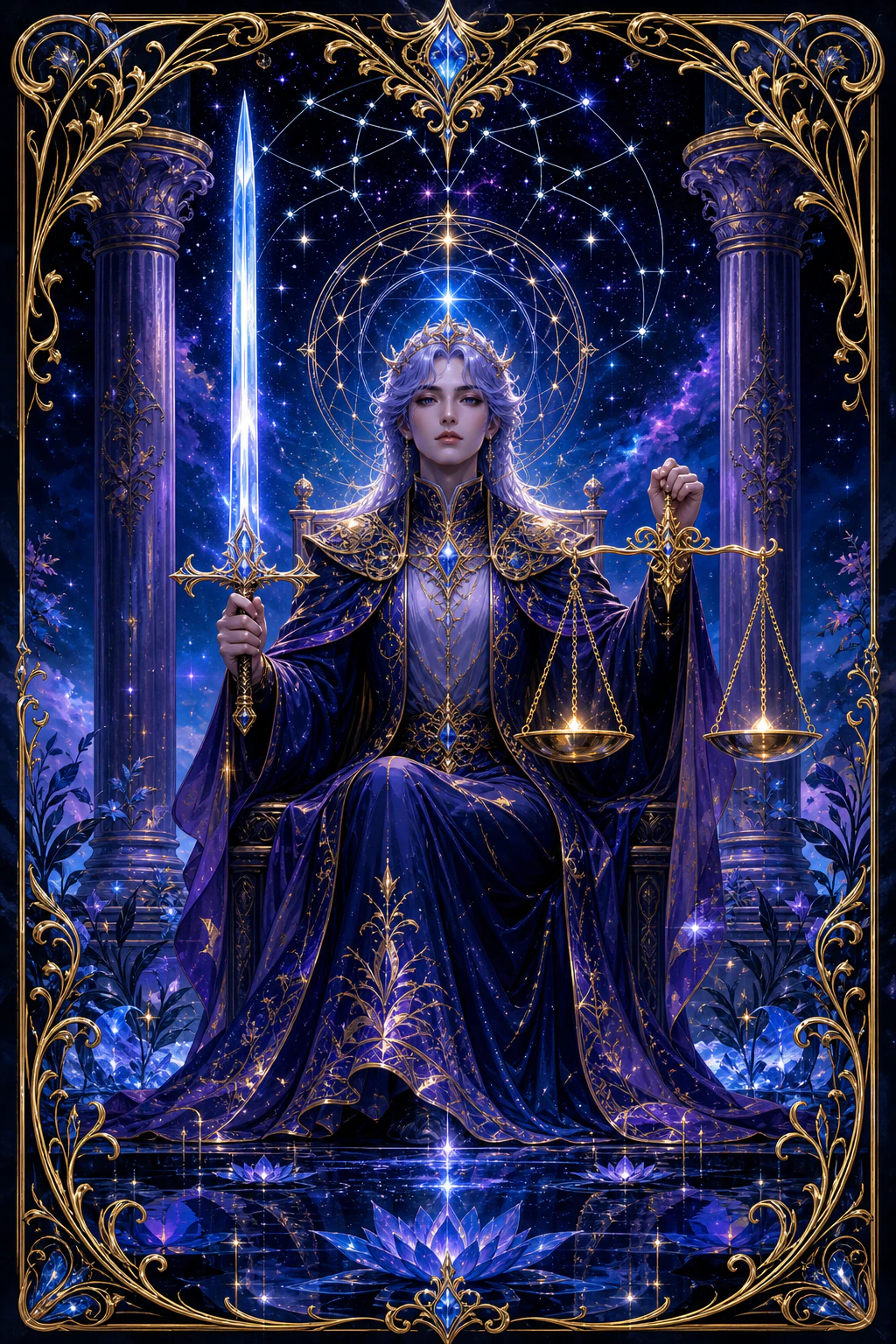 Justicejustice · fairness · truth
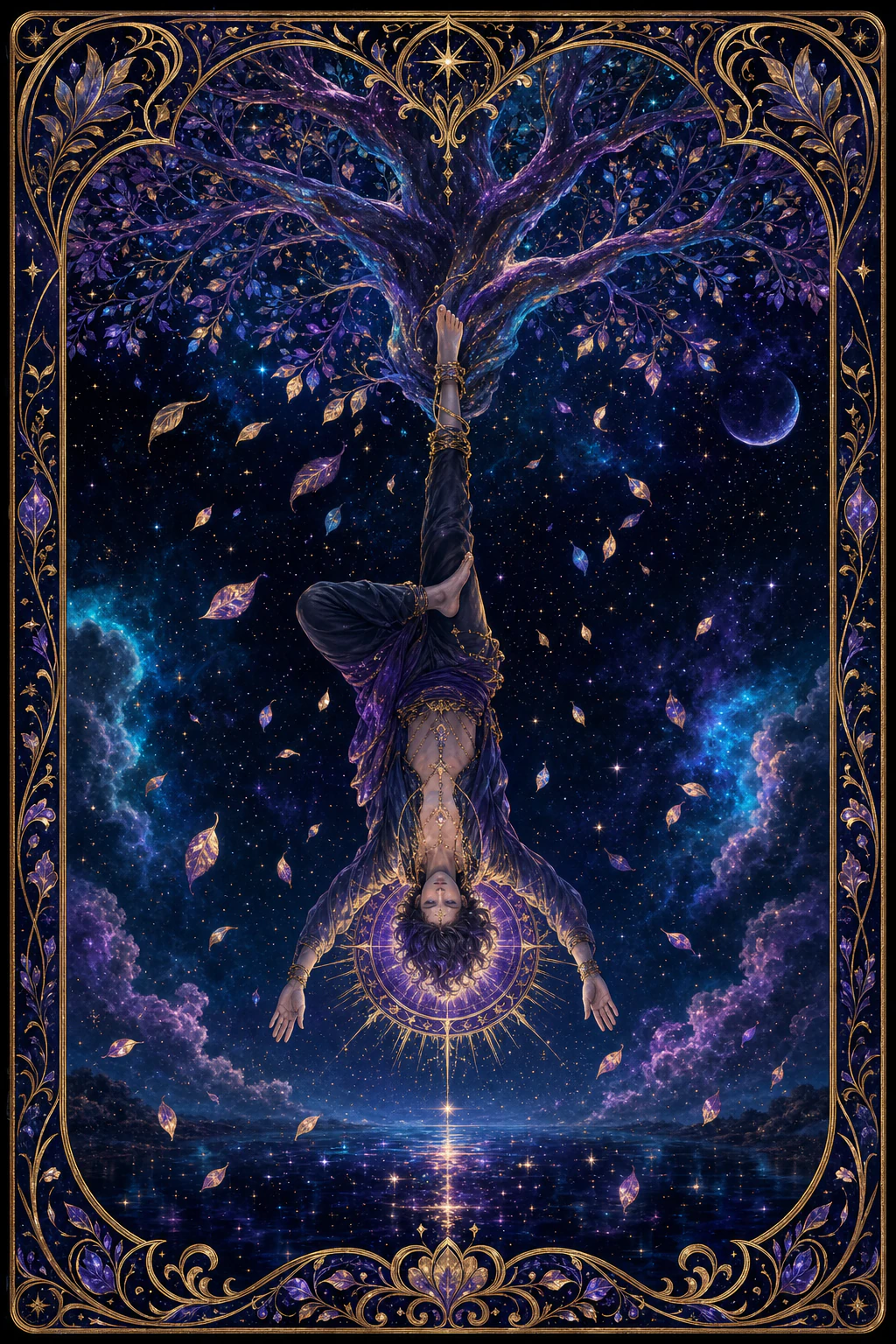 The Hanged Mansurrender · pause · perspective
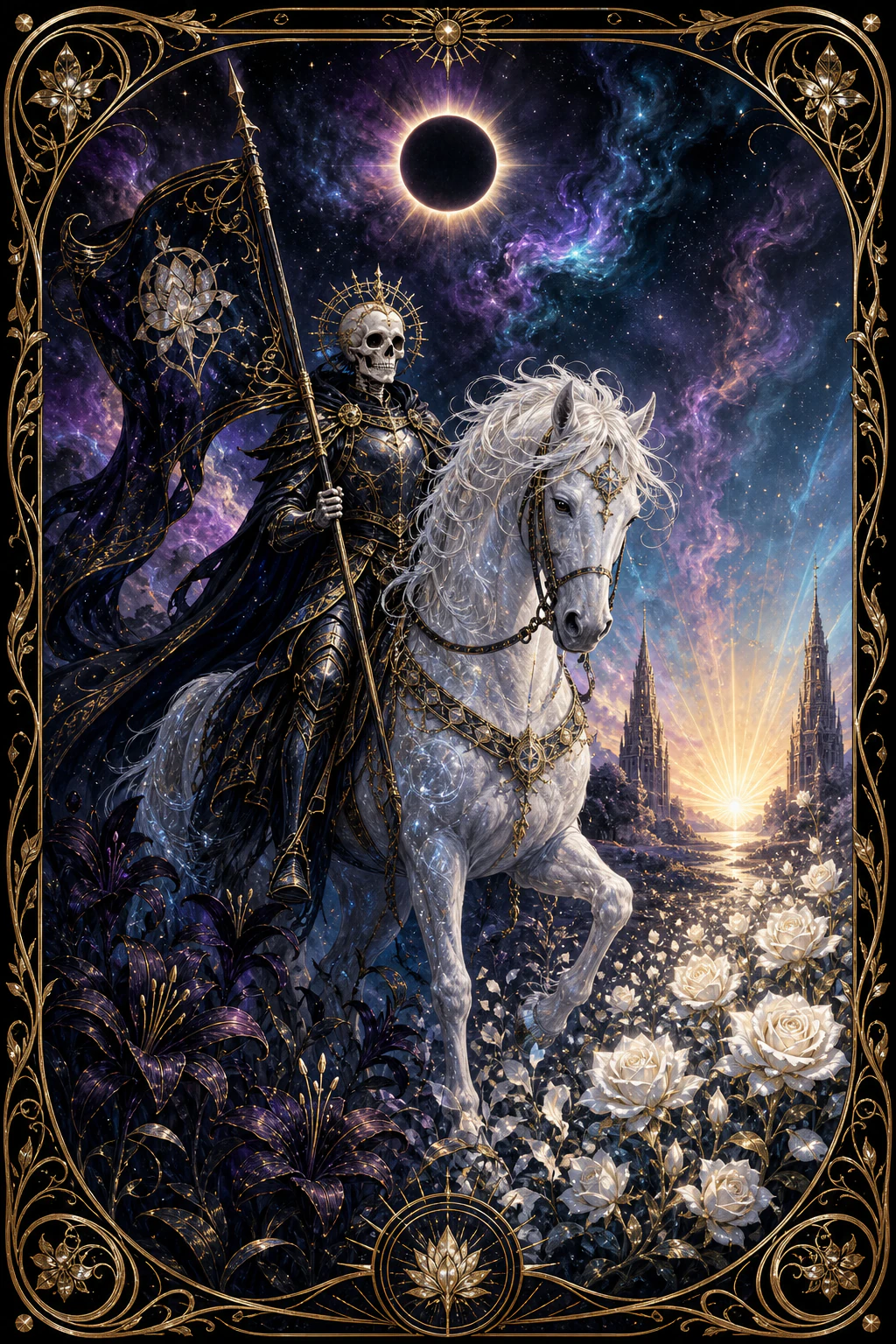 Deathendings · change · transformation
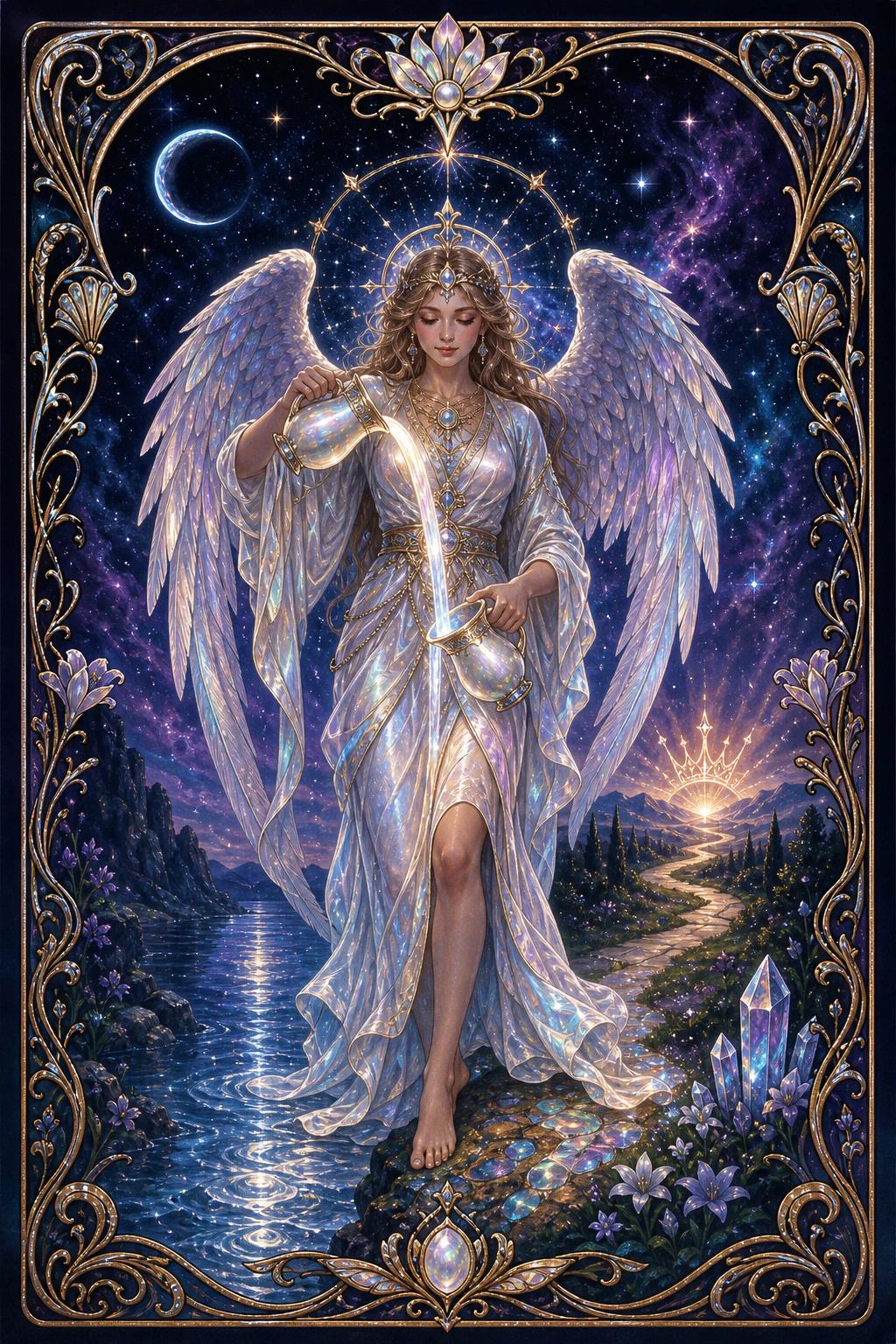 Temperancebalance · moderation · patience
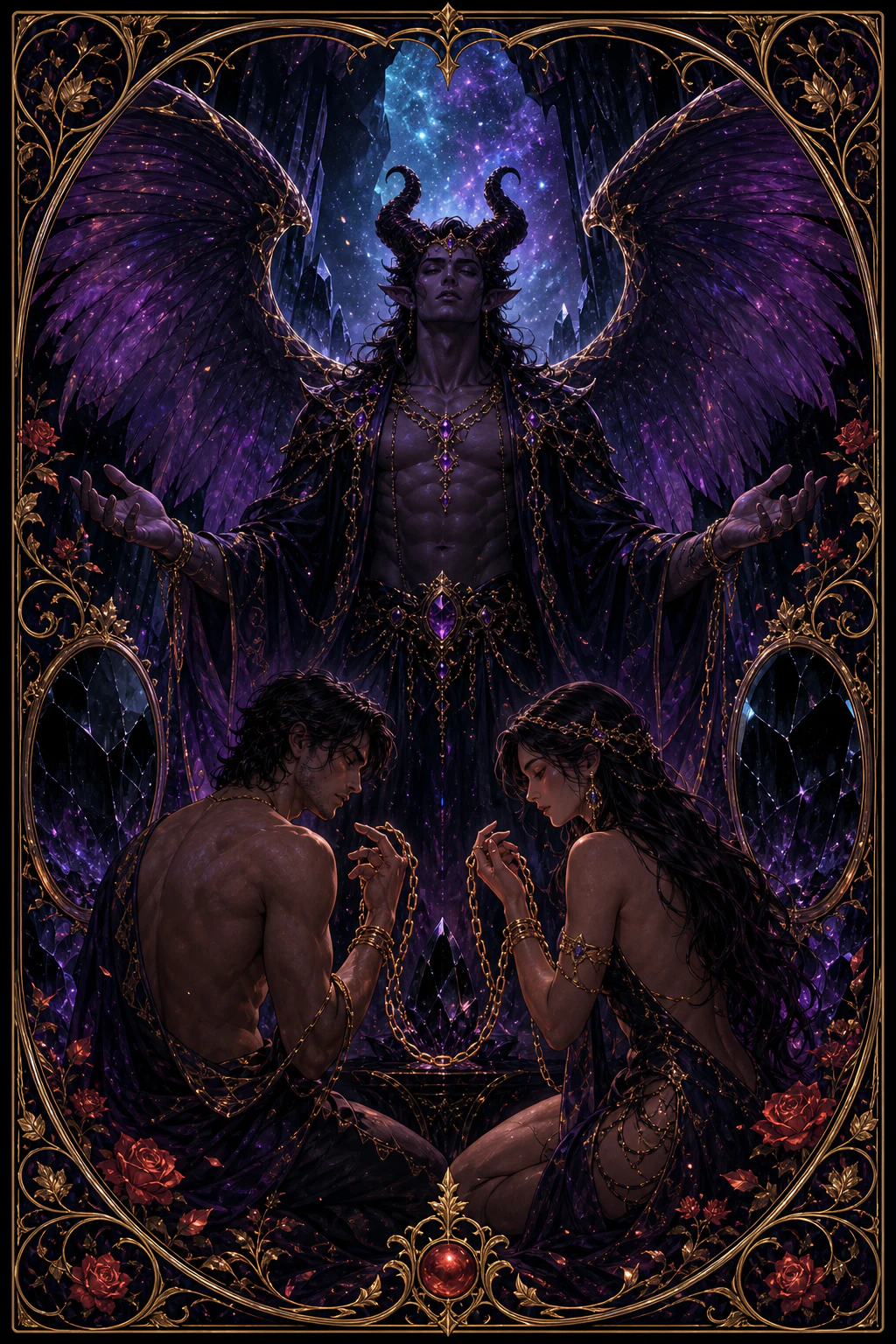 The Devilshadow · attachment · restriction
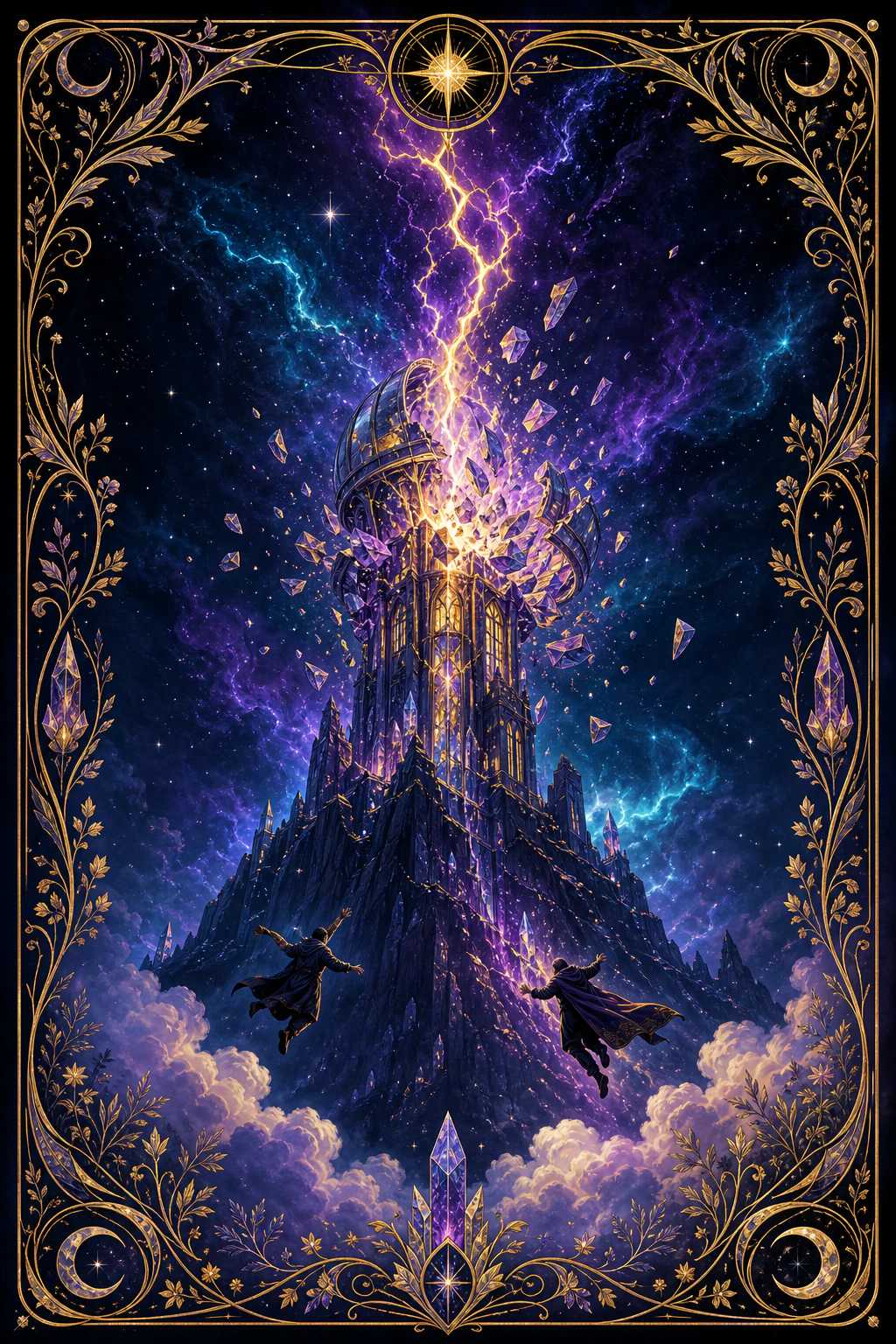 The Towerchange · upheaval · chaos
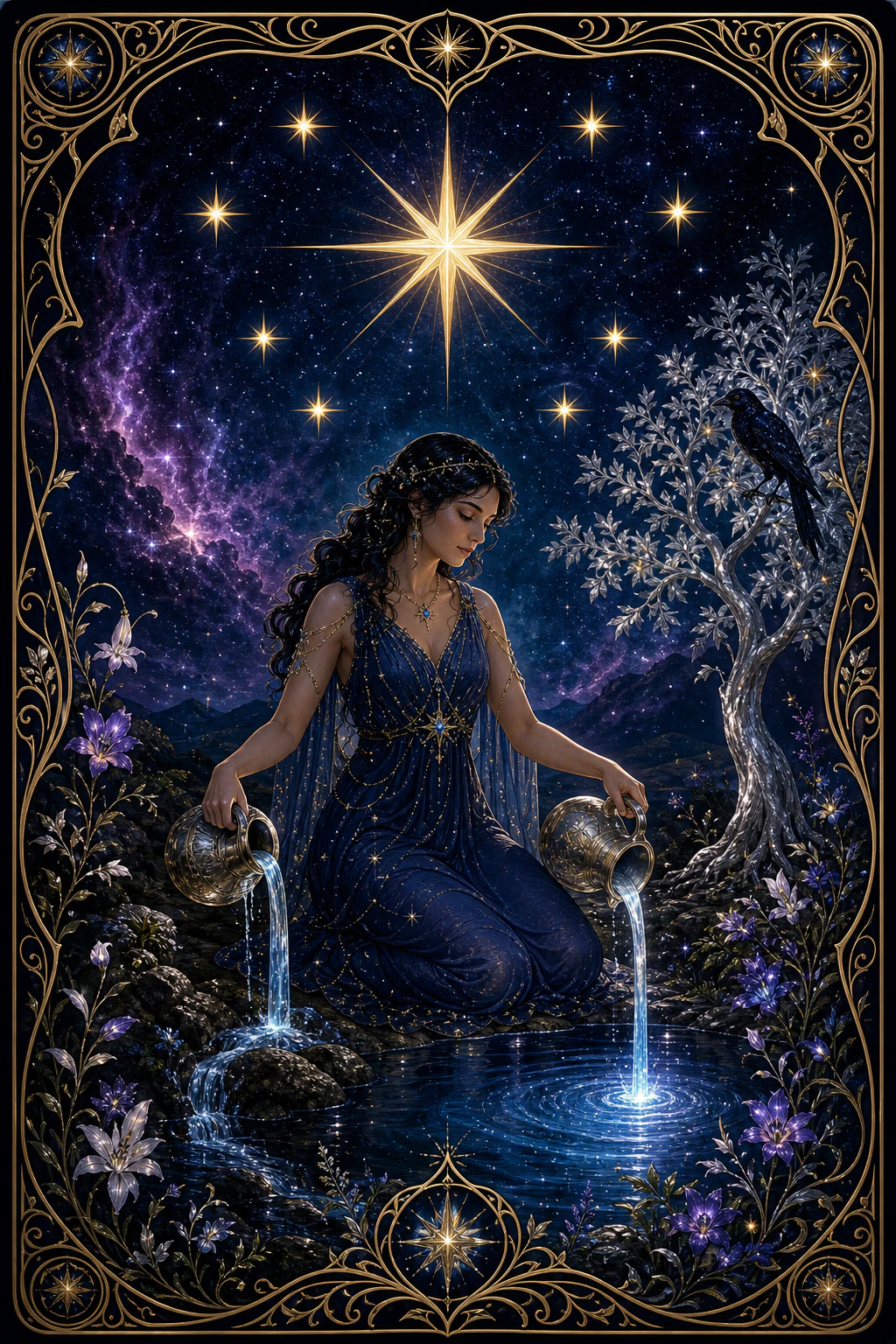 The Starhope · faith · renewal
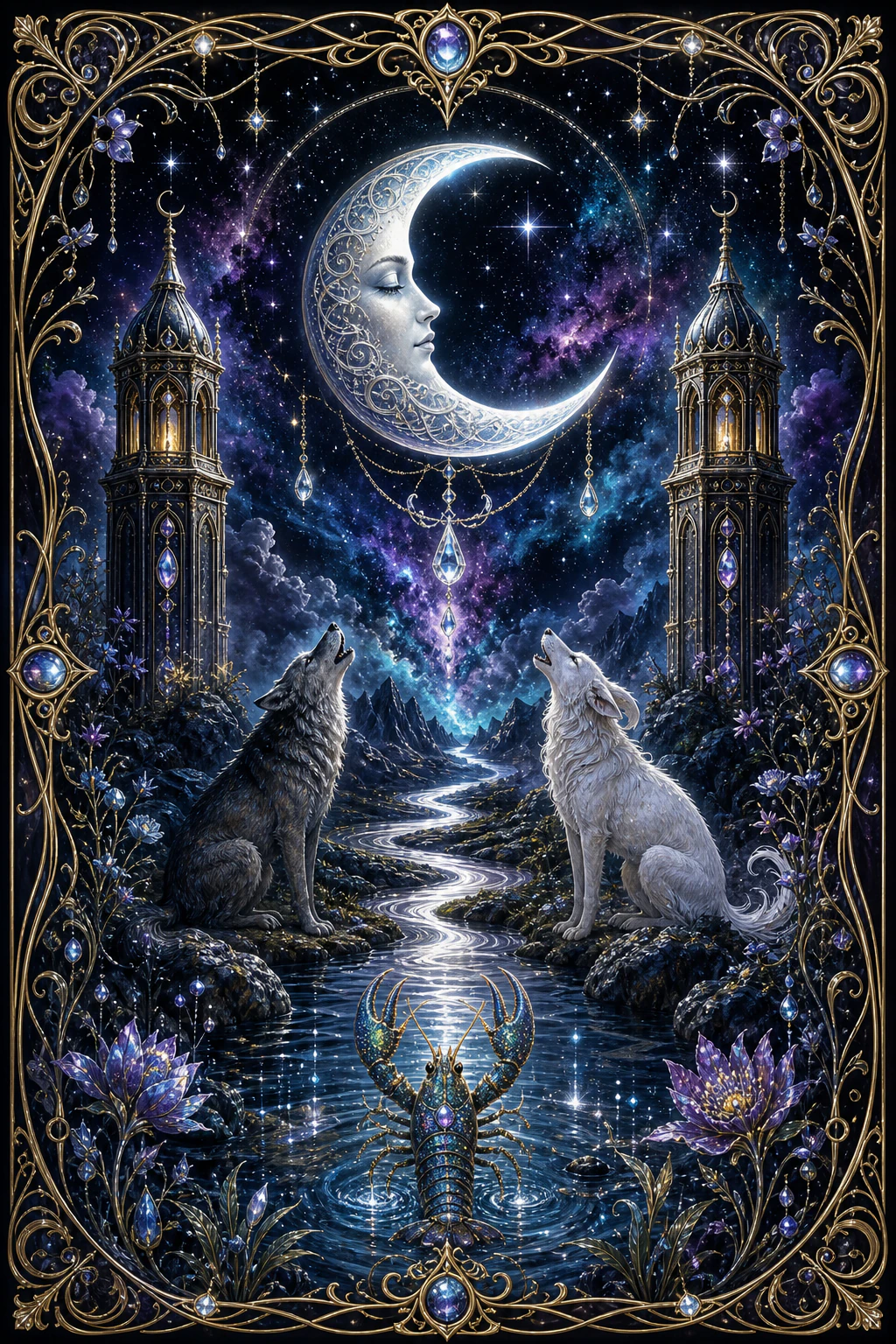 The Moonillusion · fear · subconscious
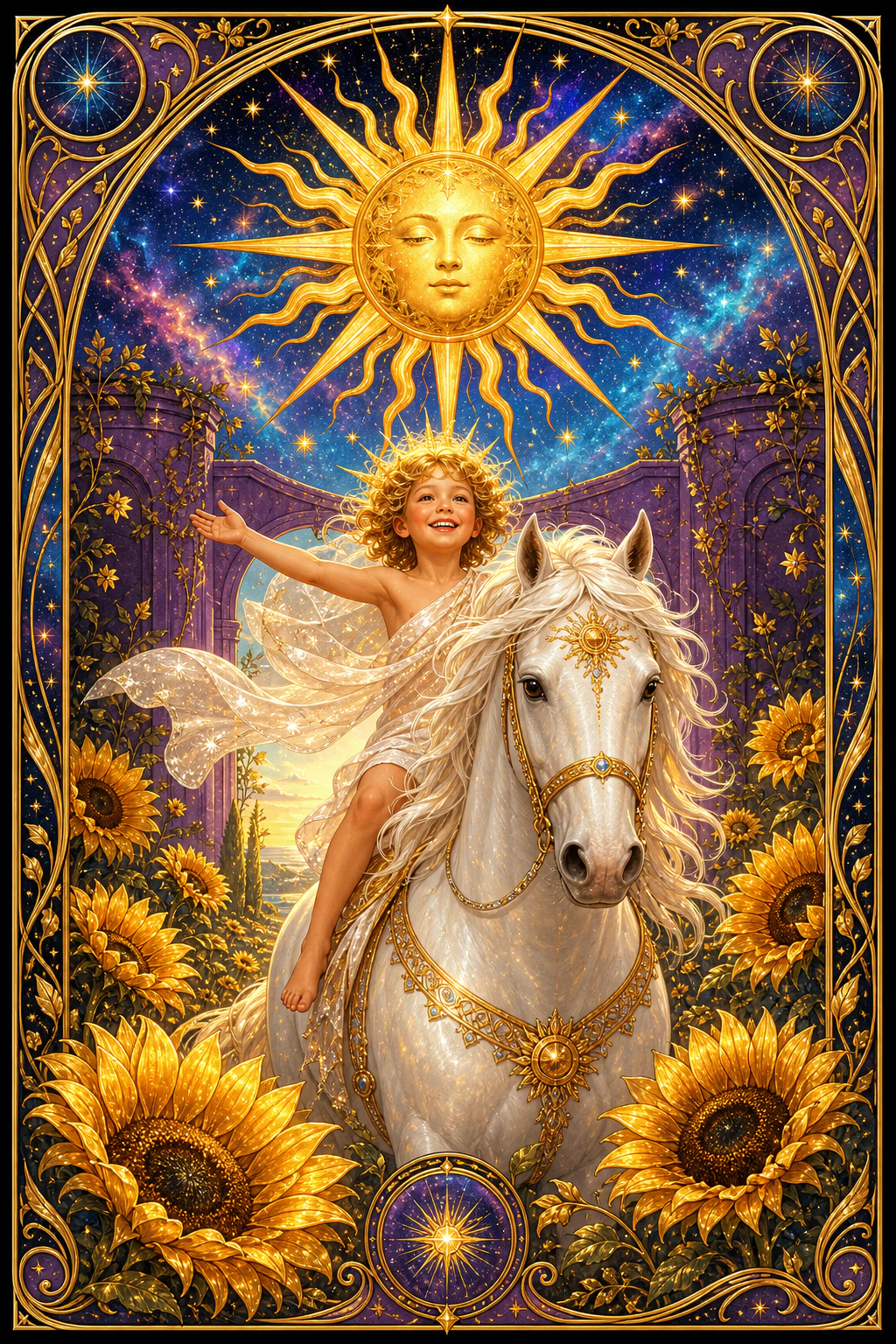 The Sunpositivity · success · vitality
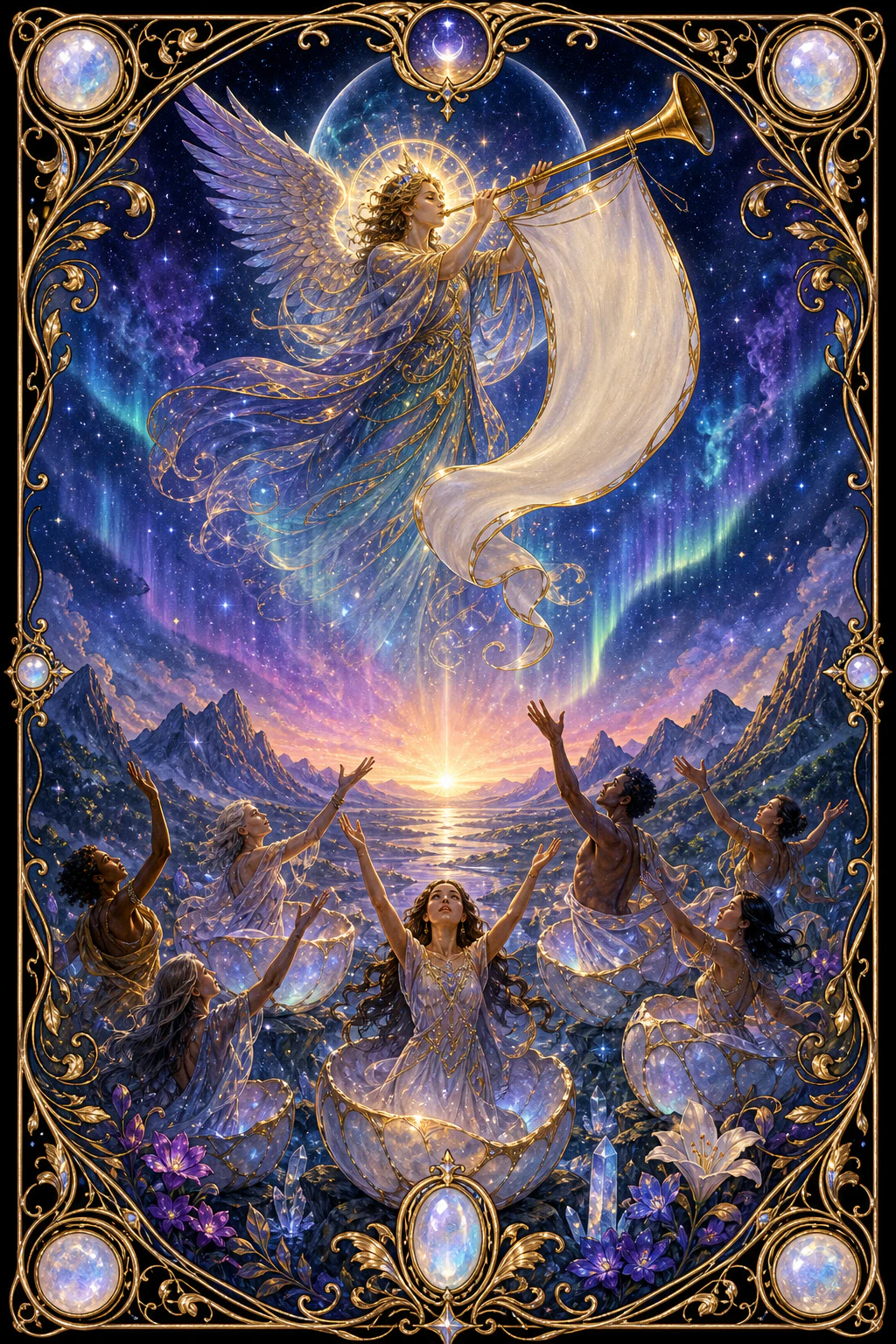 Judgementjudgement · rebirth · calling
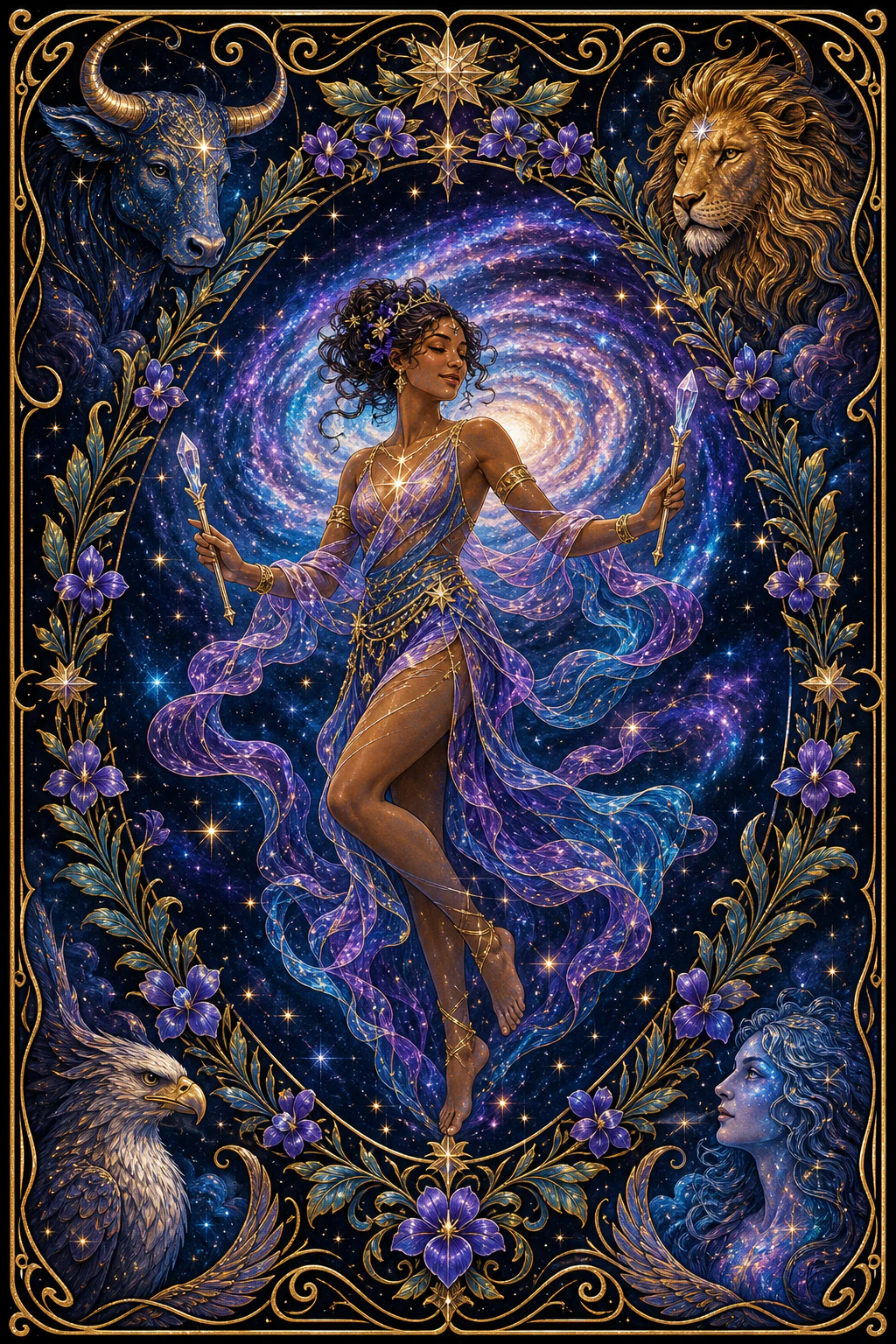 The Worldcompletion · achievement · travel
Minor Arcana
Fifty-six cards in four suits, Ace through King. Where the Major Arcana mark the chapters, the Minor Arcana describe the days inside them.
Wands
Wands are the suit of fire — ambition, desire, and the will to begin. They govern work undertaken with passion, and the friction that comes with wanting something.
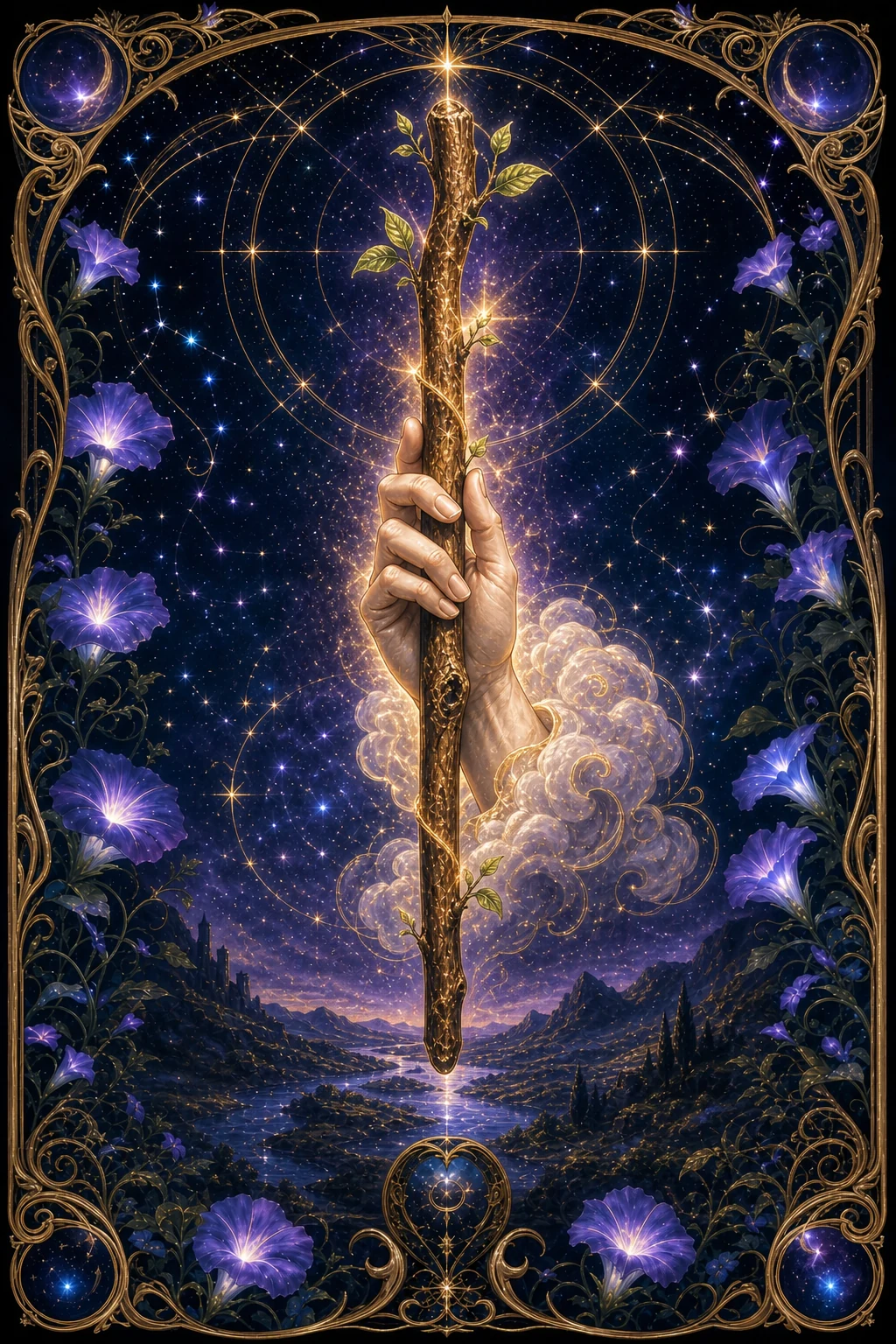 Ace of Wandsinspiration · potential · creation
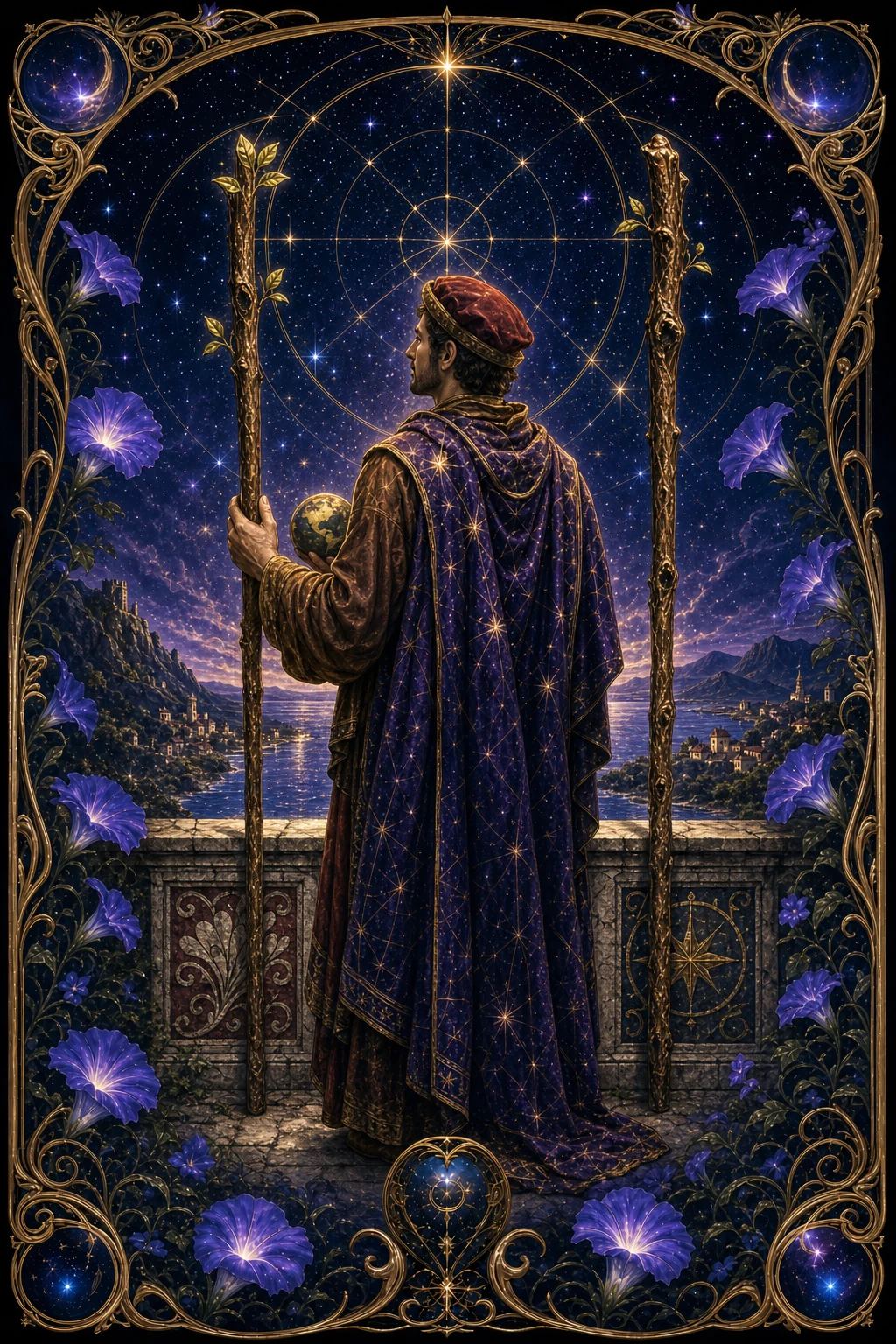 Two of Wandsplanning · progress · decisions
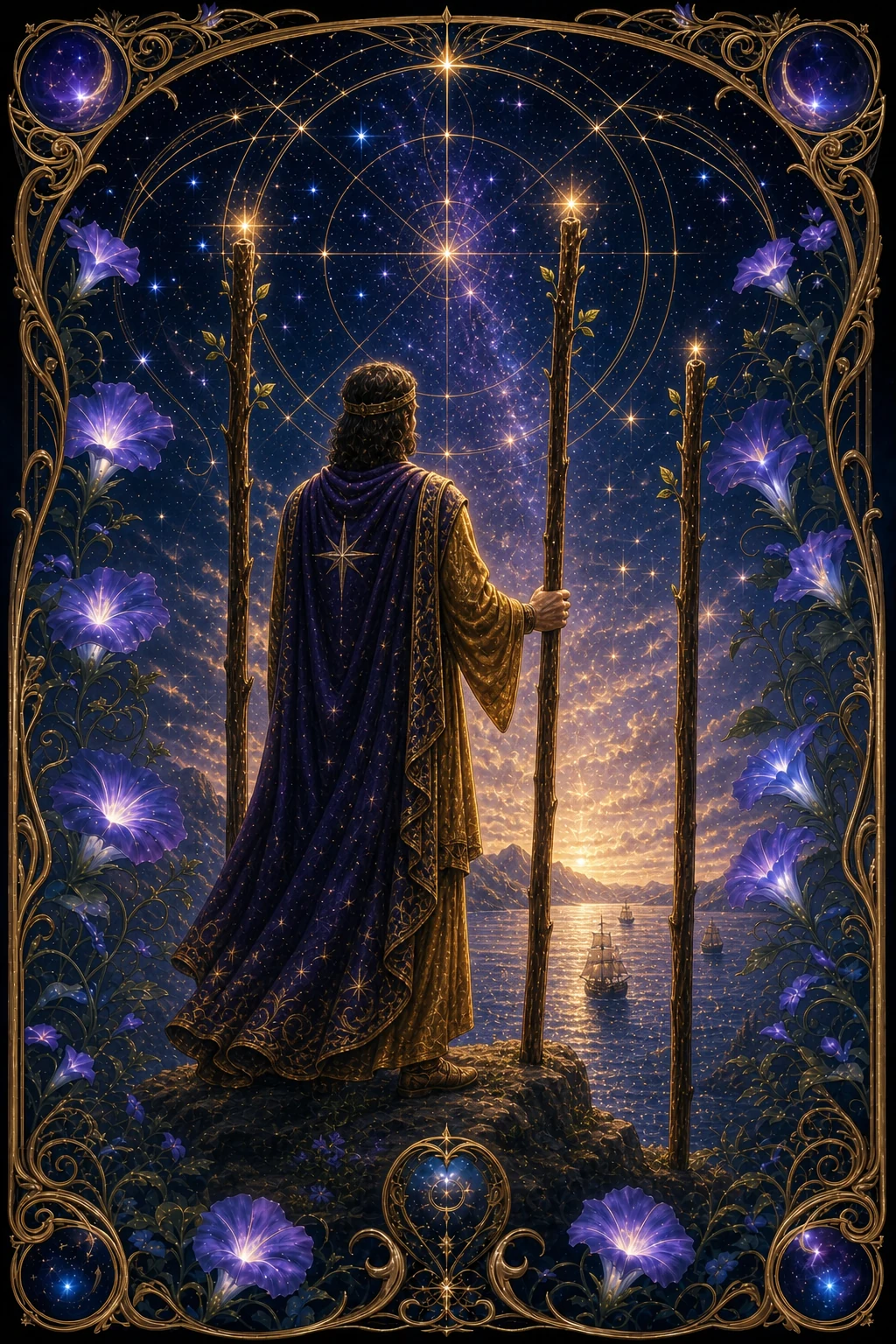 Three of Wandsexpansion · foresight · opportunity
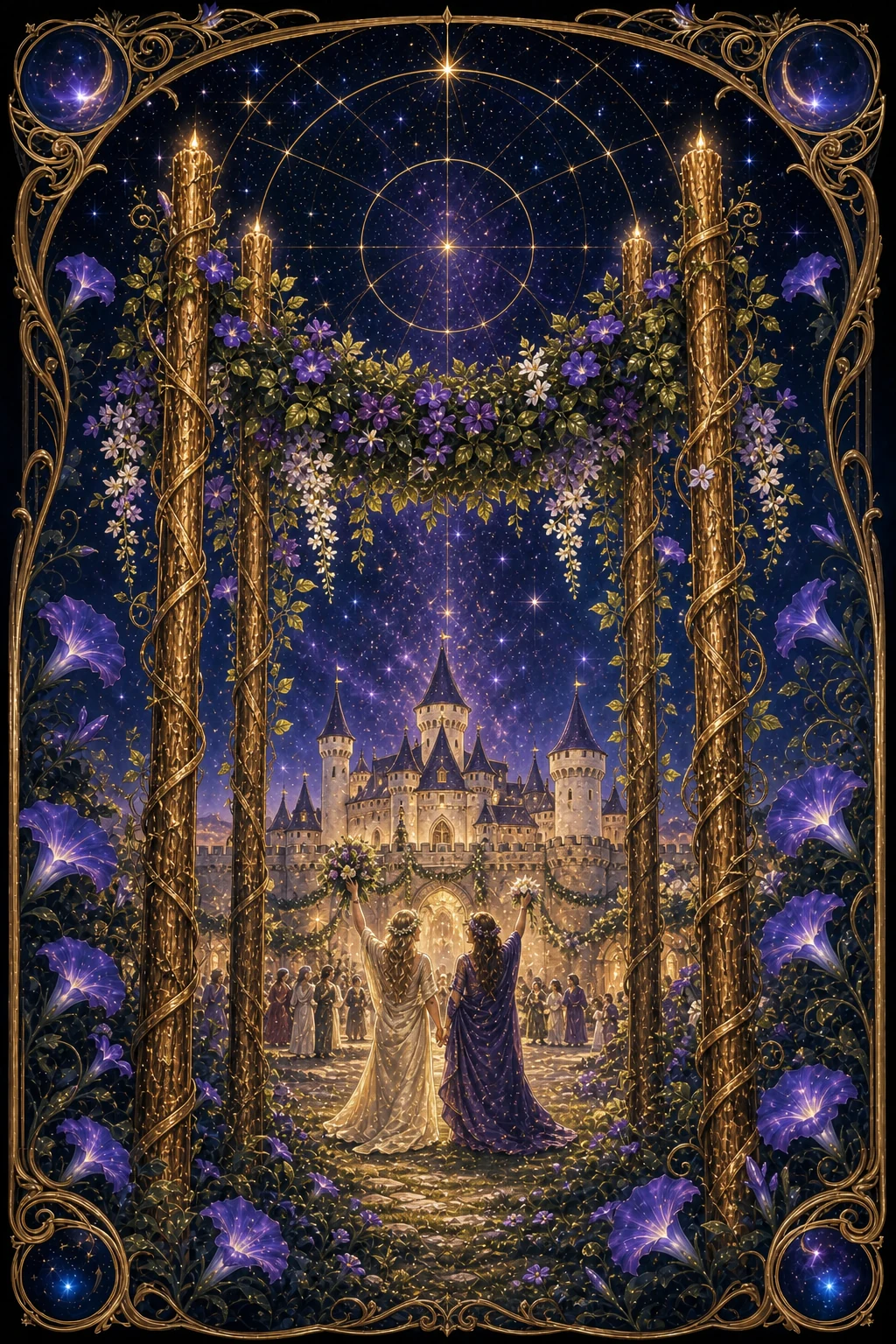 Four of Wandscelebration · harmony · home
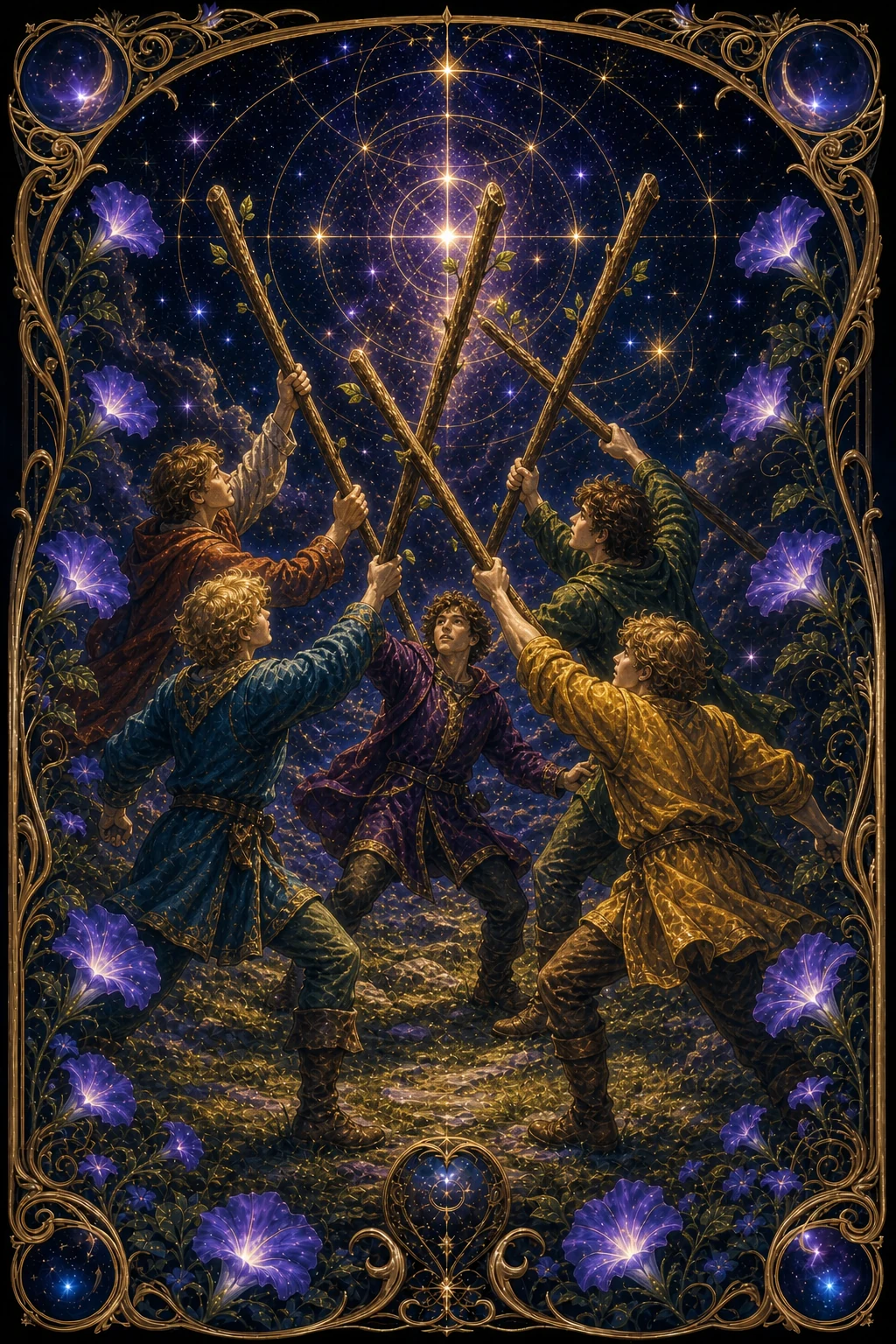 Five of Wandscompetition · tension · conflict
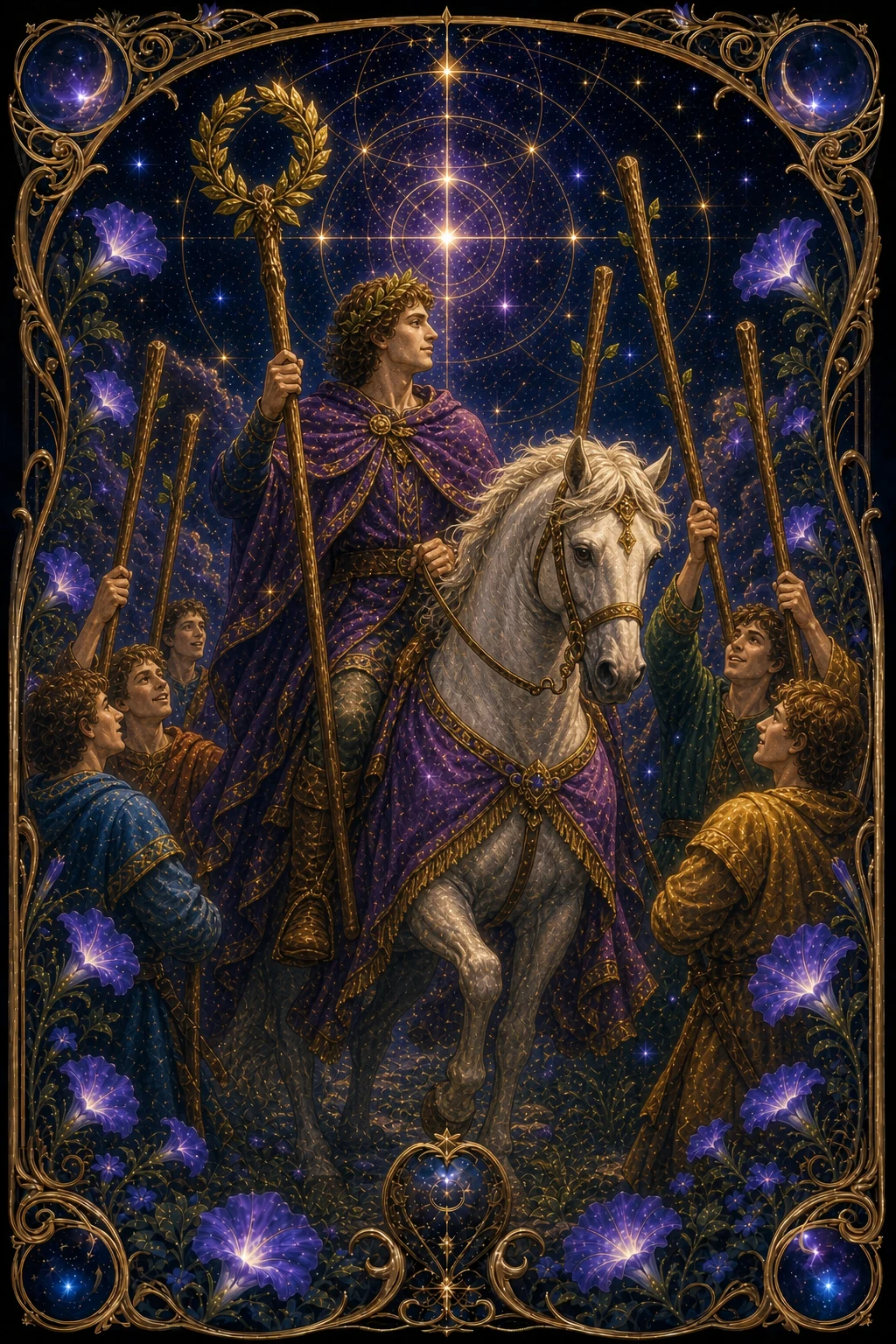 Six of Wandsvictory · recognition · confidence
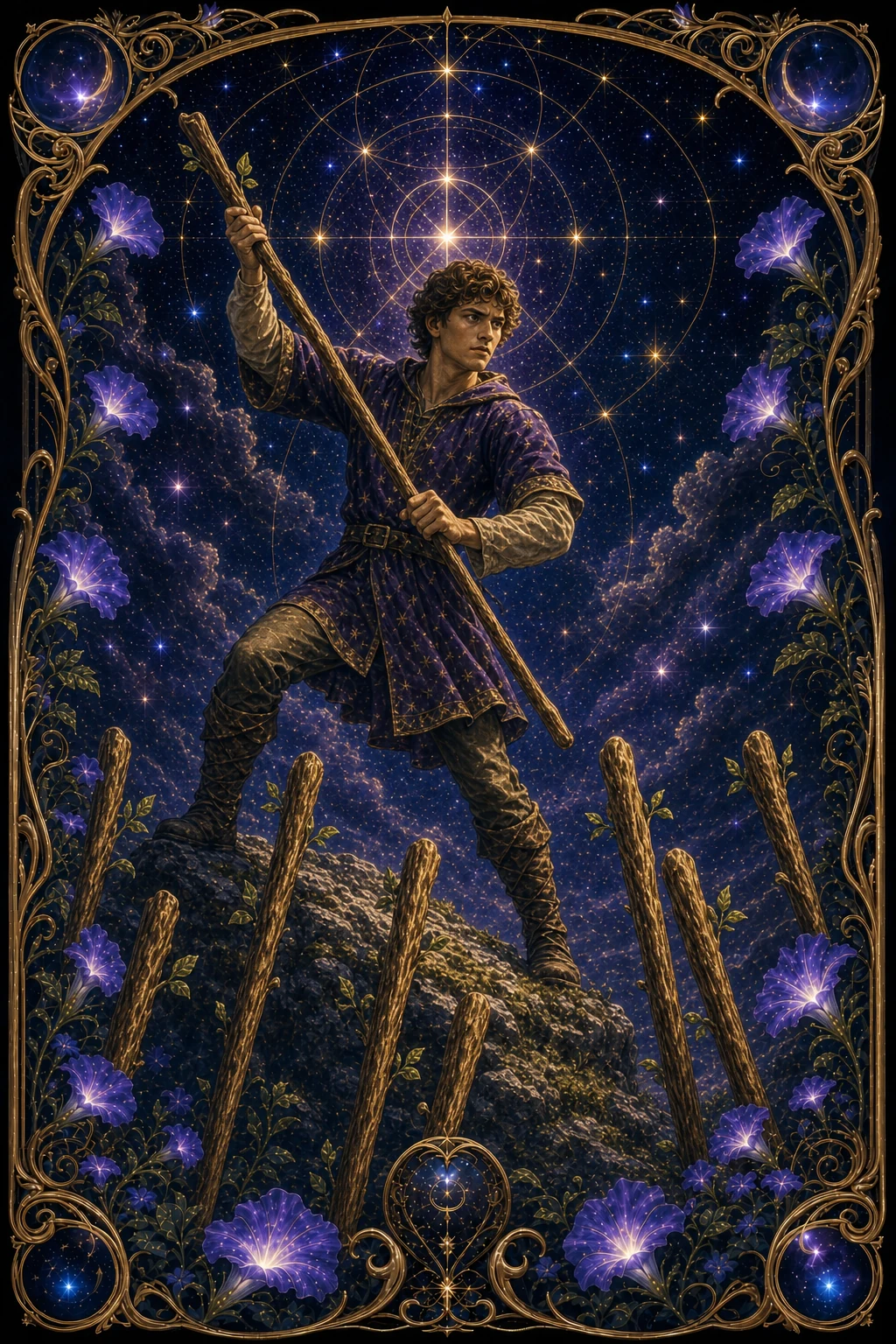 Seven of Wandschallenge · perseverance · defense
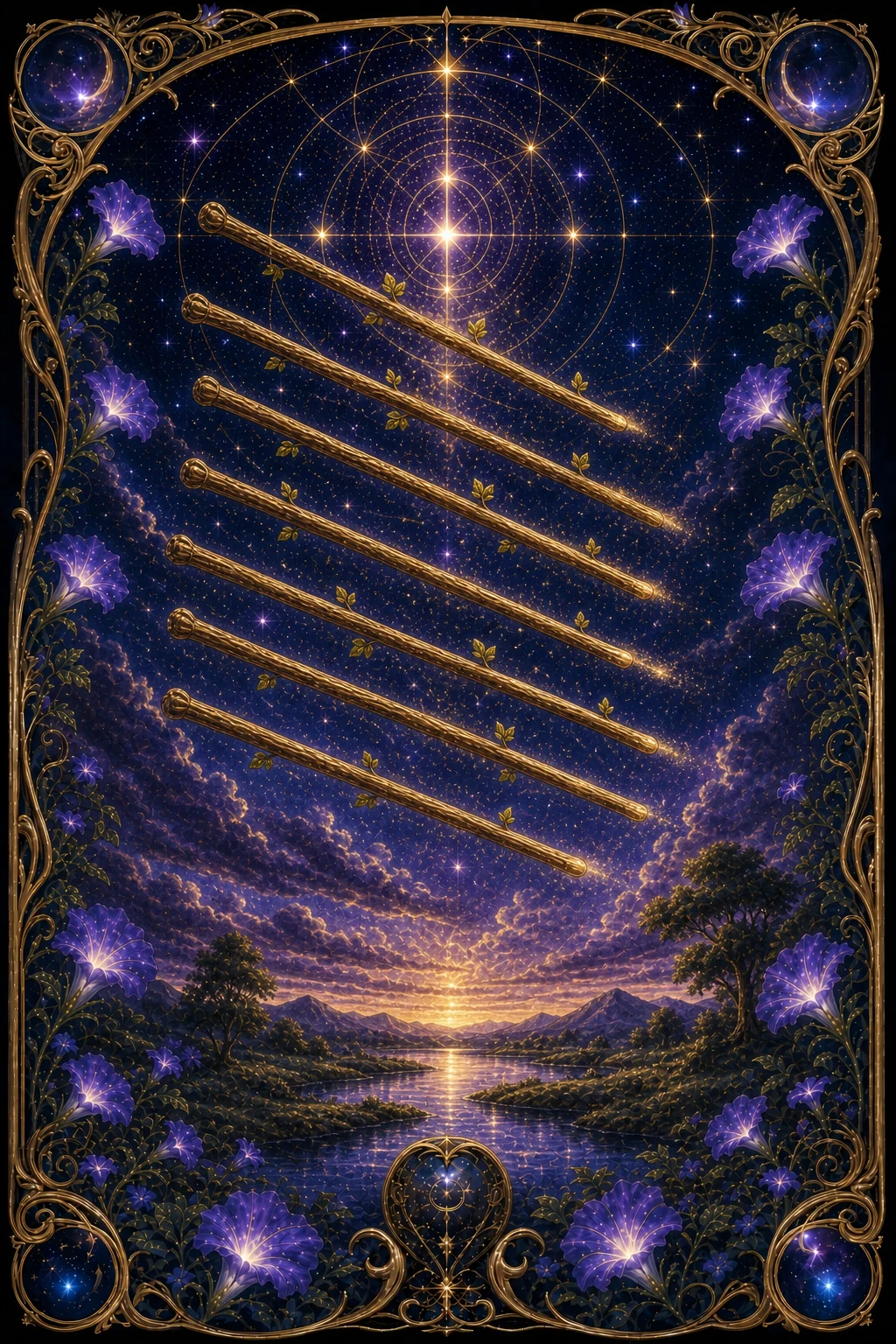 Eight of Wandsmomentum · action · movement
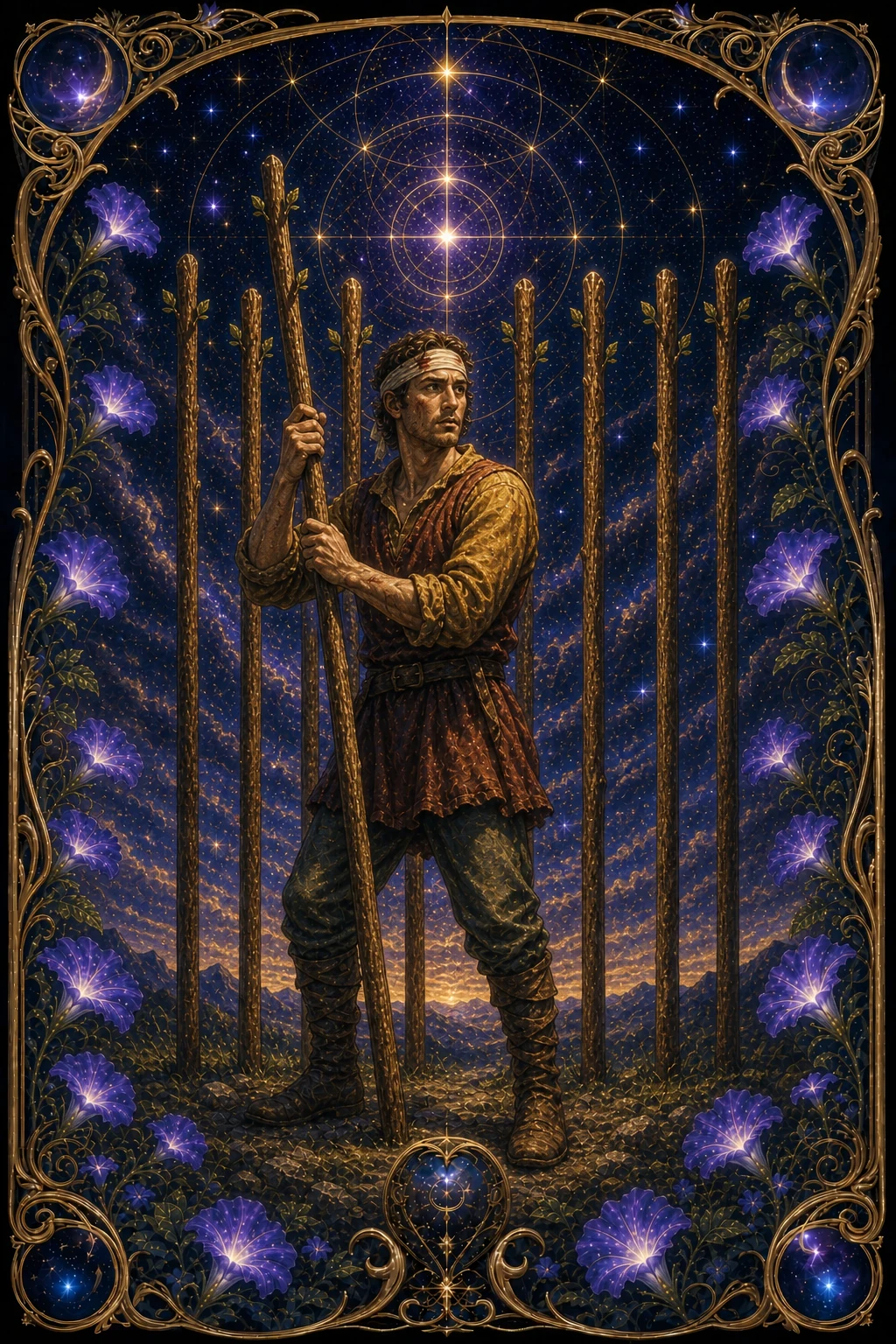 Nine of Wandsresilience · persistence · boundaries
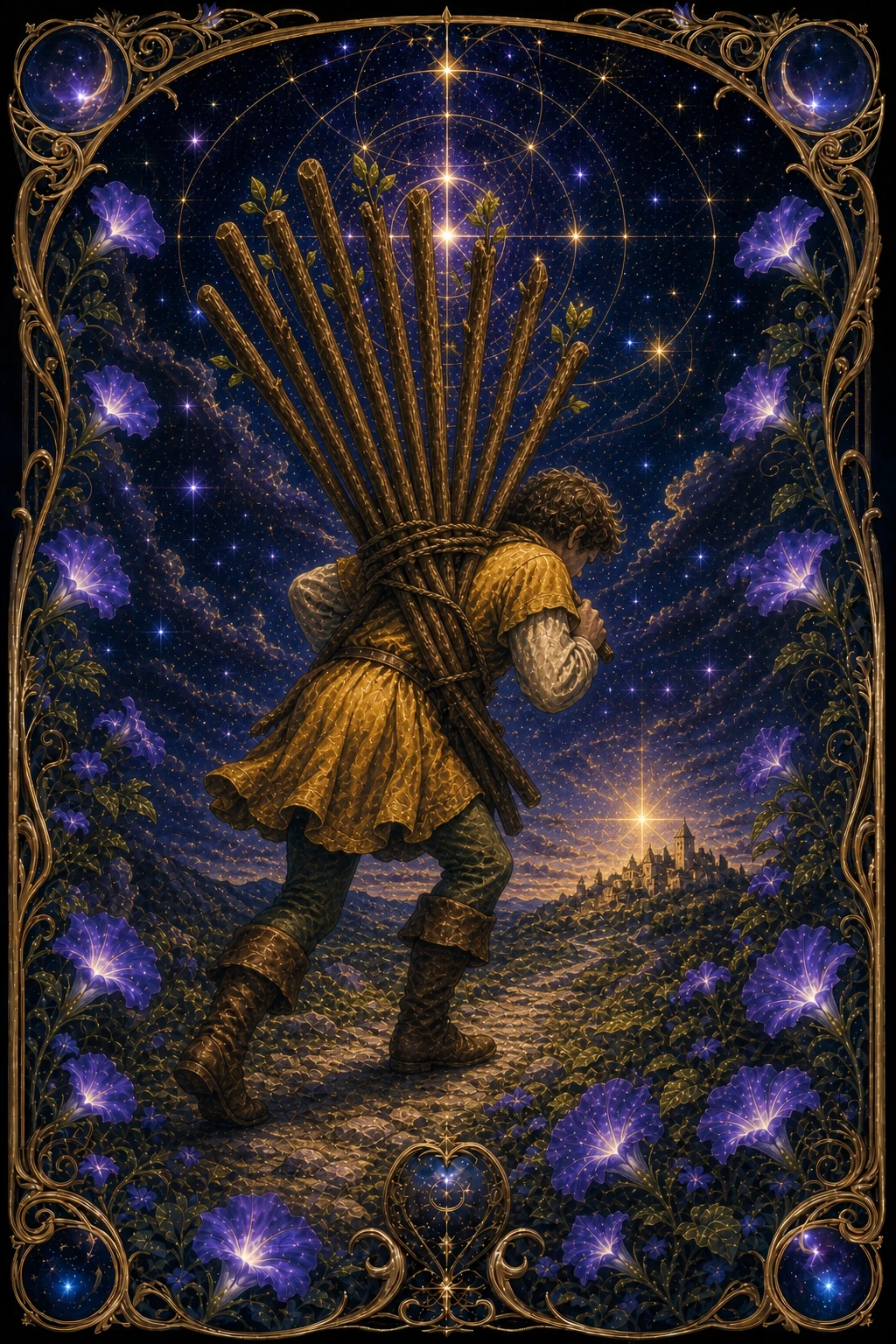 Ten of Wandsburden · responsibility · effort
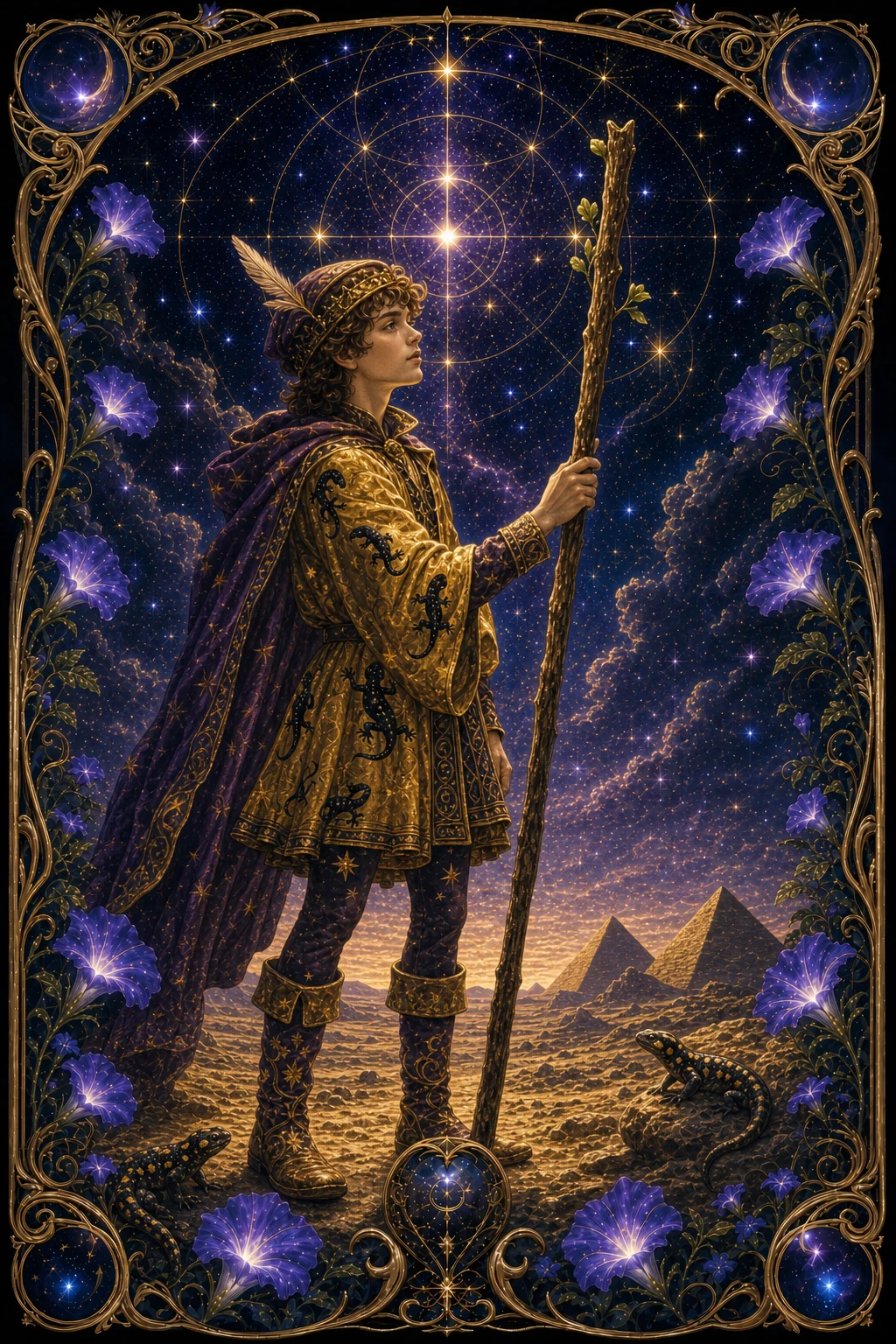 Page of Wandsexploration · enthusiasm · discovery
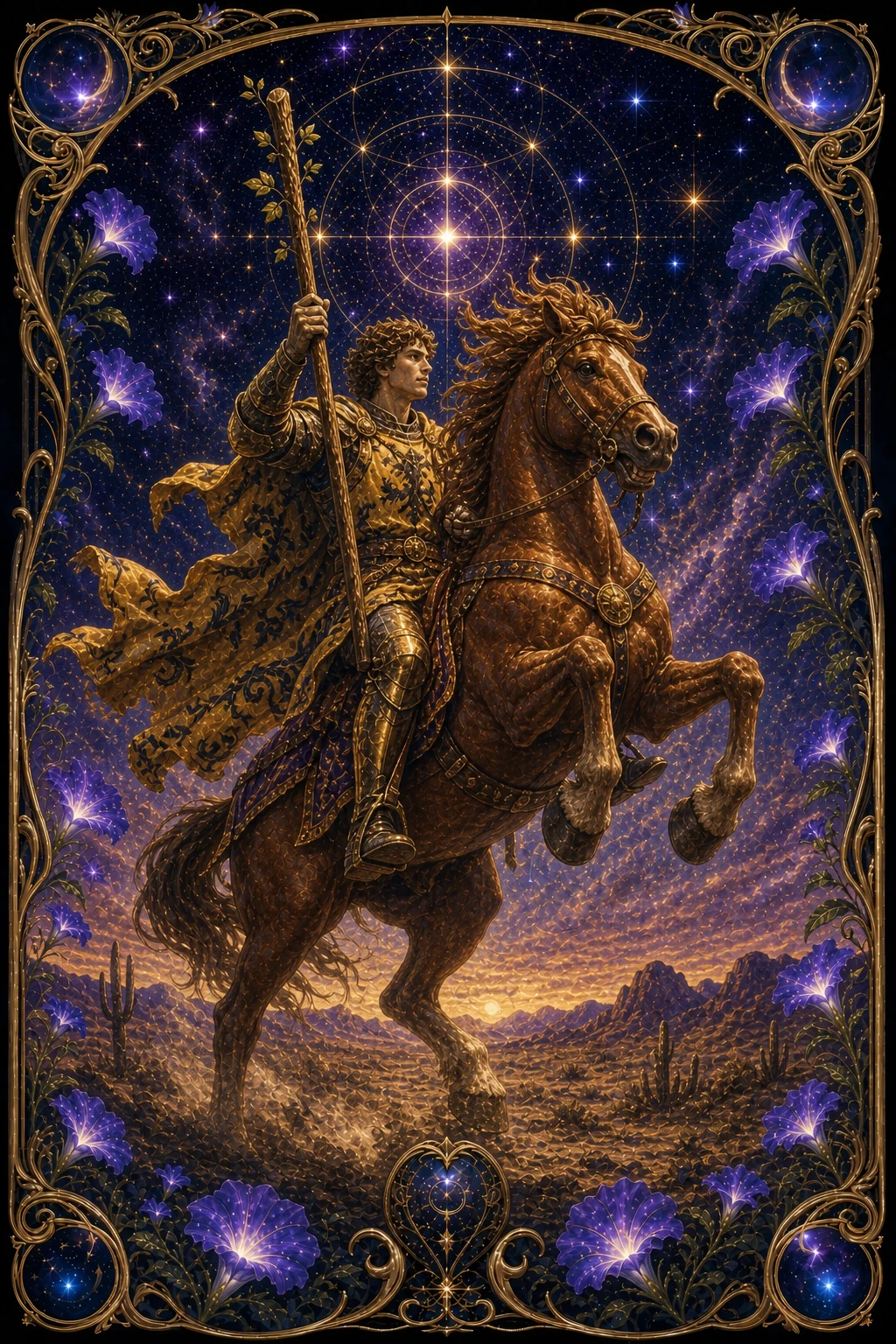 Knight of Wandspassion · adventure · action
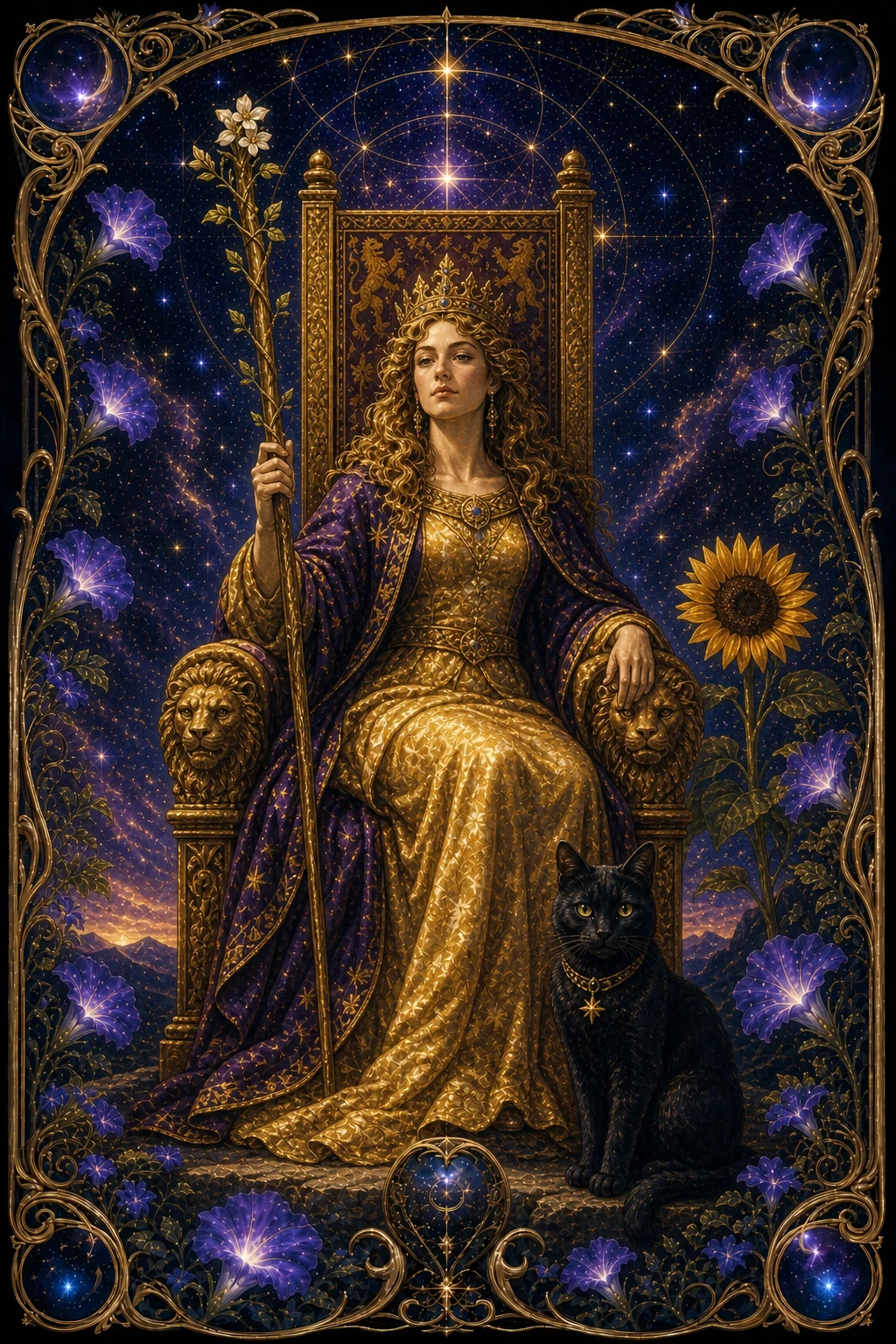 Queen of Wandscourage · confidence · independence
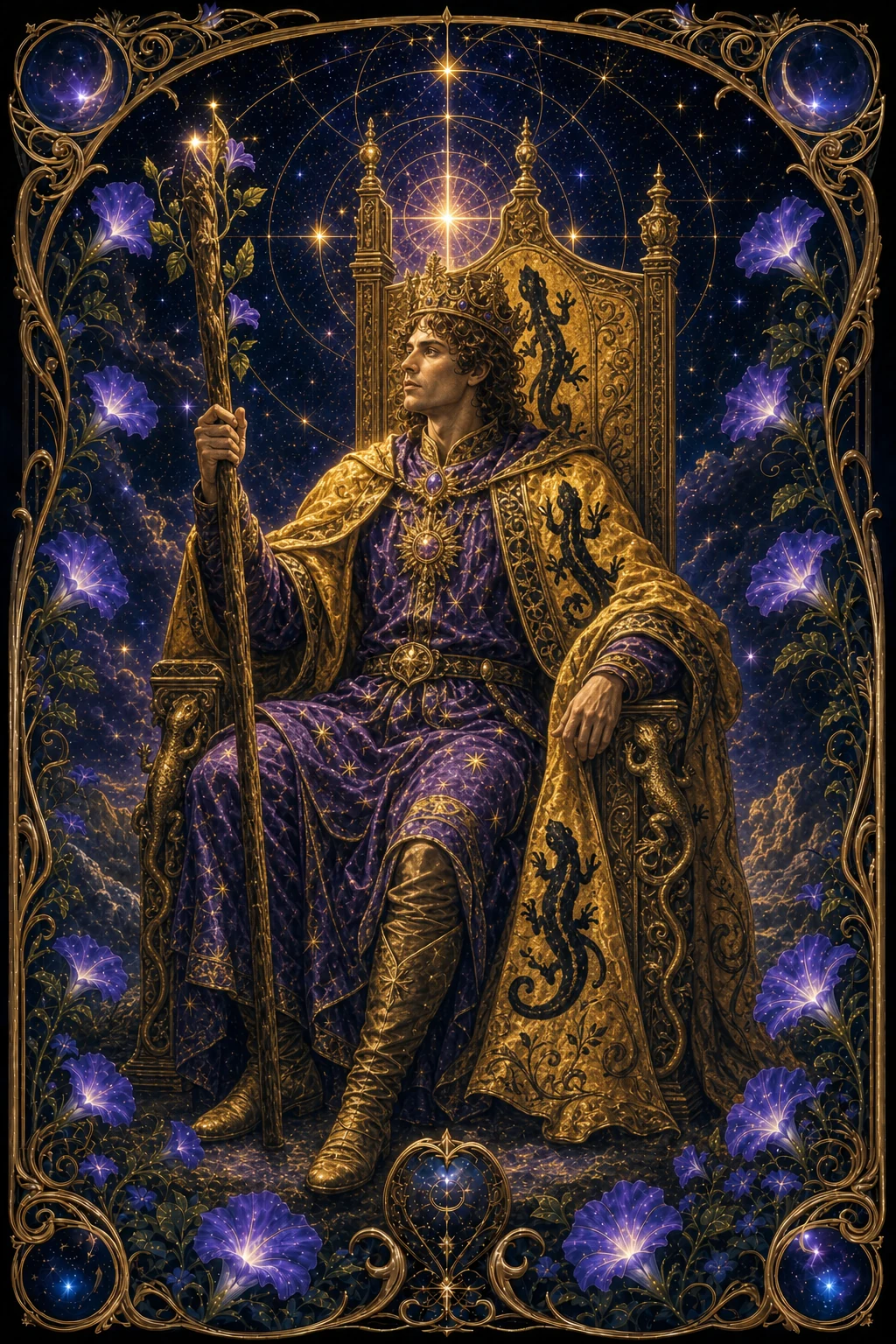 King of Wandsvision · leadership · honor
Cups
Cups are the suit of water — emotion, relationship, and intuition. They govern love in all its forms, from first tenderness to the long work of staying.
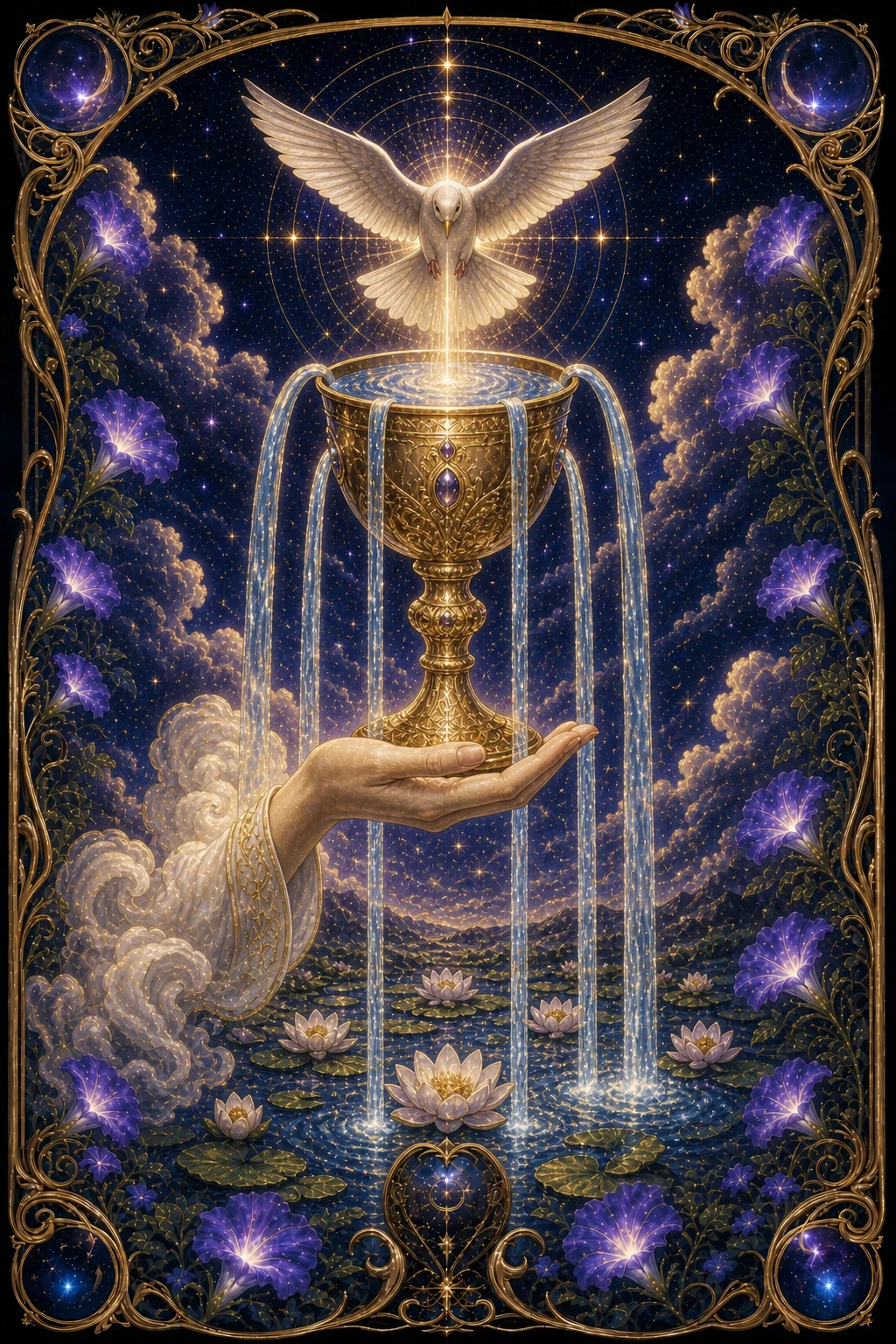 Ace of Cupslove · compassion · creativity
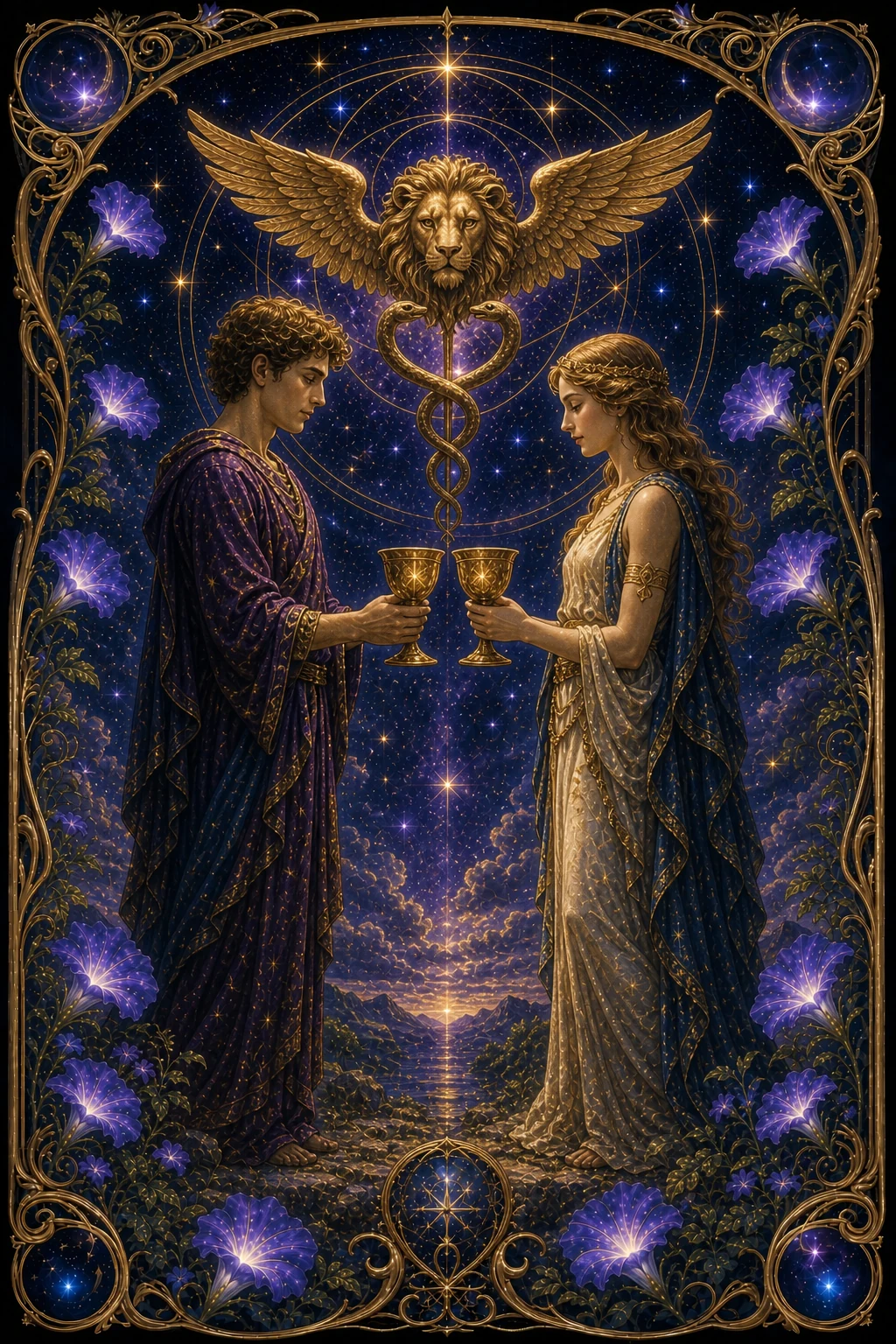 Two of Cupspartnership · unity · attraction
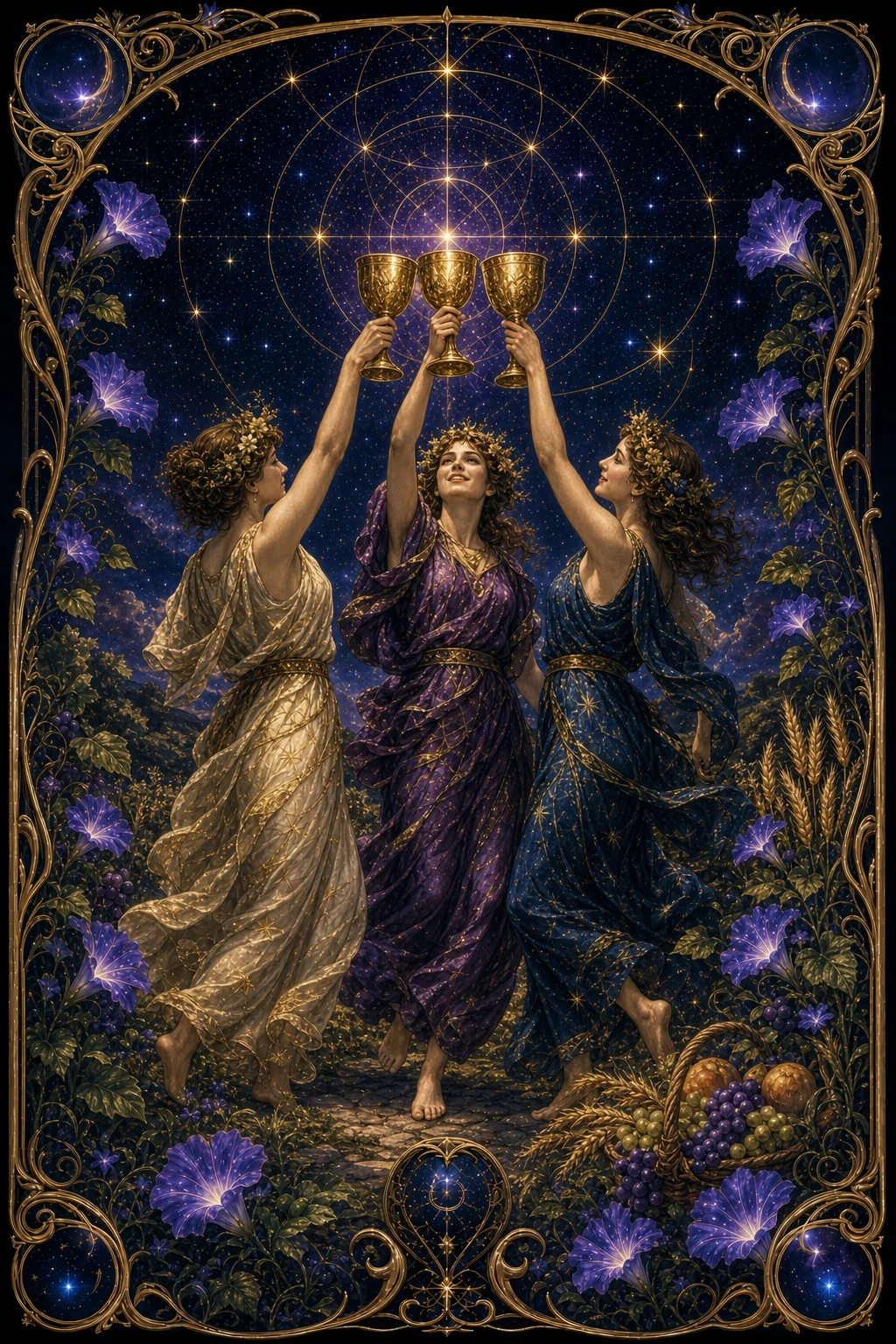 Three of Cupsfriendship · celebration · community
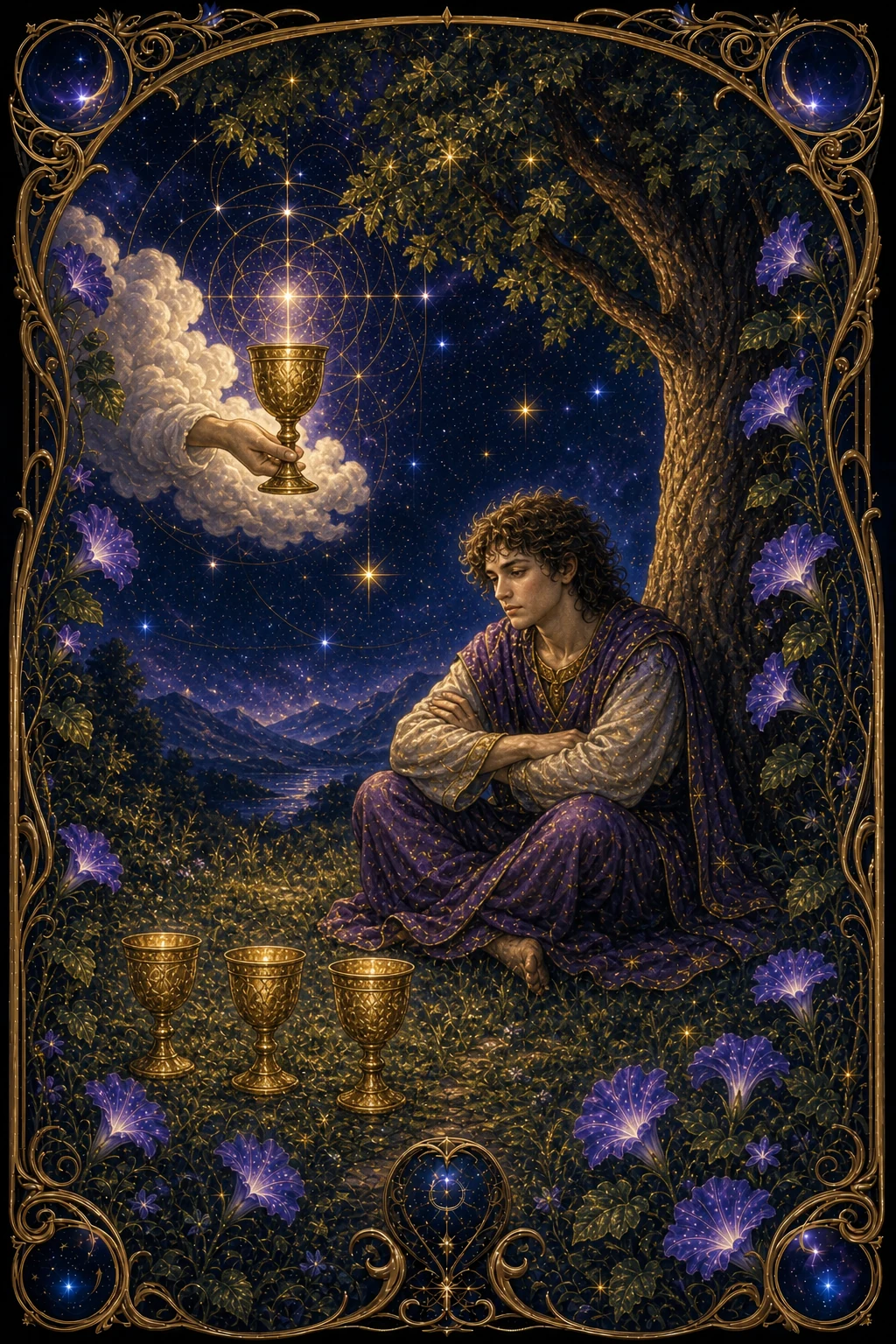 Four of Cupscontemplation · apathy · reevaluation
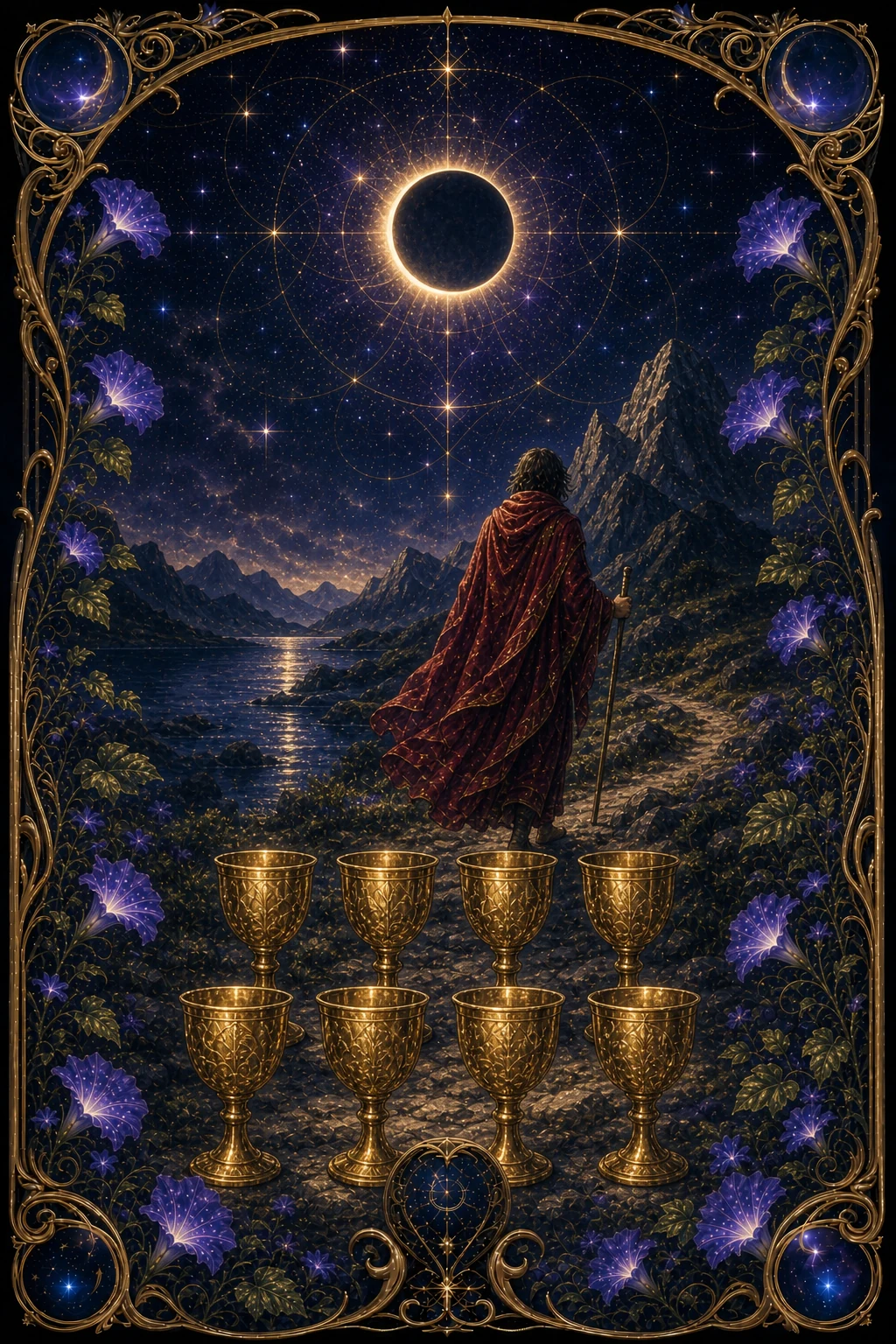 Five of Cupsloss · regret · grief
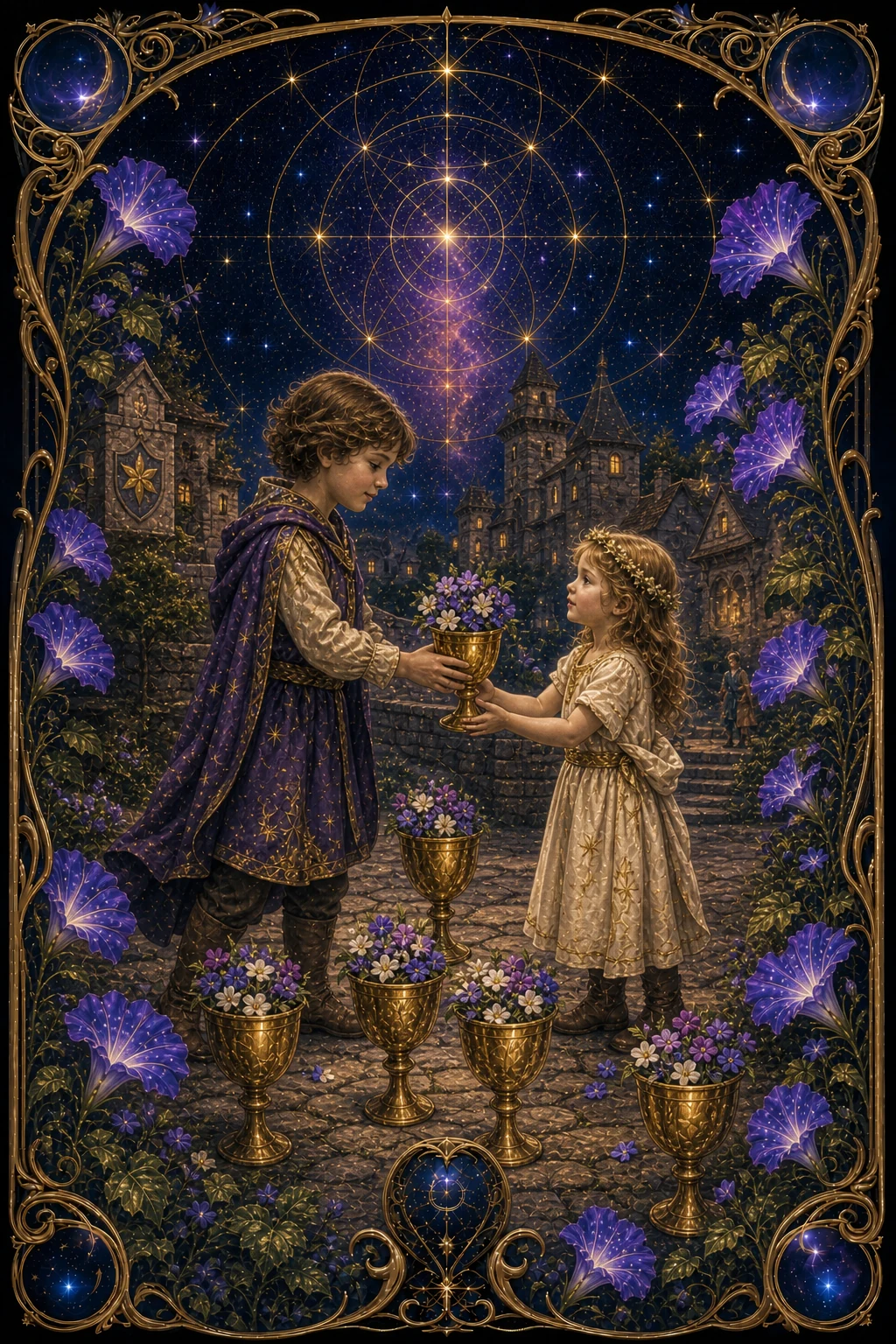 Six of Cupsnostalgia · innocence · generosity
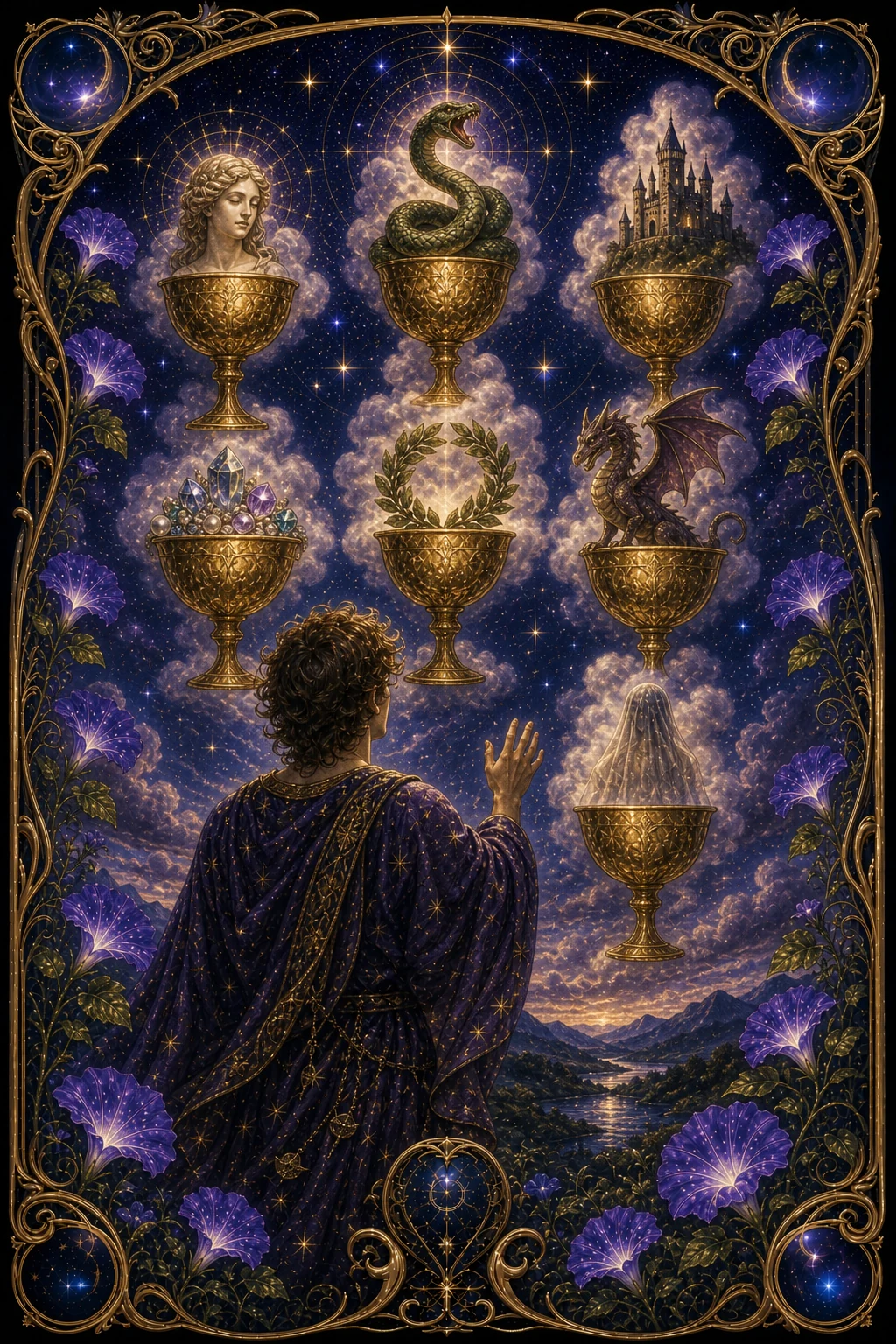 Seven of Cupschoices · imagination · illusion
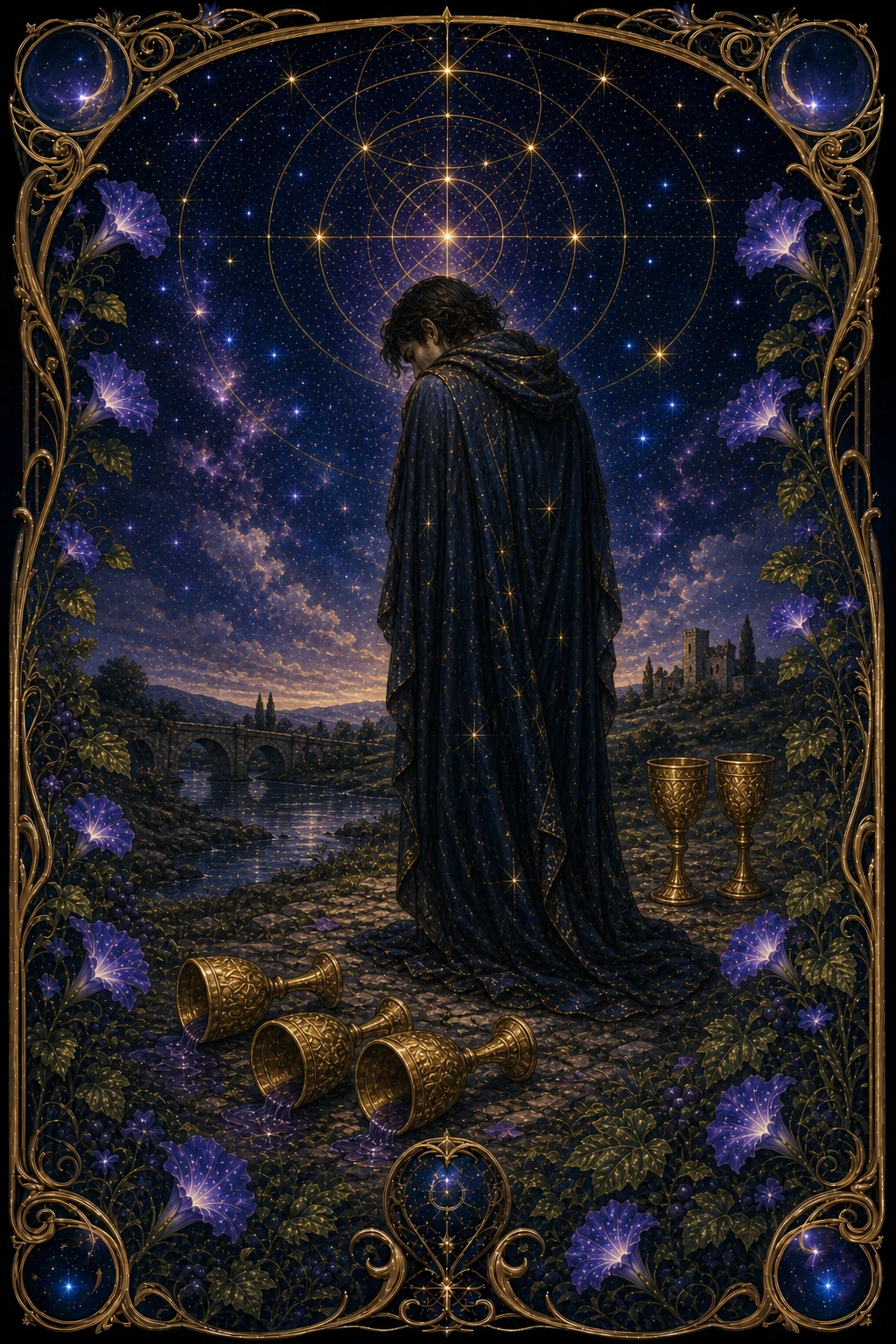 Eight of Cupsdeparture · searching · withdrawal
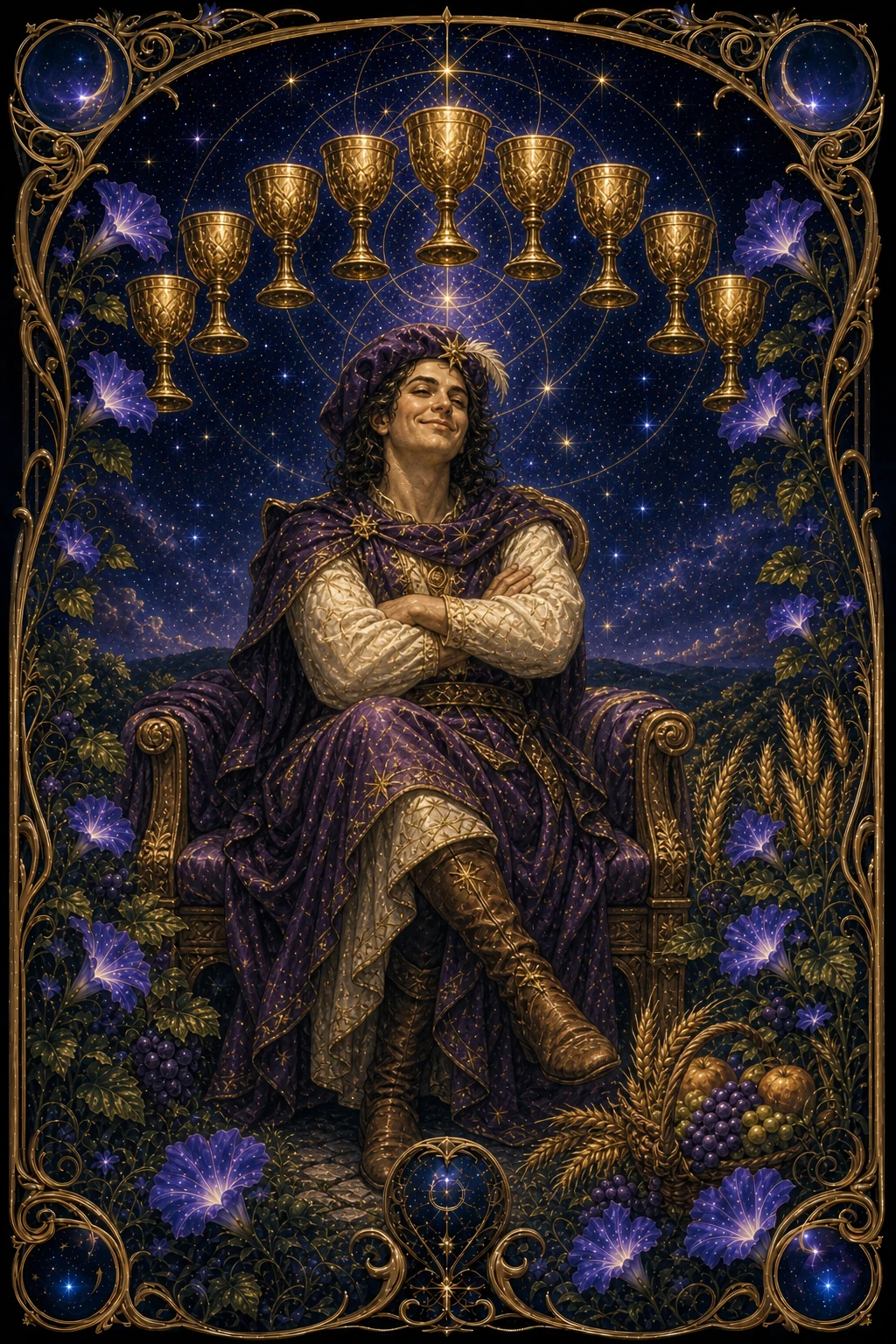 Nine of Cupscontentment · satisfaction · gratitude
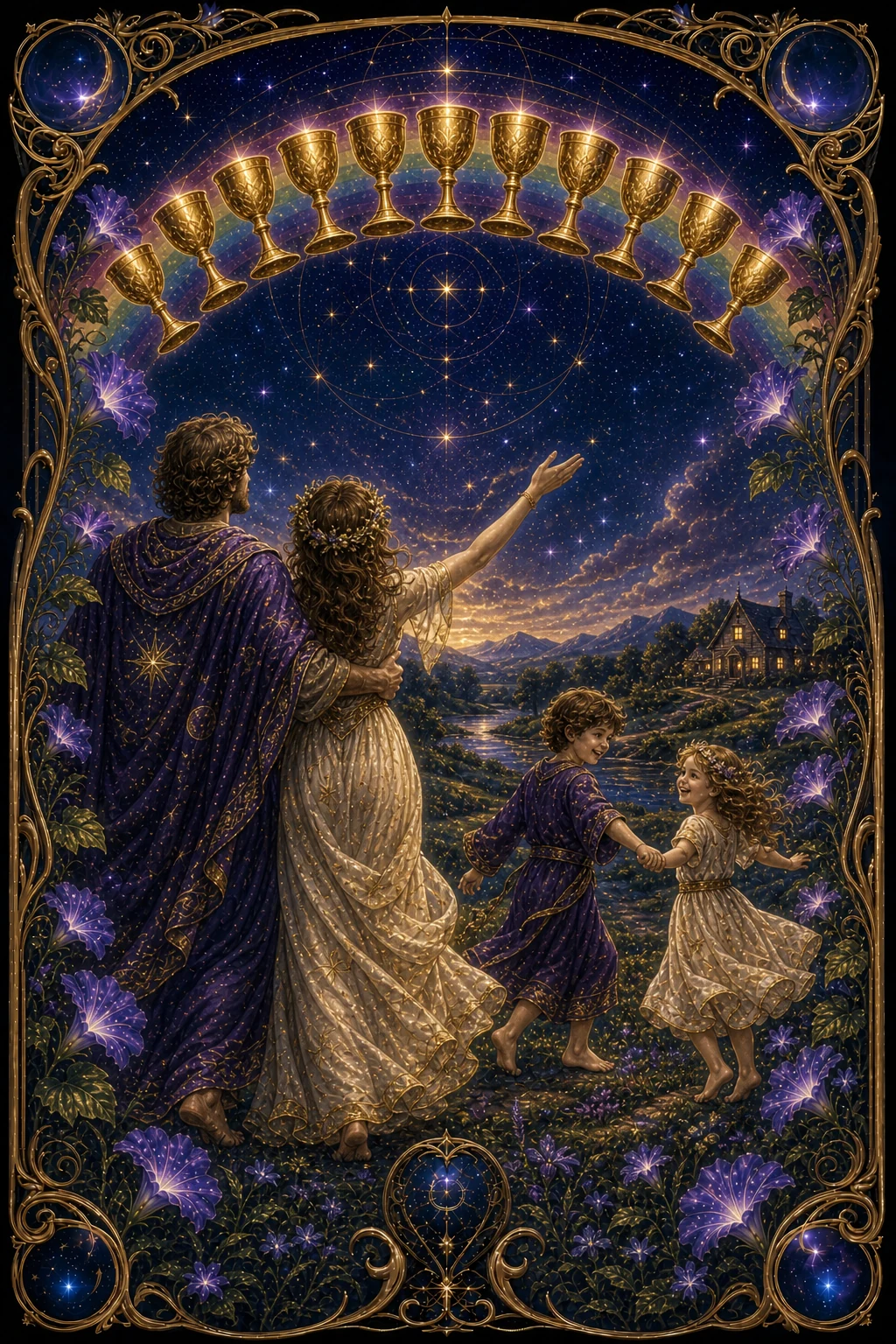 Ten of Cupsfulfillment · family · harmony
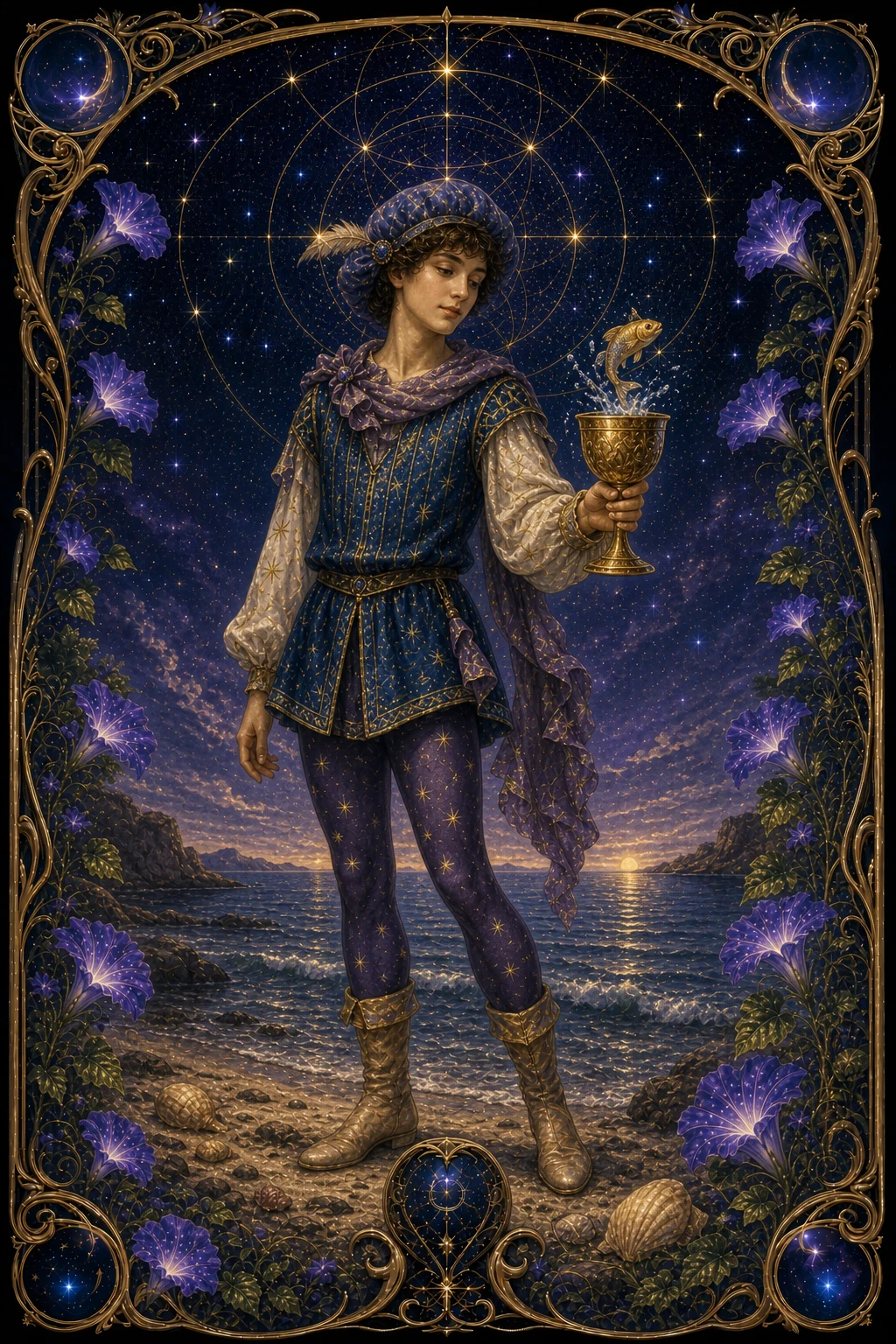 Page of Cupsintuition · sensitivity · curiosity
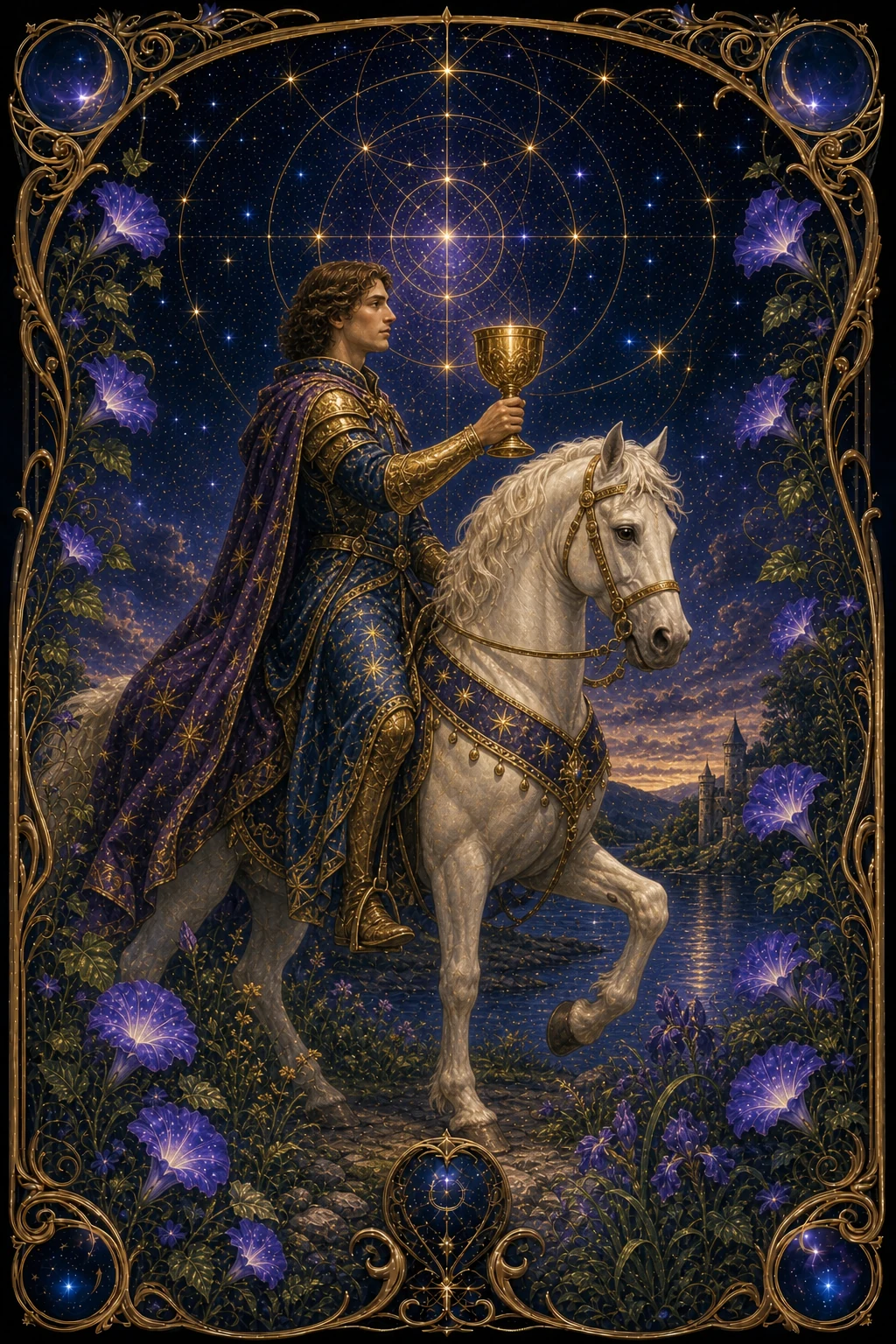 Knight of Cupsromance · charm · imagination
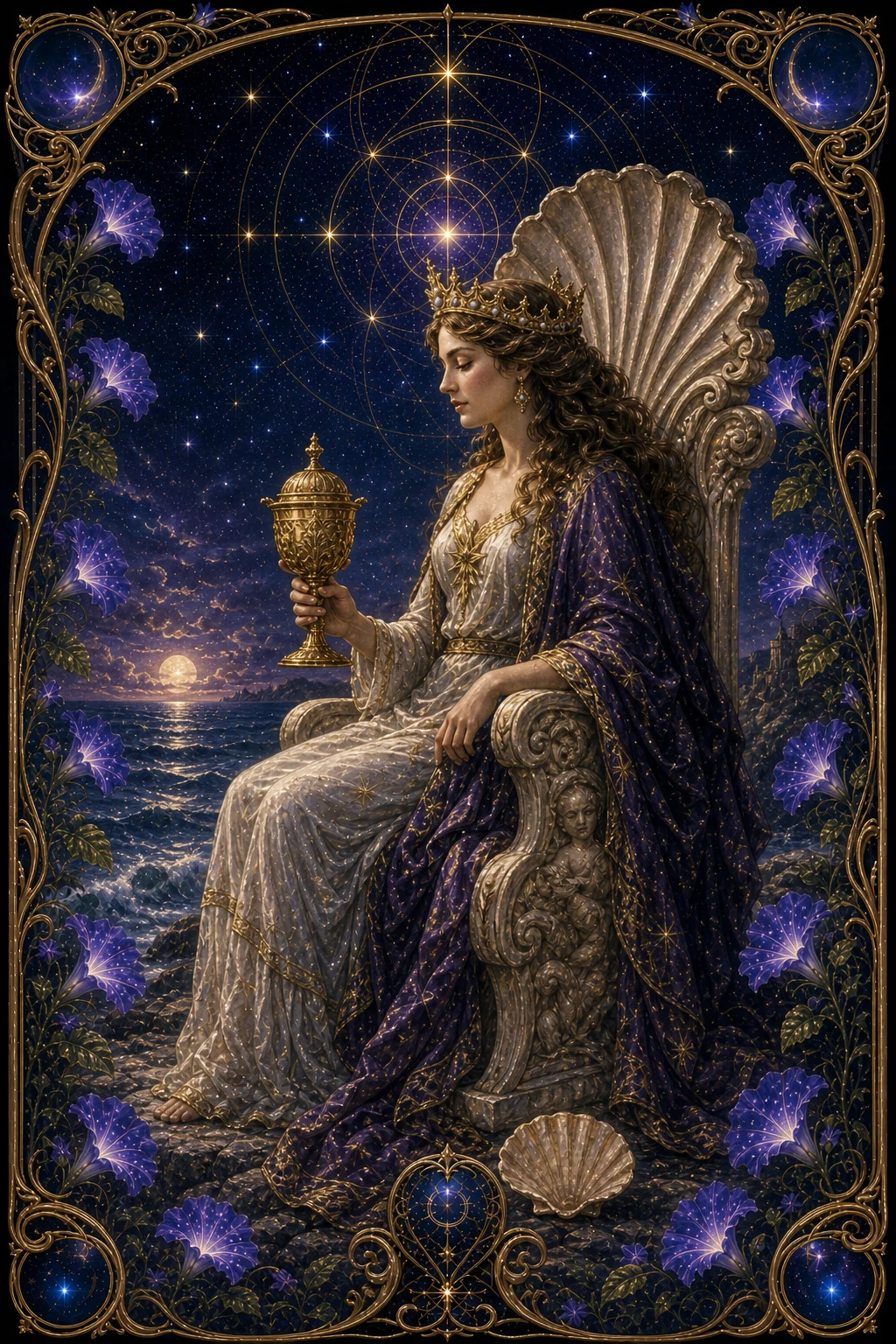 Queen of Cupscompassion · security · intuition
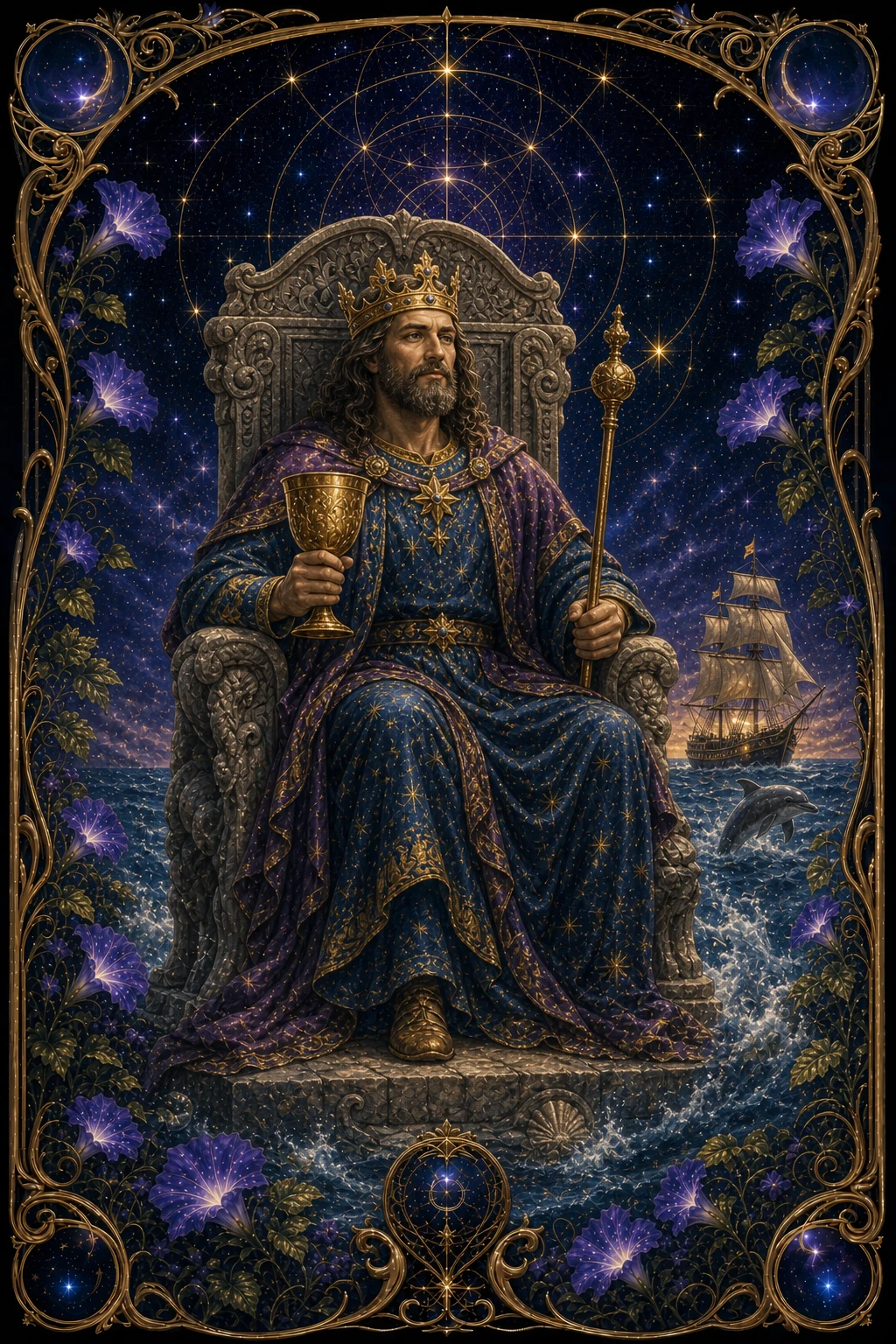 King of Cupsbalance · diplomacy · wisdom
Swords
Swords are the suit of air — thought, truth, and conflict. They govern the mind's weather: clarity and anxiety, honesty and the stories told to avoid it.
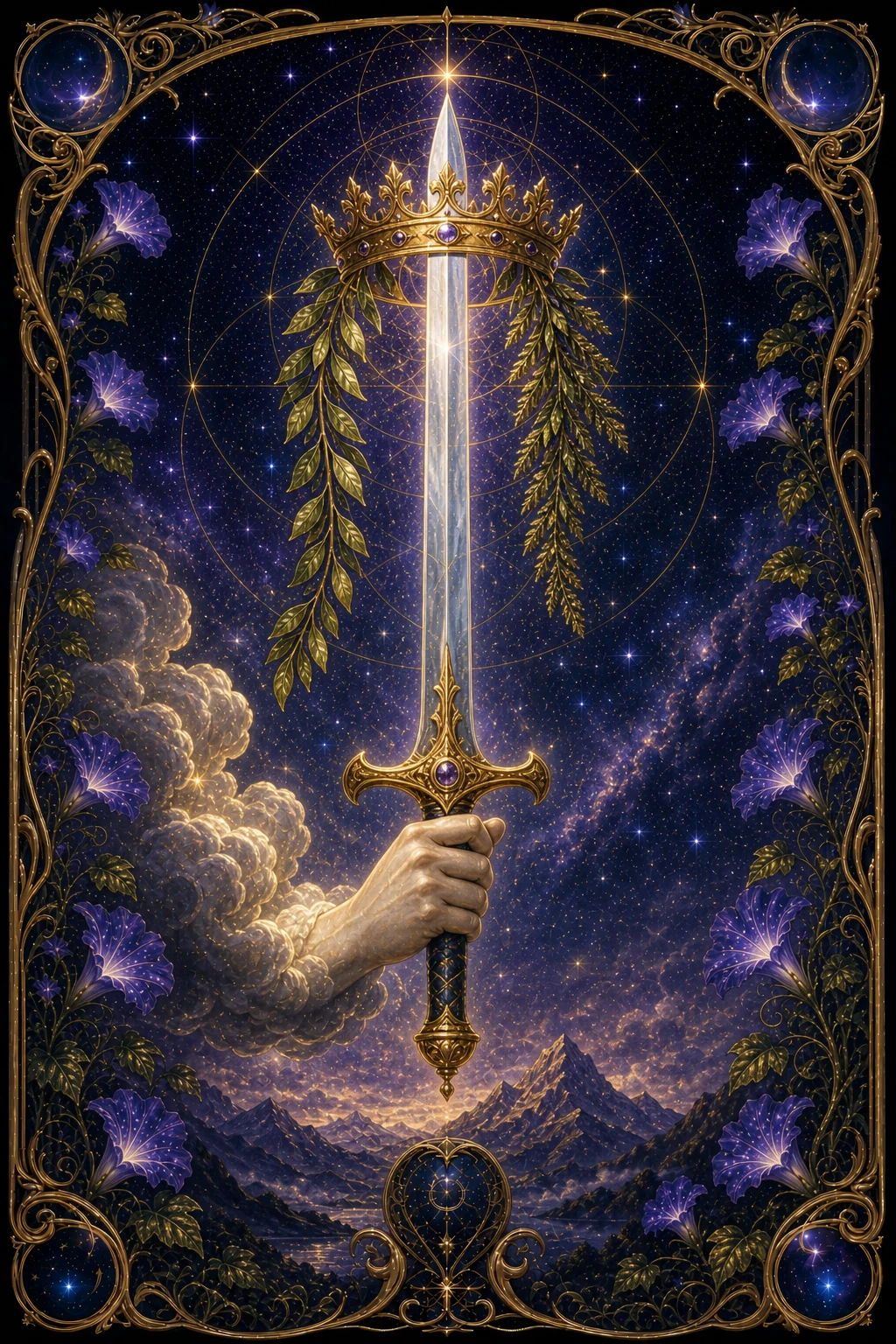 Ace of Swordsclarity · breakthrough · truth
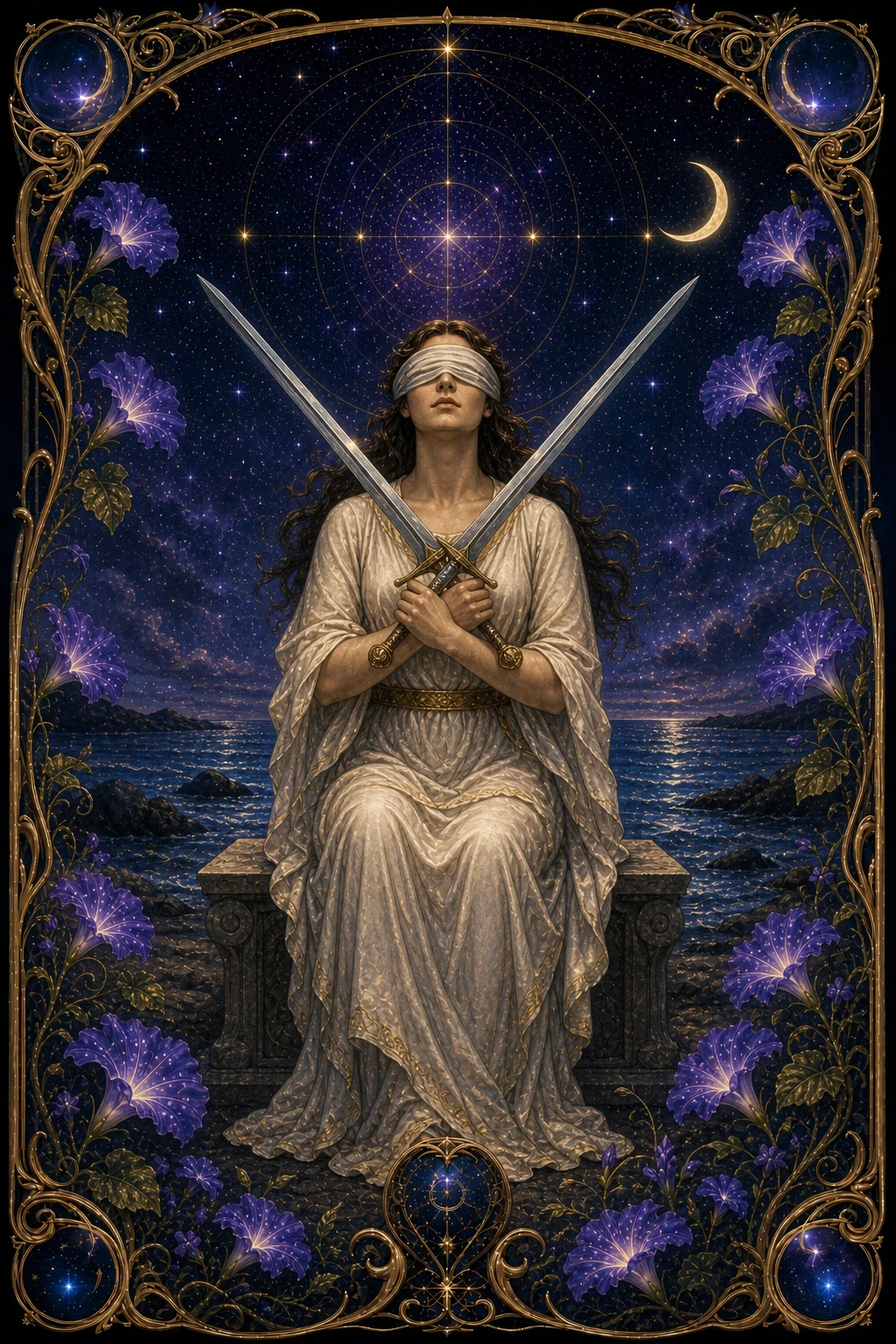 Two of Swordschoice · stalemate · avoidance
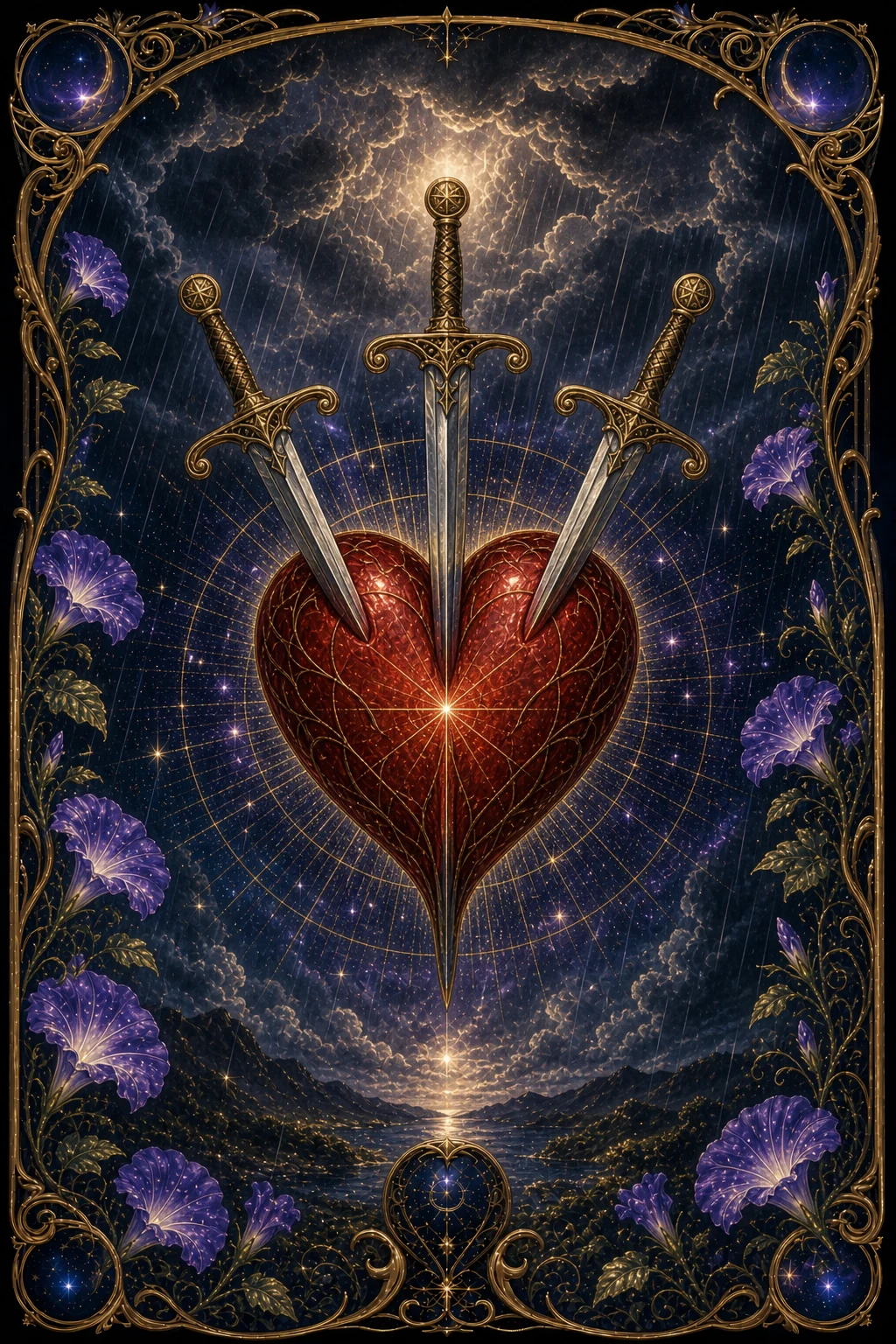 Three of Swordsheartbreak · sorrow · truth
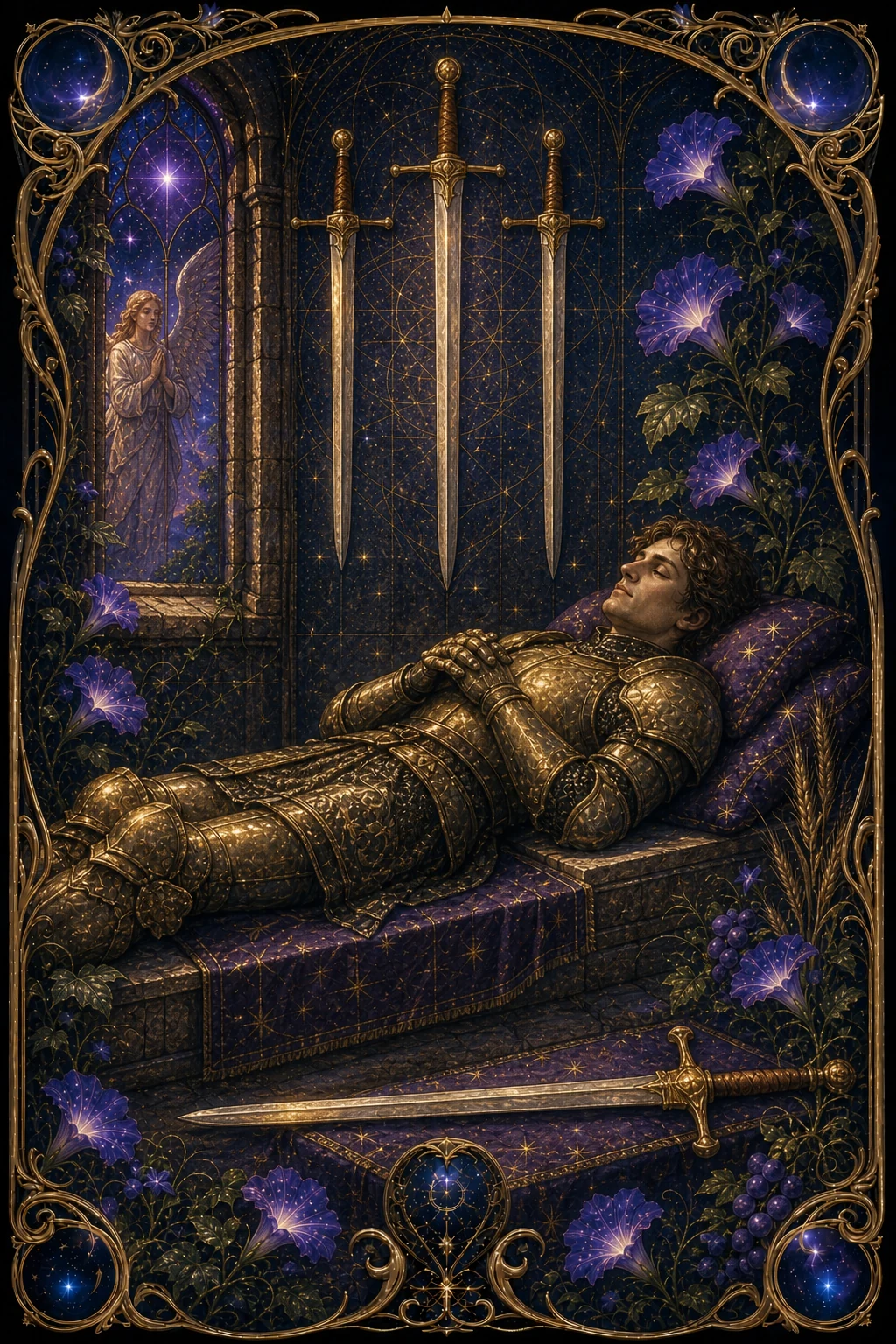 Four of Swordsrest · recovery · contemplation
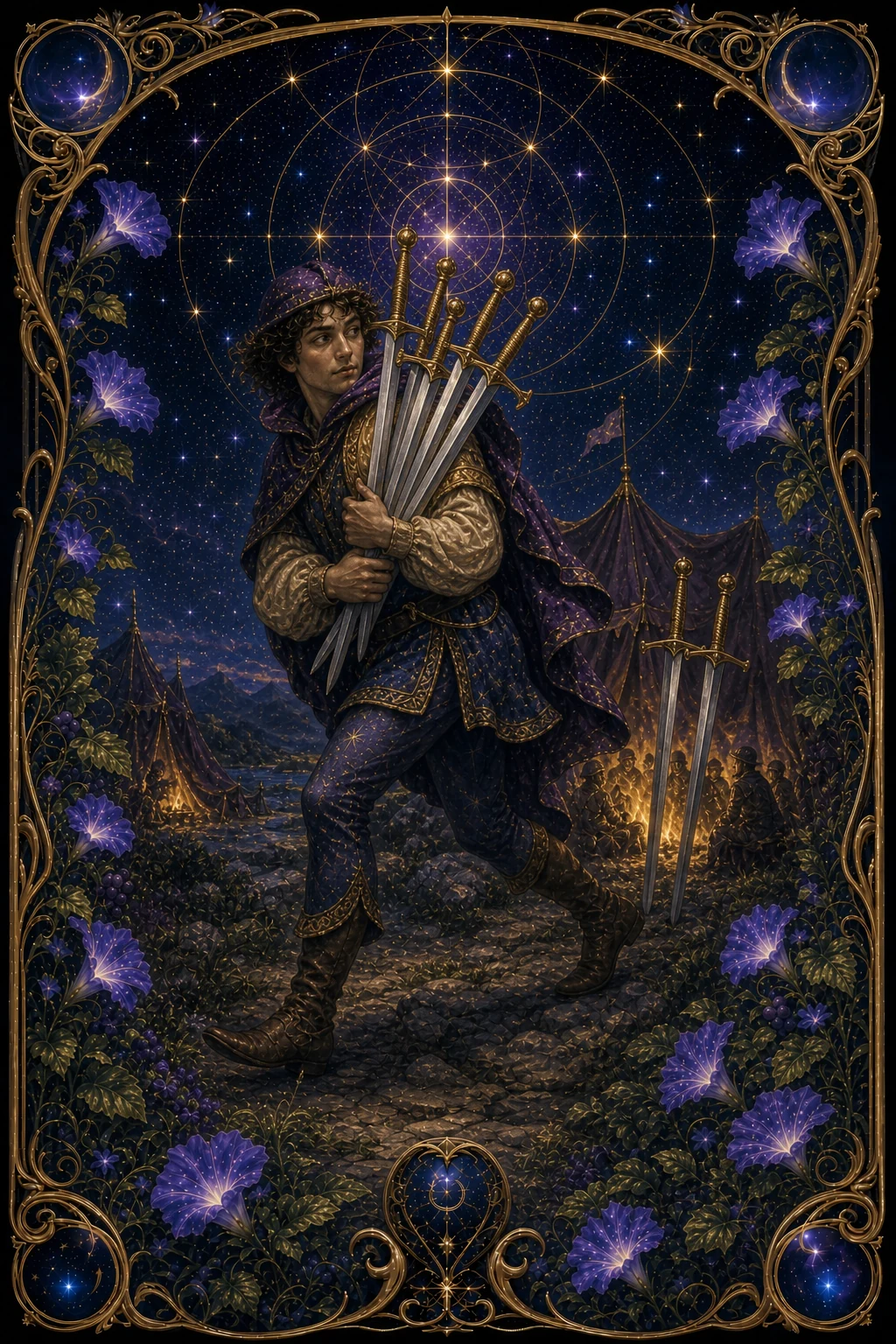 Five of Swordsconflict · victory · tension
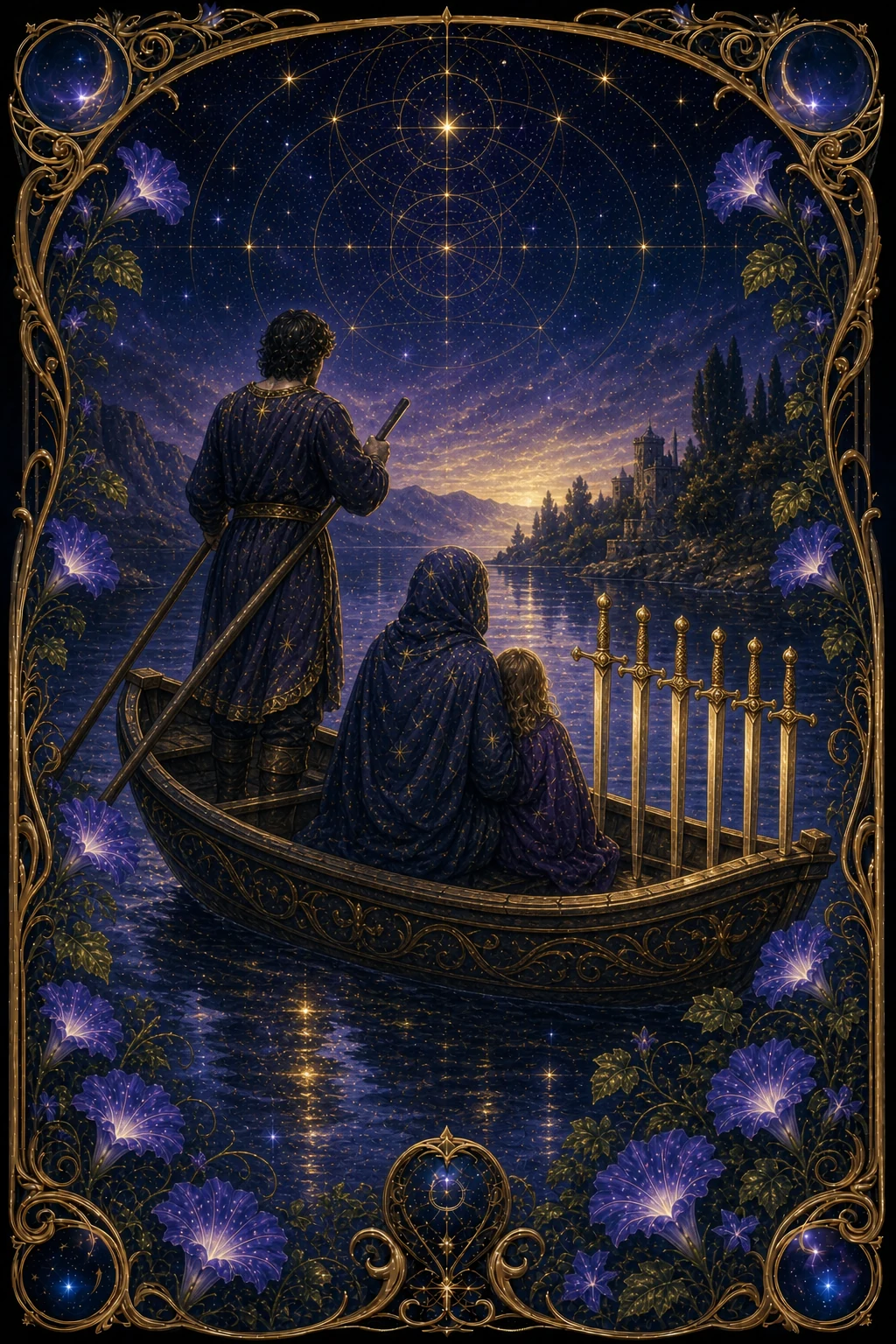 Six of Swordstransition · progress · release
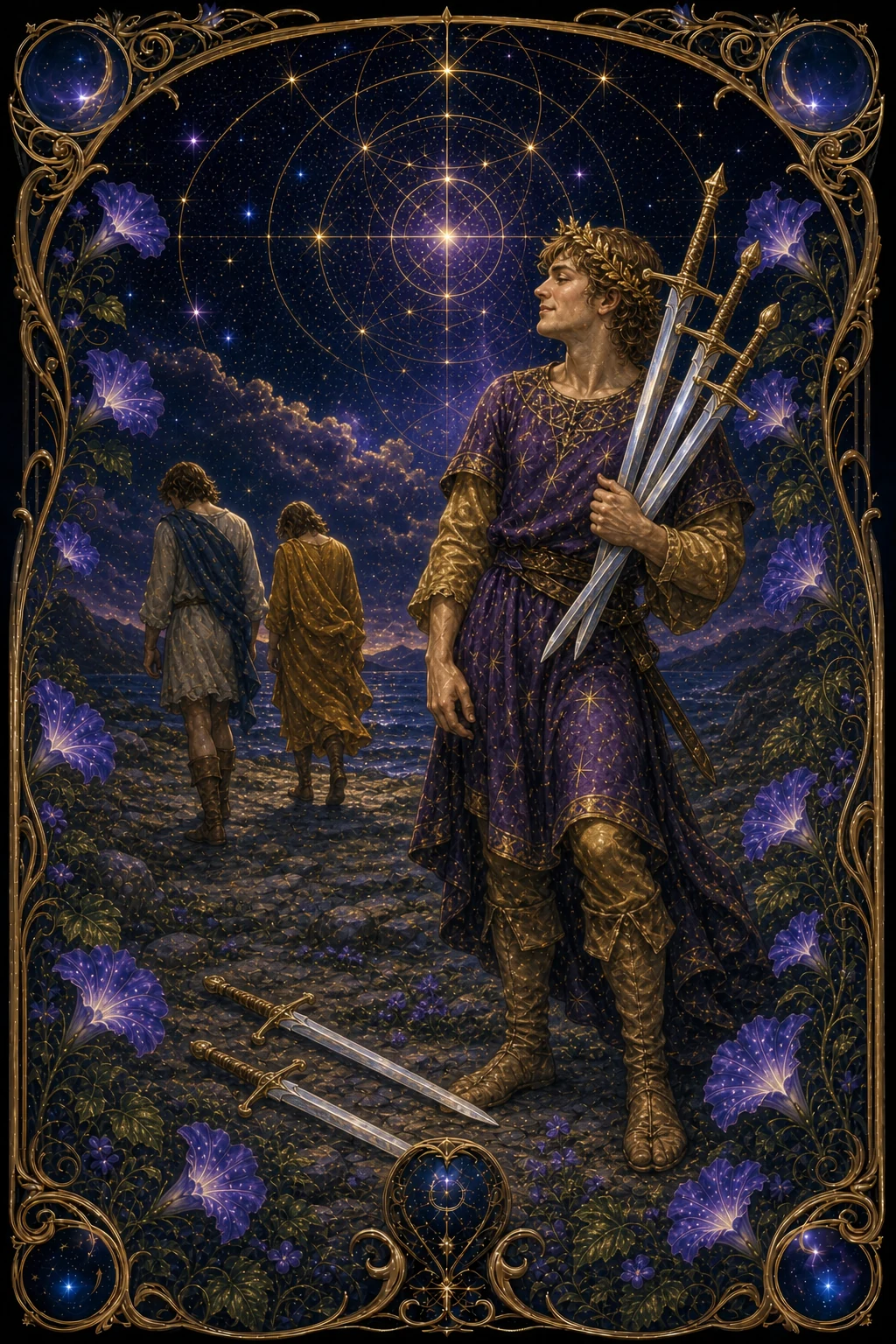 Seven of Swordsstrategy · secrecy · independence
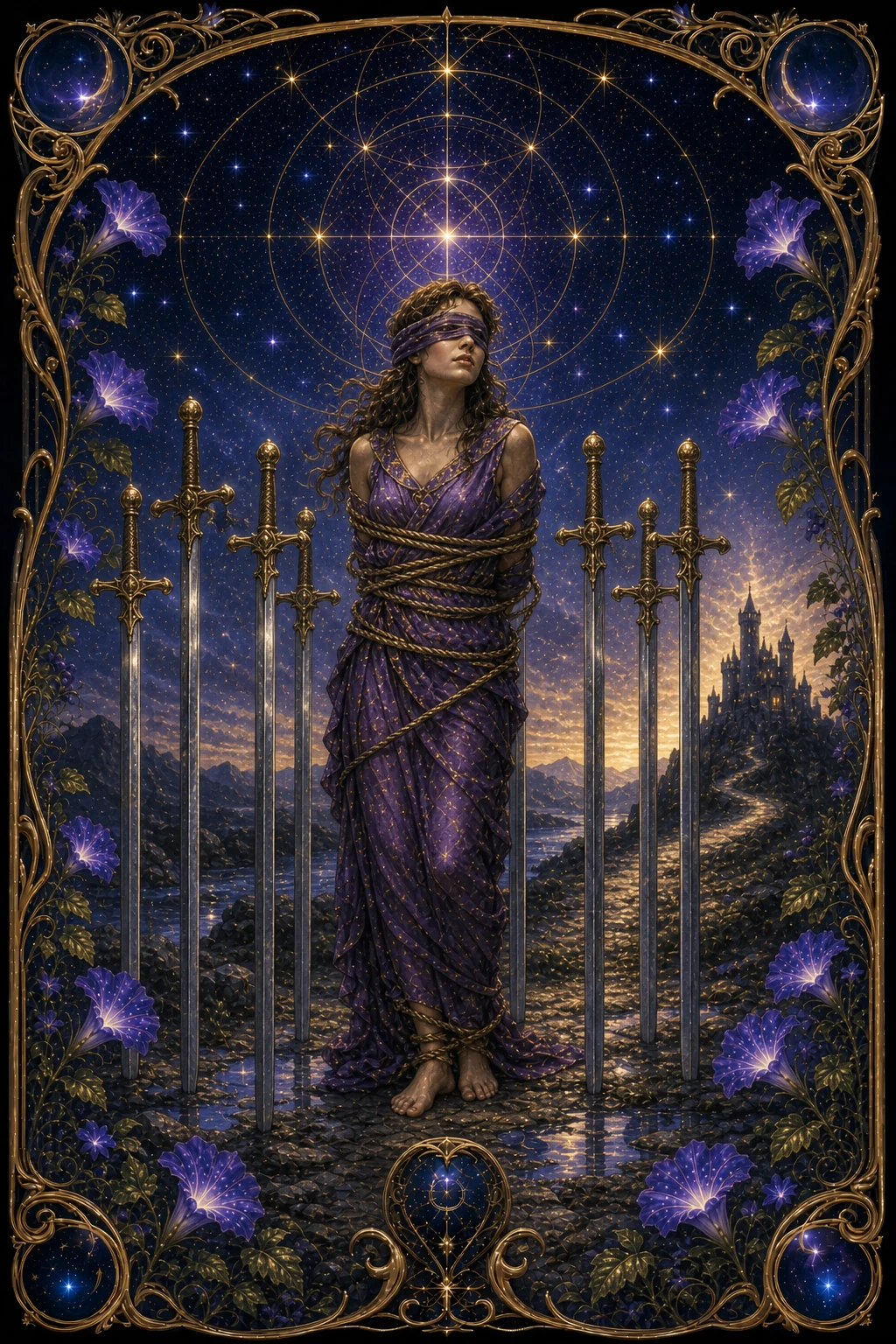 Eight of Swordsrestriction · doubt · perspective
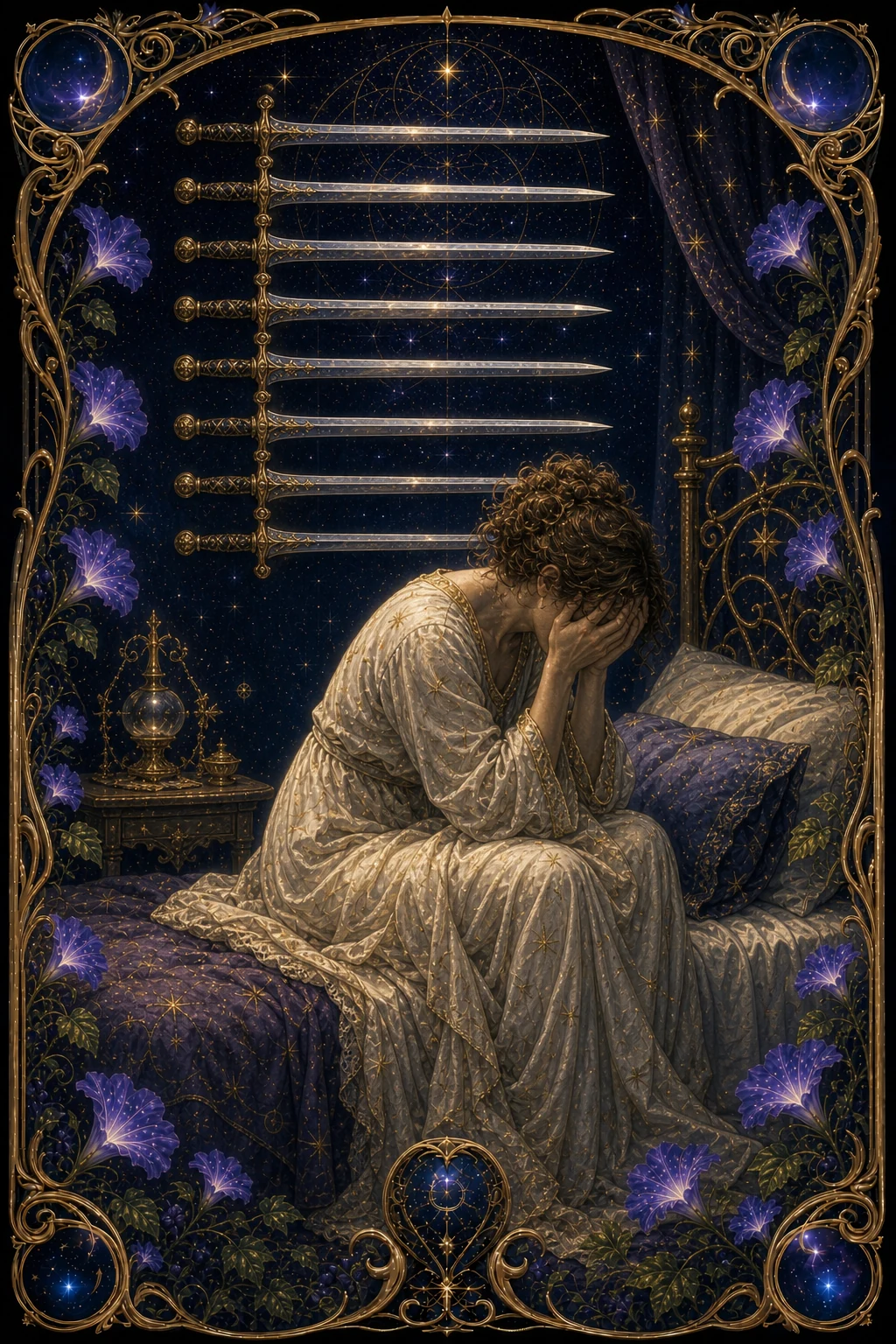 Nine of Swordsanxiety · worry · fear
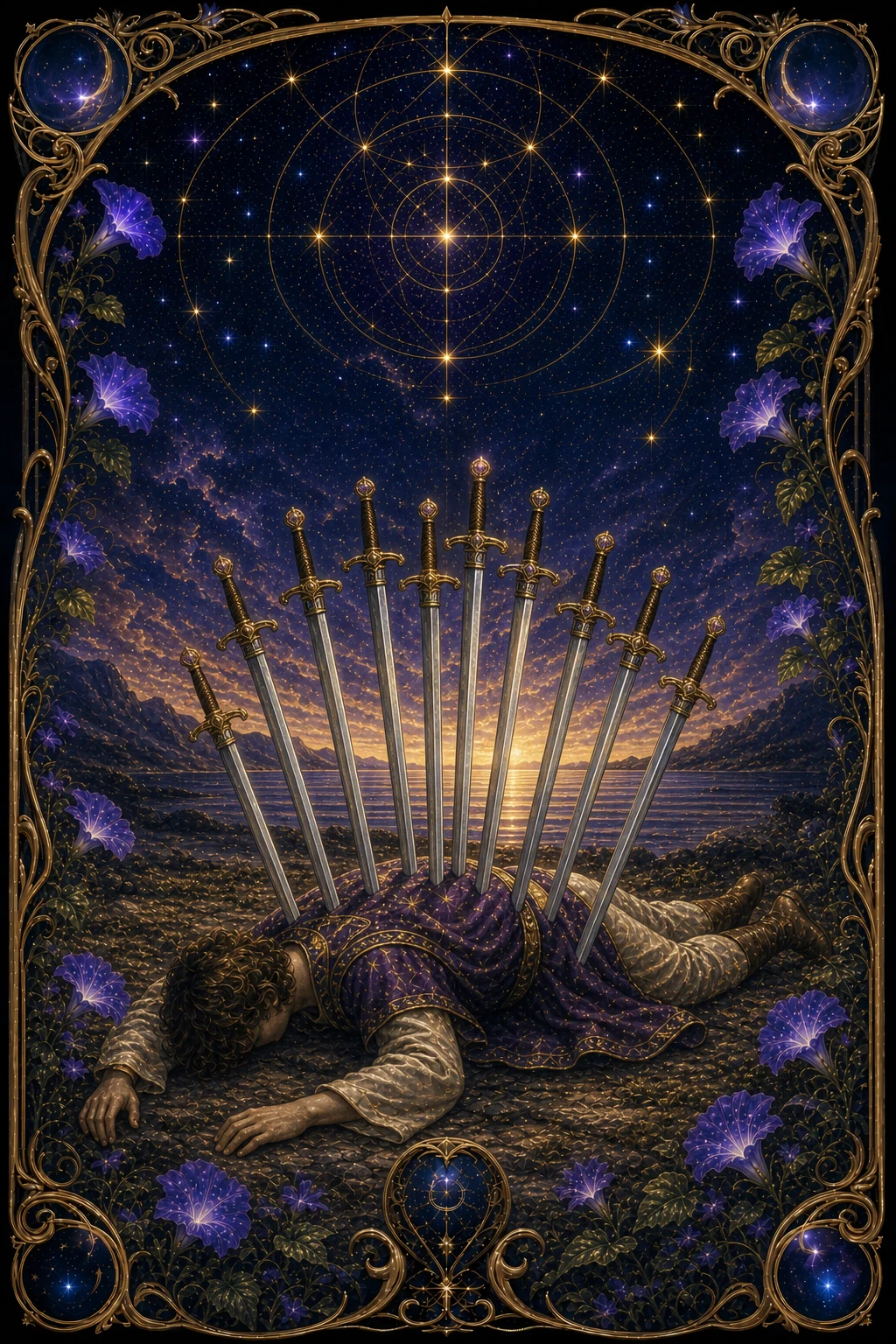 Ten of Swordsending · exhaustion · surrender
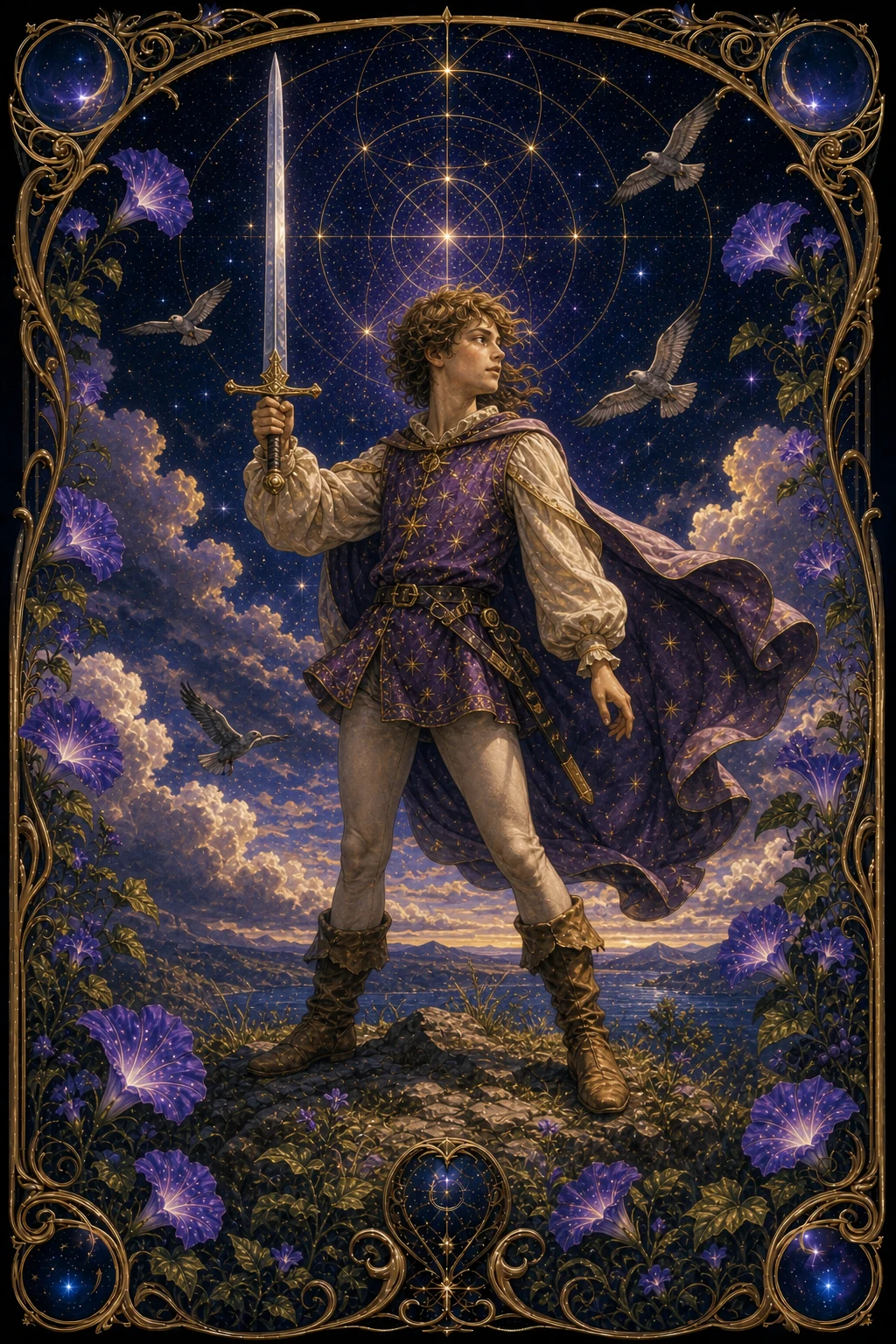 Page of Swordscuriosity · vigilance · ideas
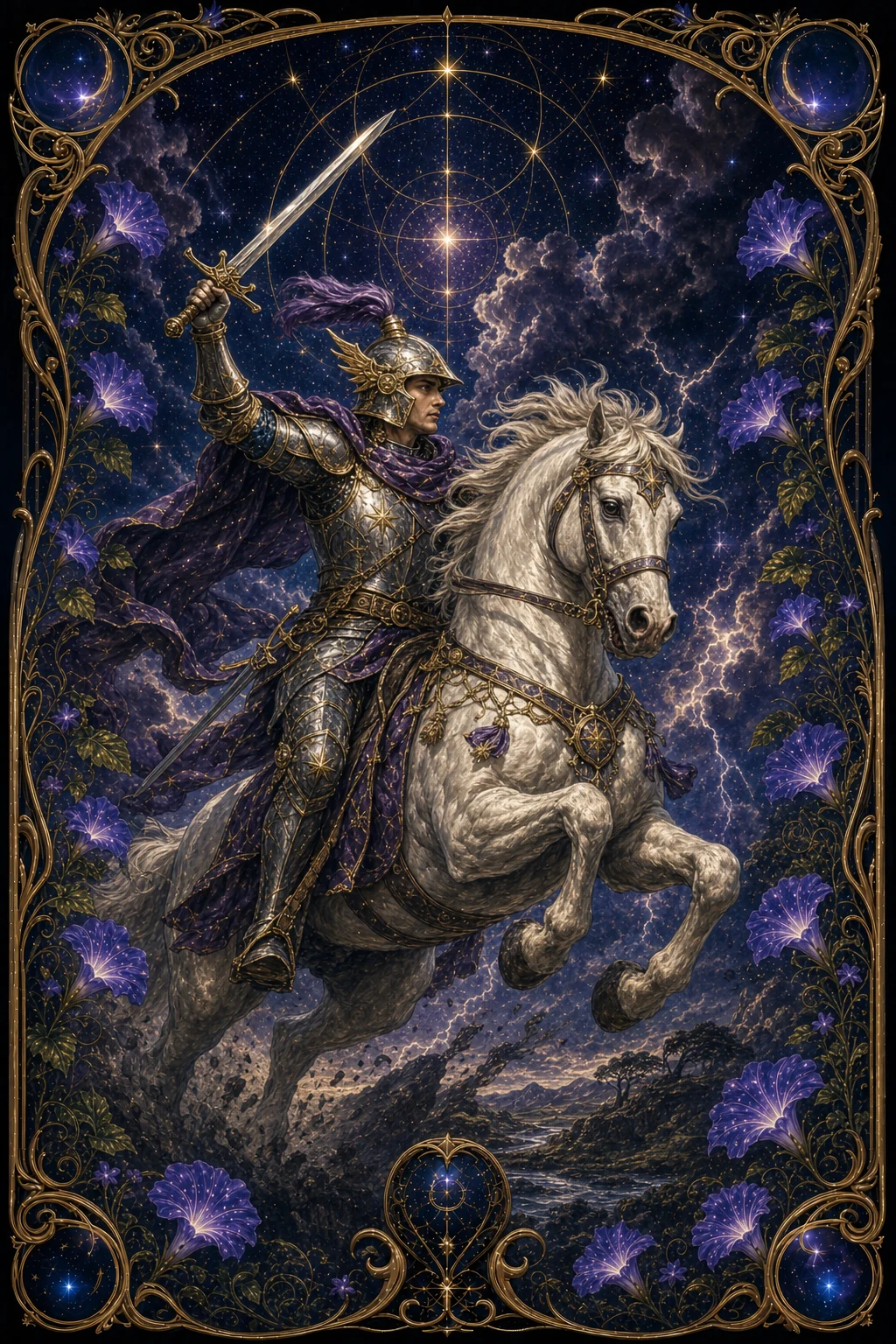 Knight of Swordsambition · action · intensity
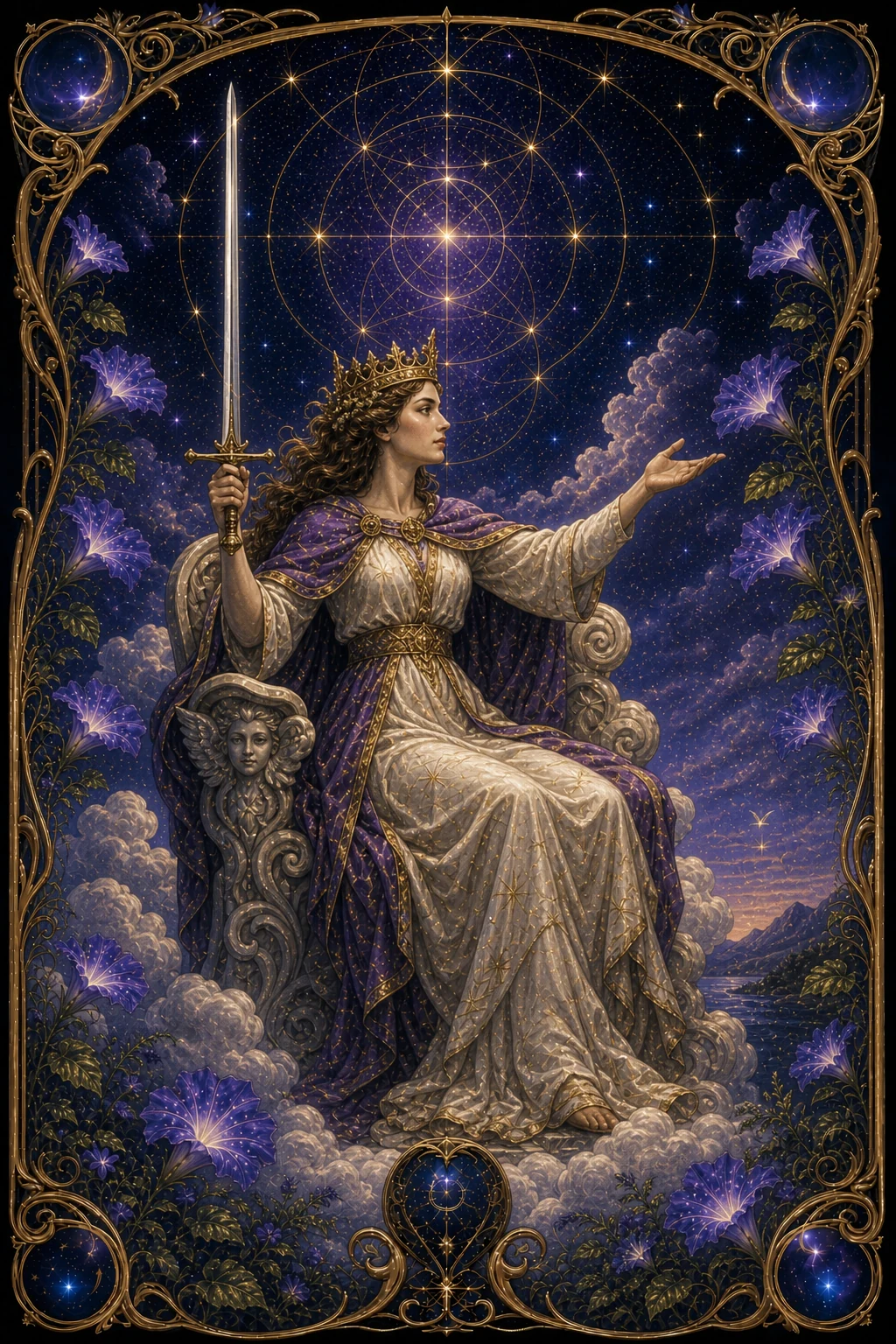 Queen of Swordsindependence · boundaries · honesty
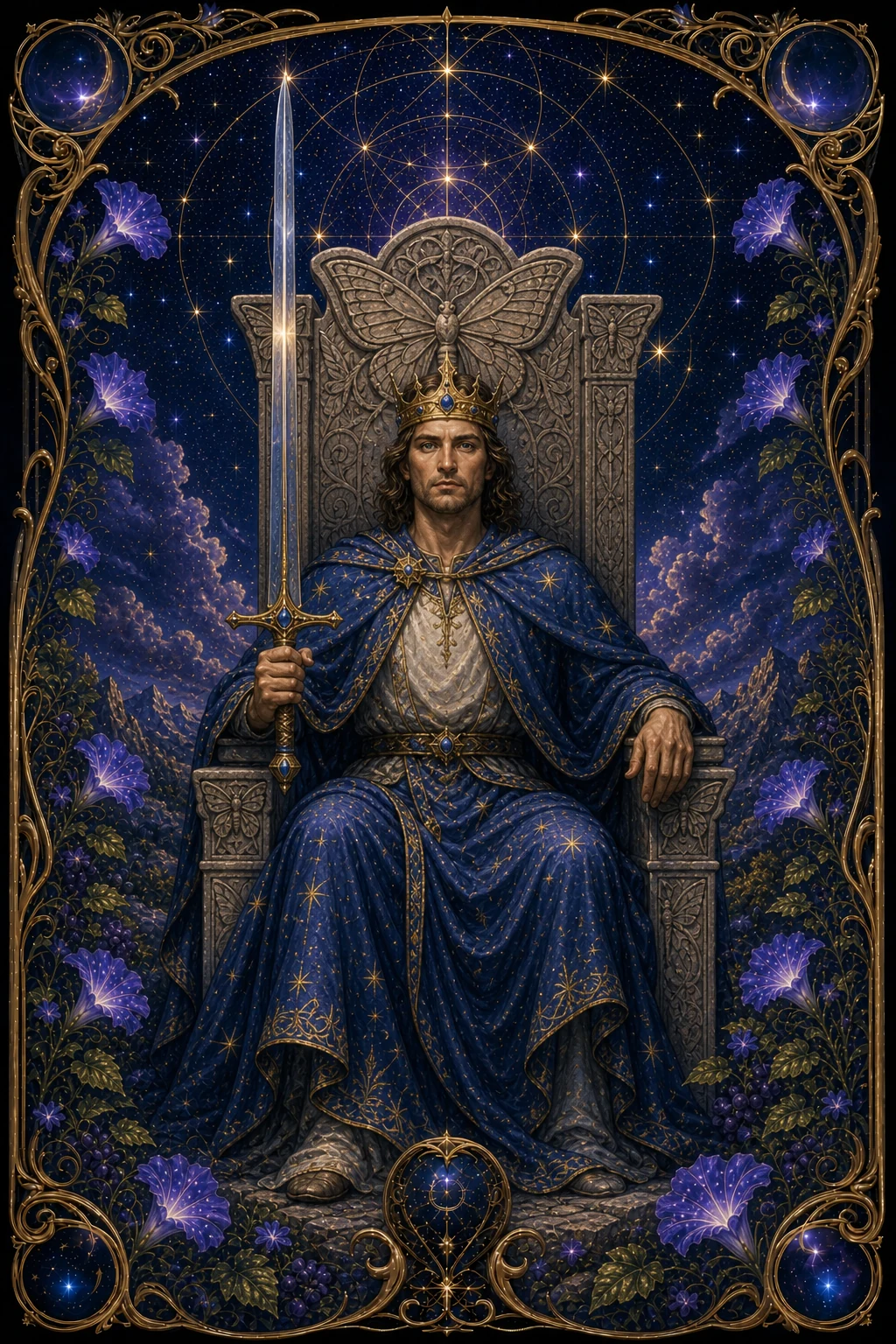 King of Swordsintellect · authority · truth
Pentacles
Pentacles are the suit of earth — work, money, the body, and craft. They govern what is built slowly: skill, security, and the material conditions of a good life.
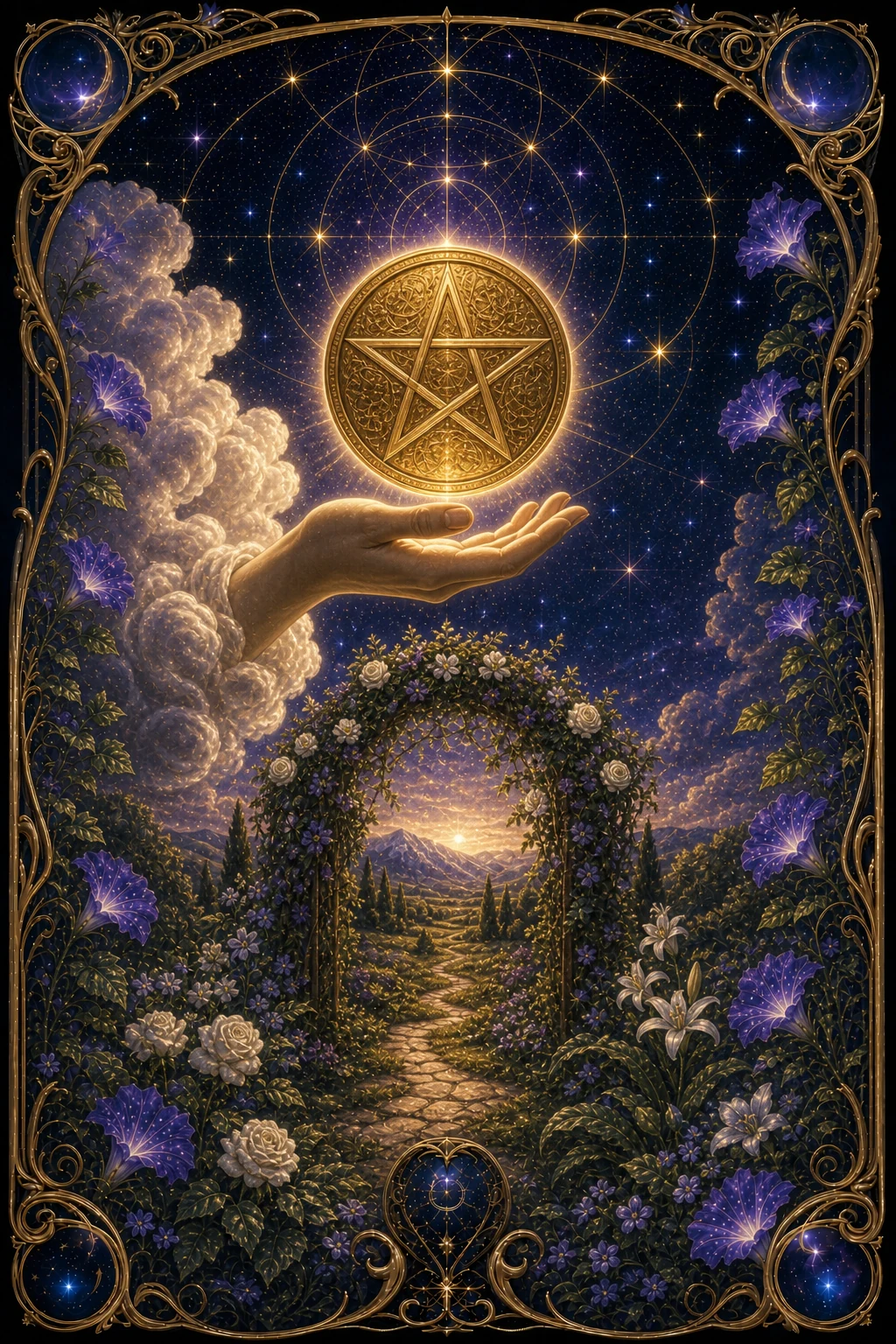 Ace of Pentaclesopportunity · prosperity · grounding
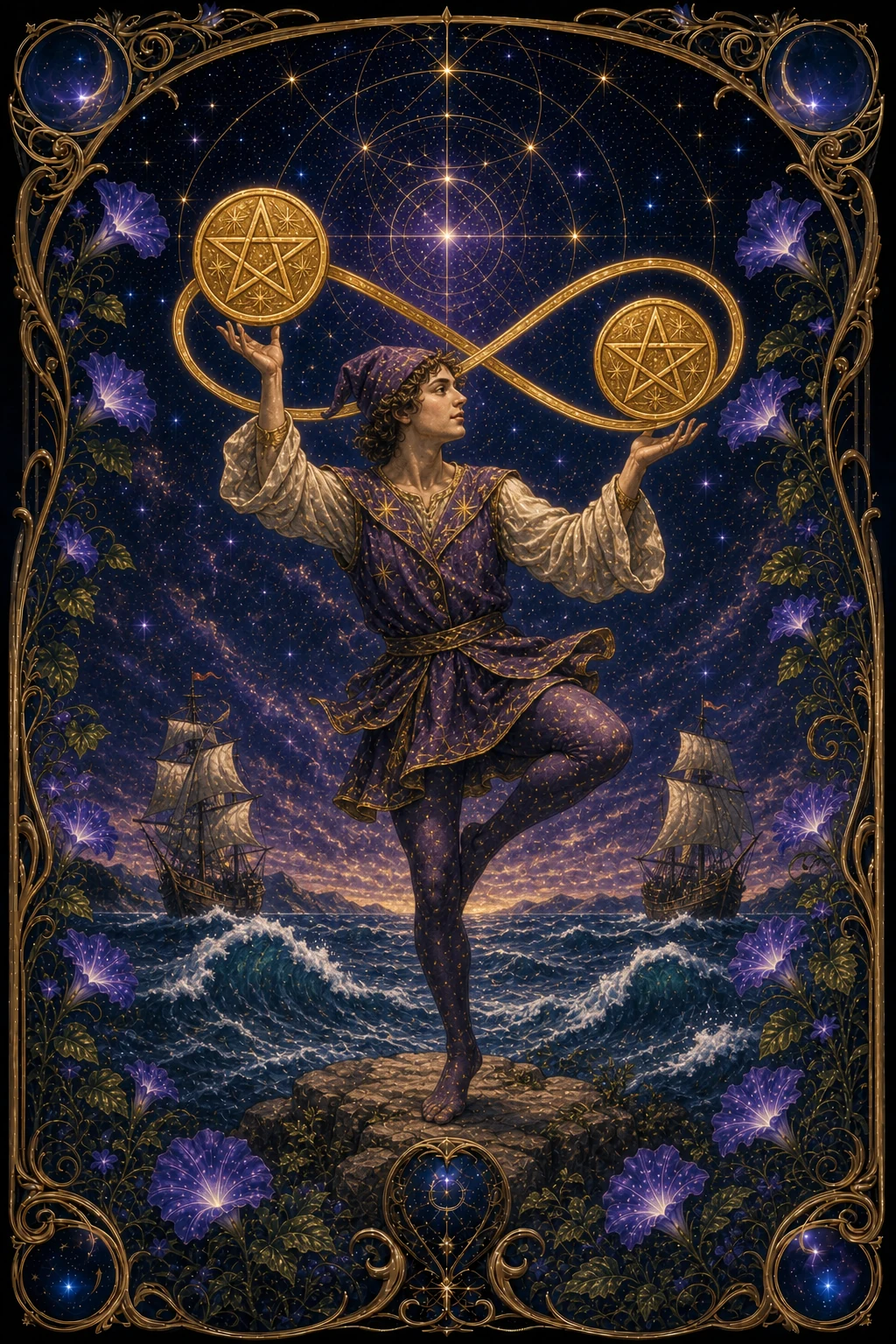 Two of Pentaclesbalance · adaptability · priorities
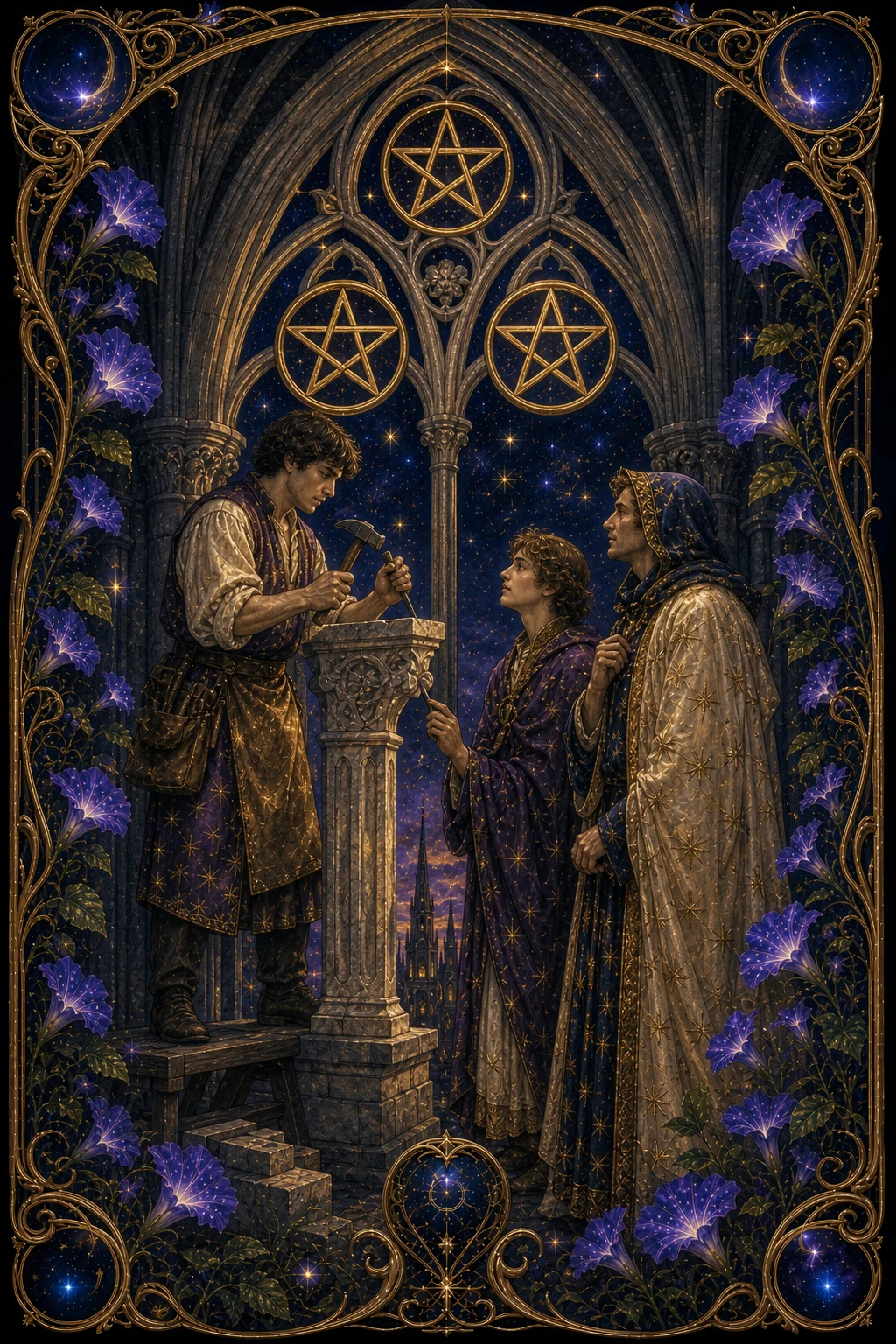 Three of Pentaclesteamwork · skill · collaboration
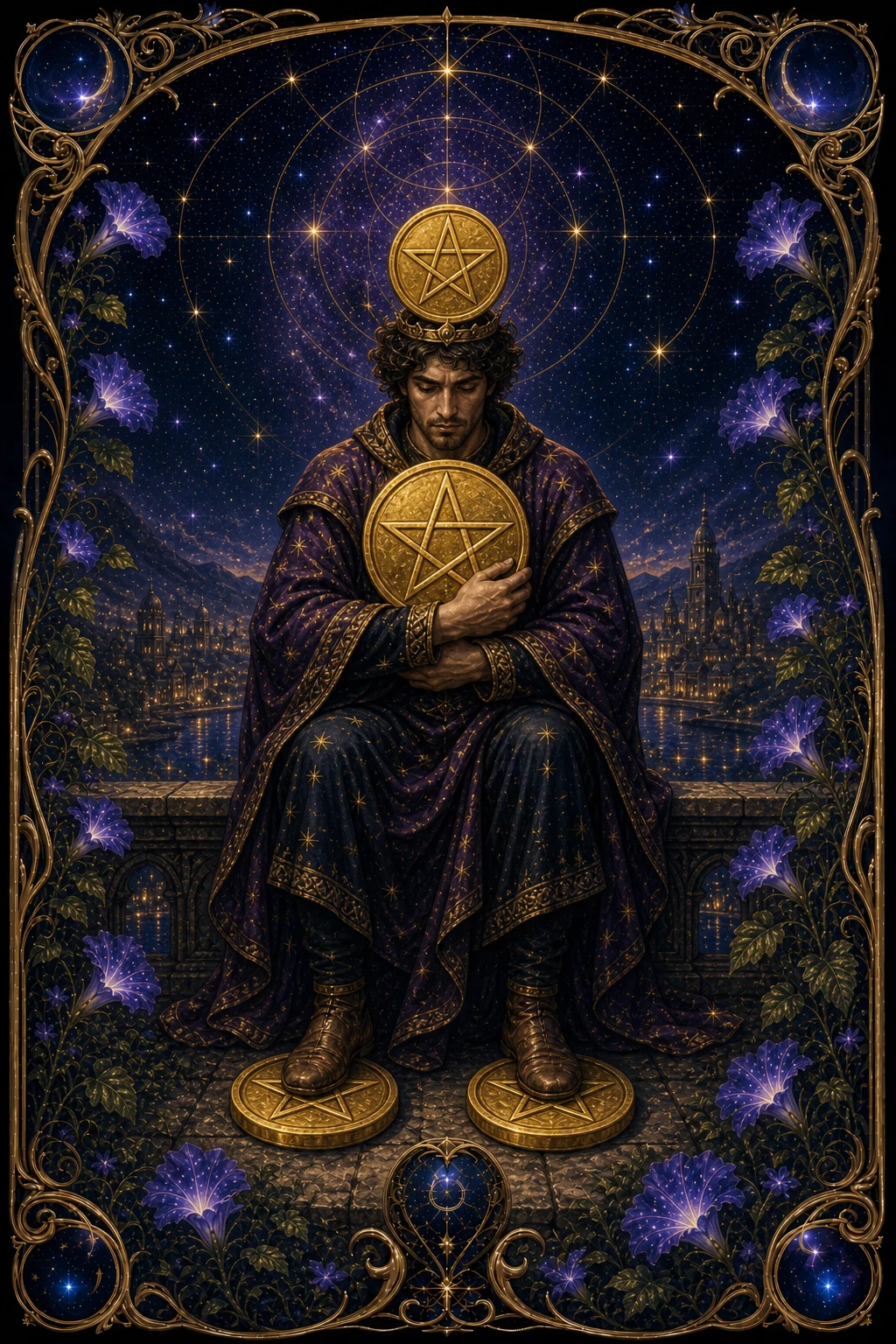 Four of Pentaclessecurity · control · conservation
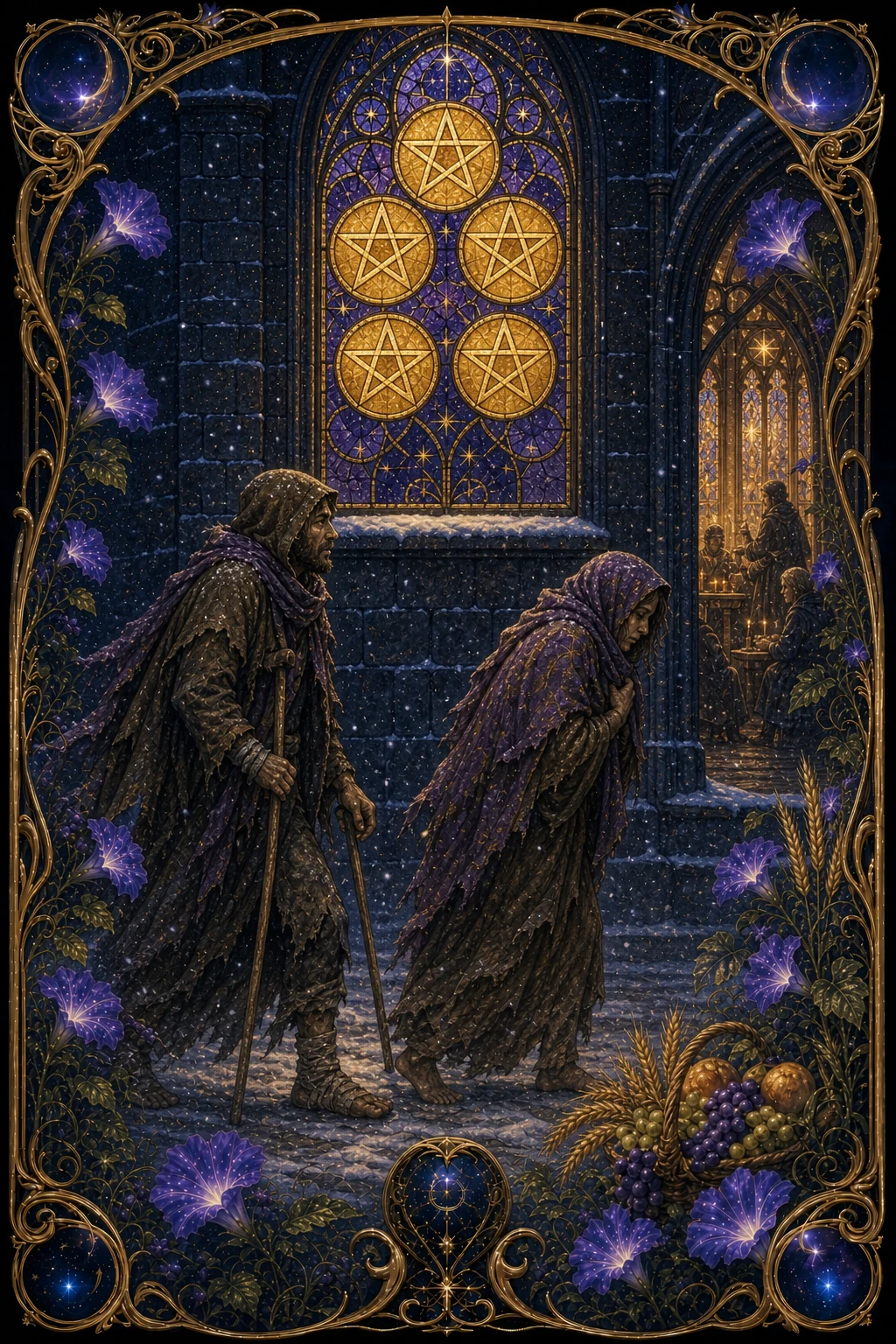 Five of Pentacleshardship · isolation · worry
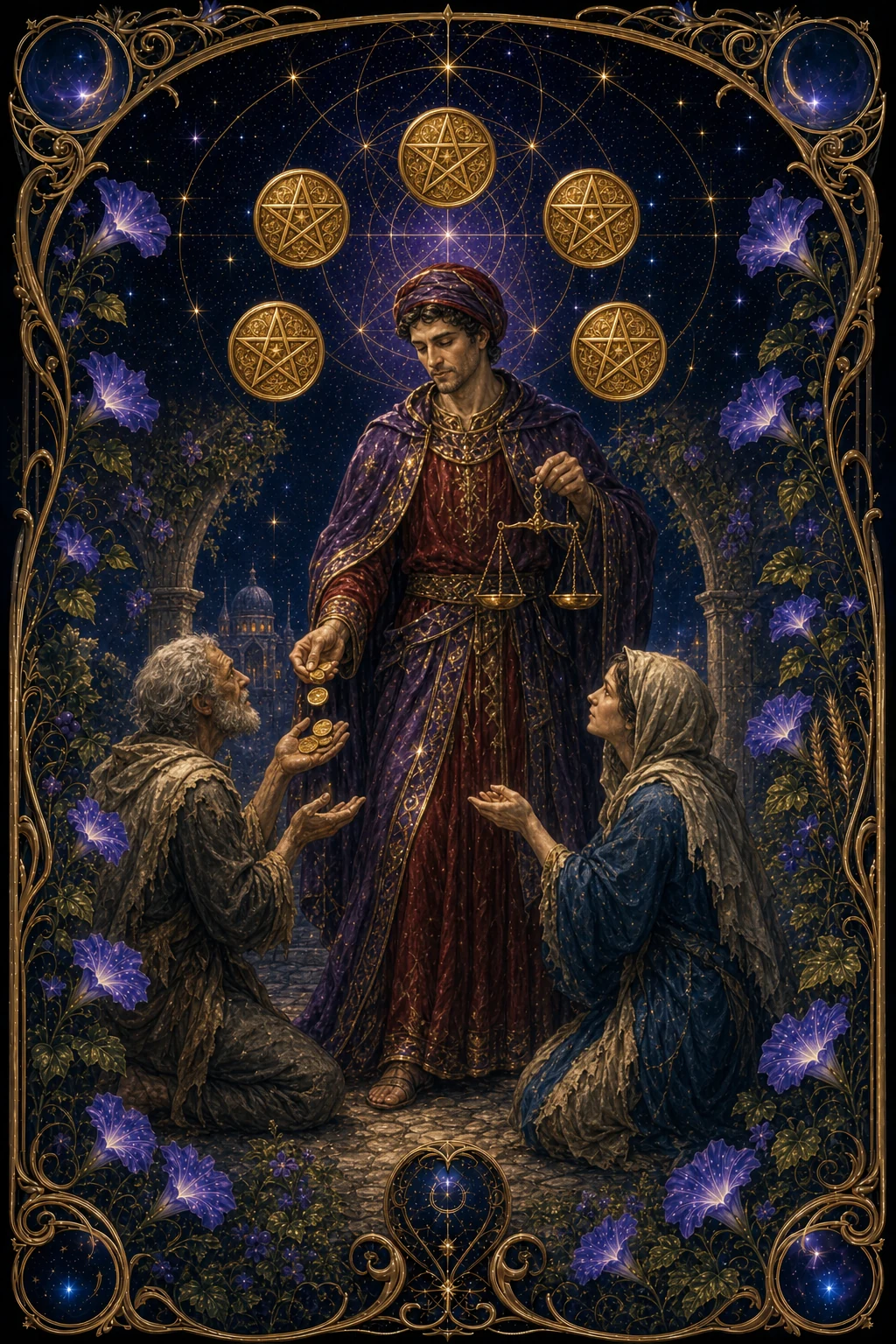 Six of Pentaclesgenerosity · charity · sharing
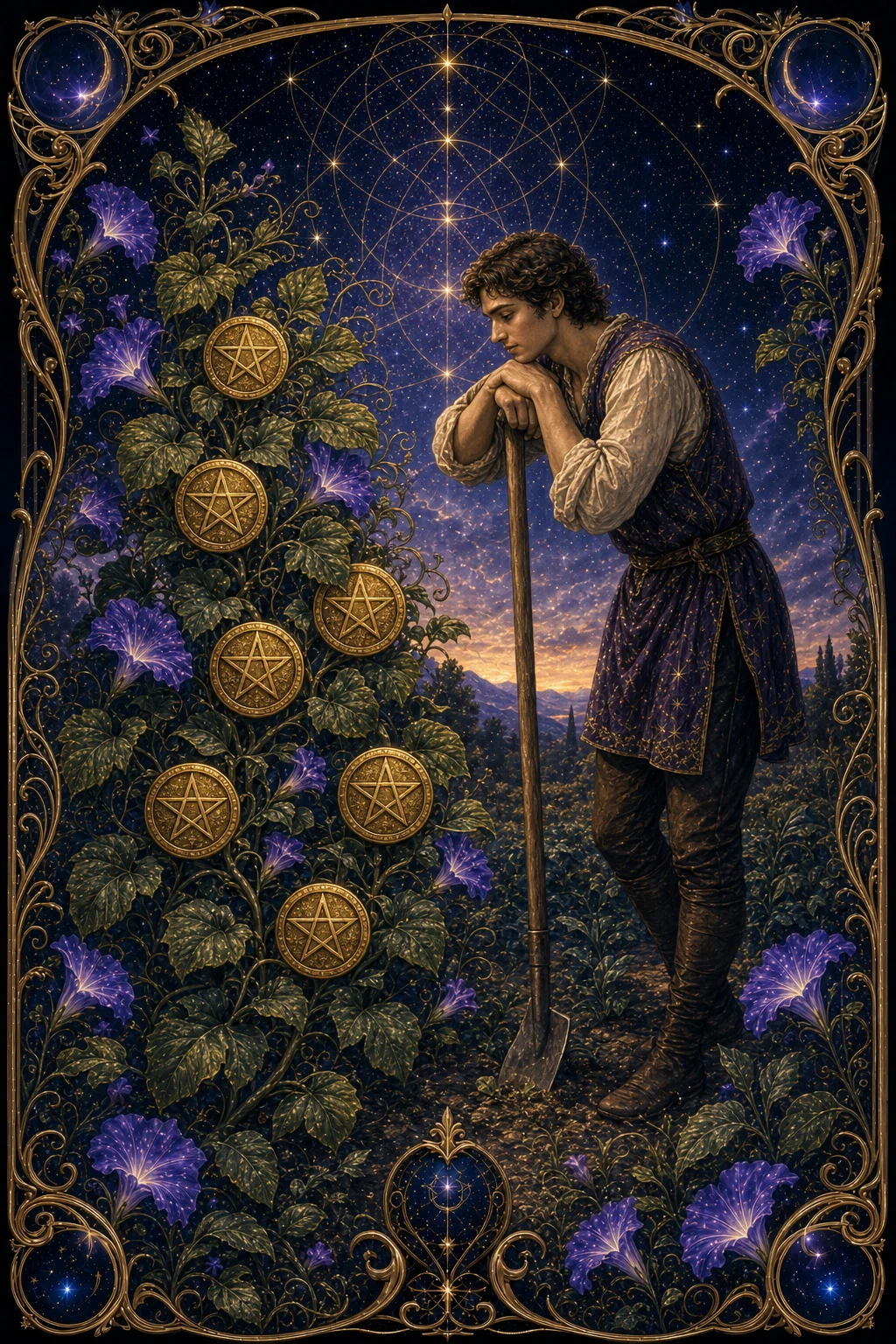 Seven of Pentaclespatience · investment · assessment
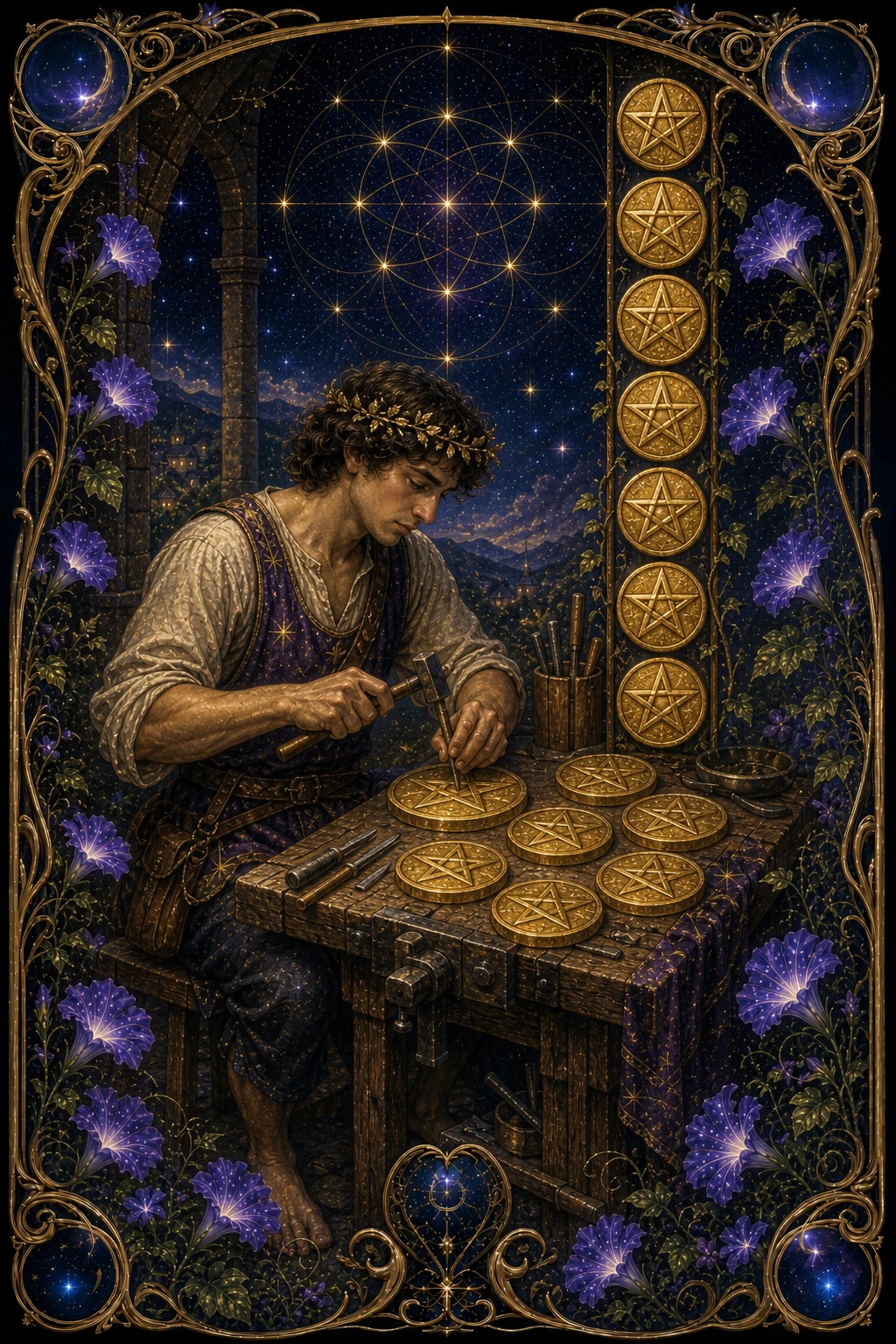 Eight of Pentaclesdiligence · mastery · practice
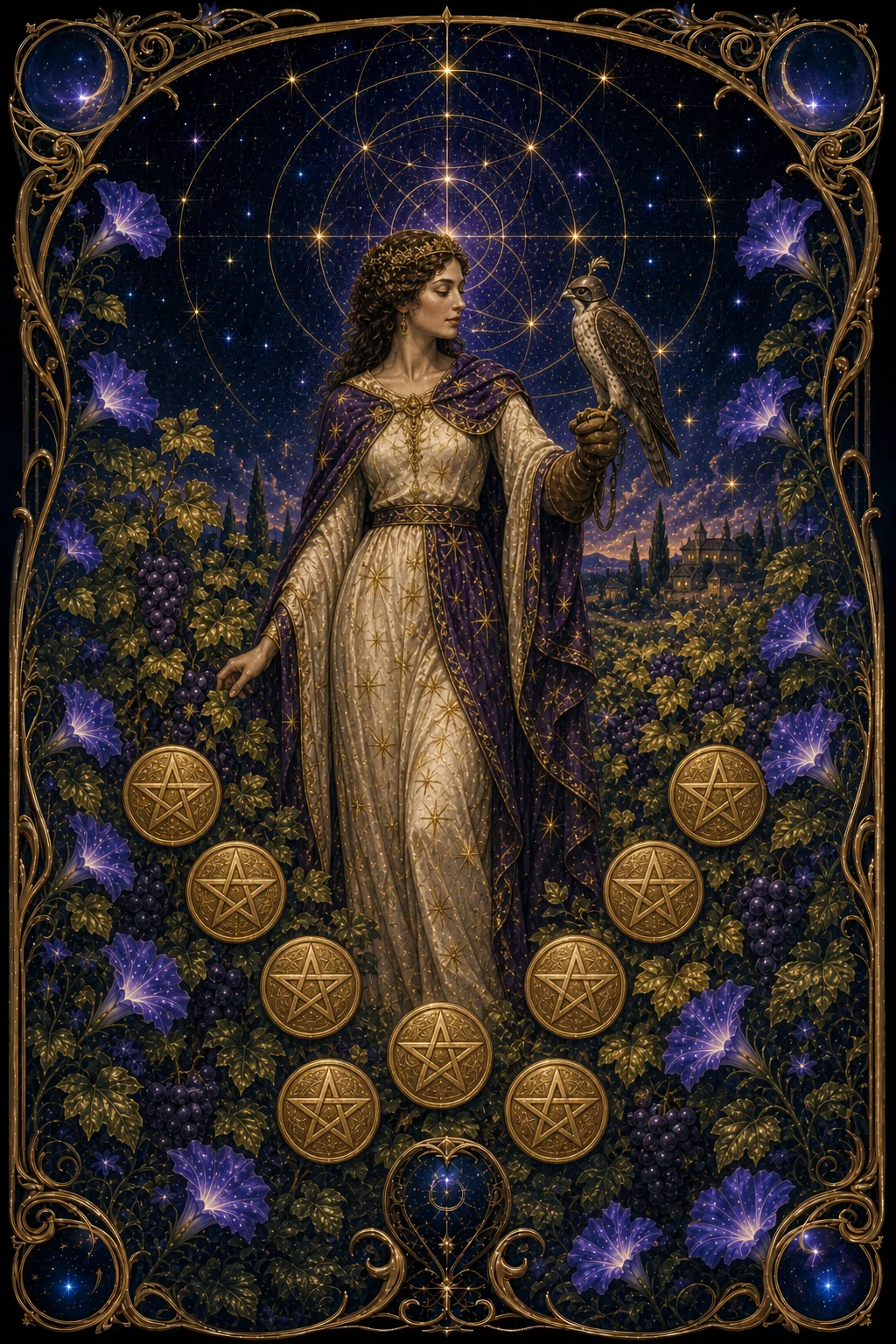 Nine of Pentaclesabundance · independence · refinement
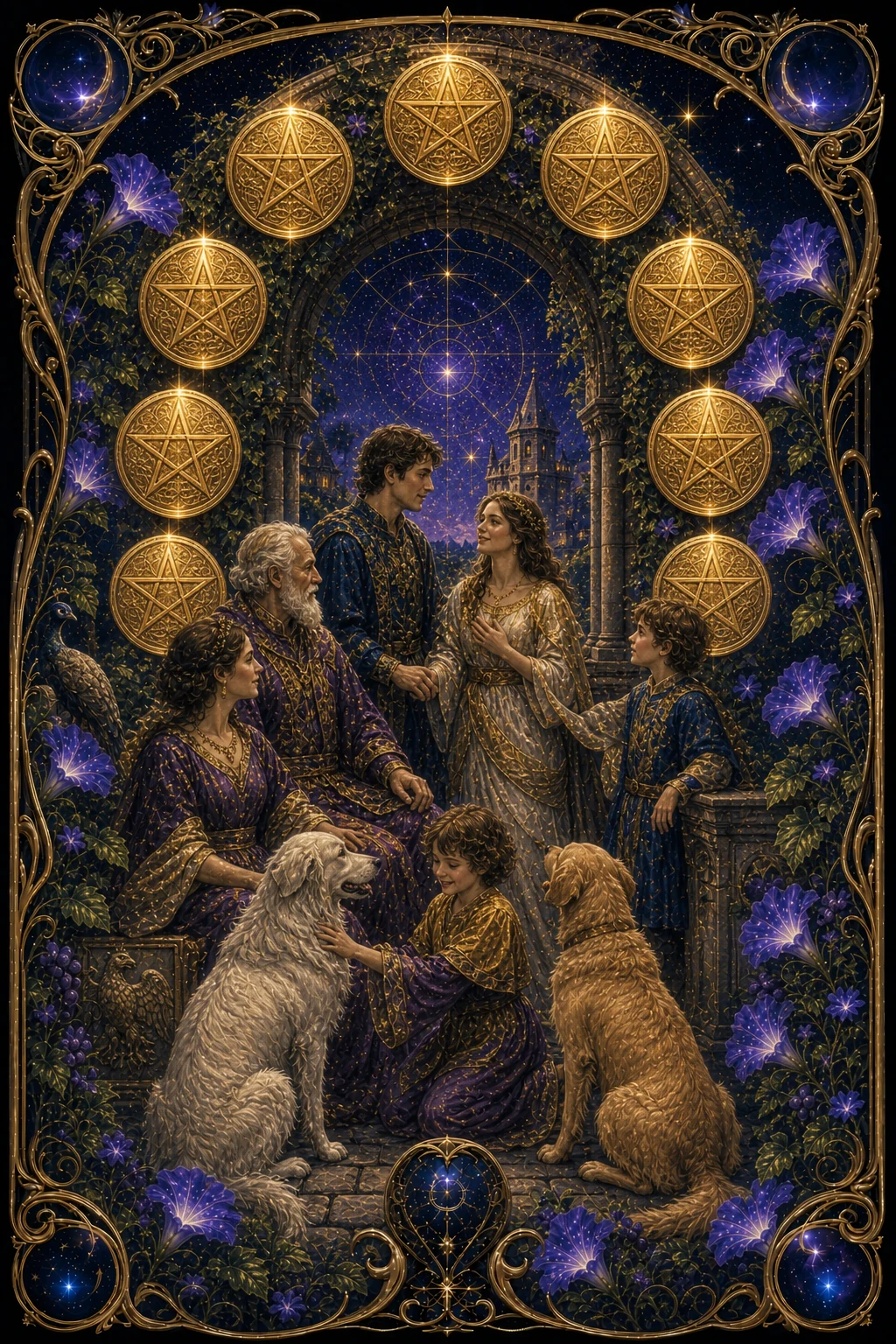 Ten of Pentacleslegacy · family · stability
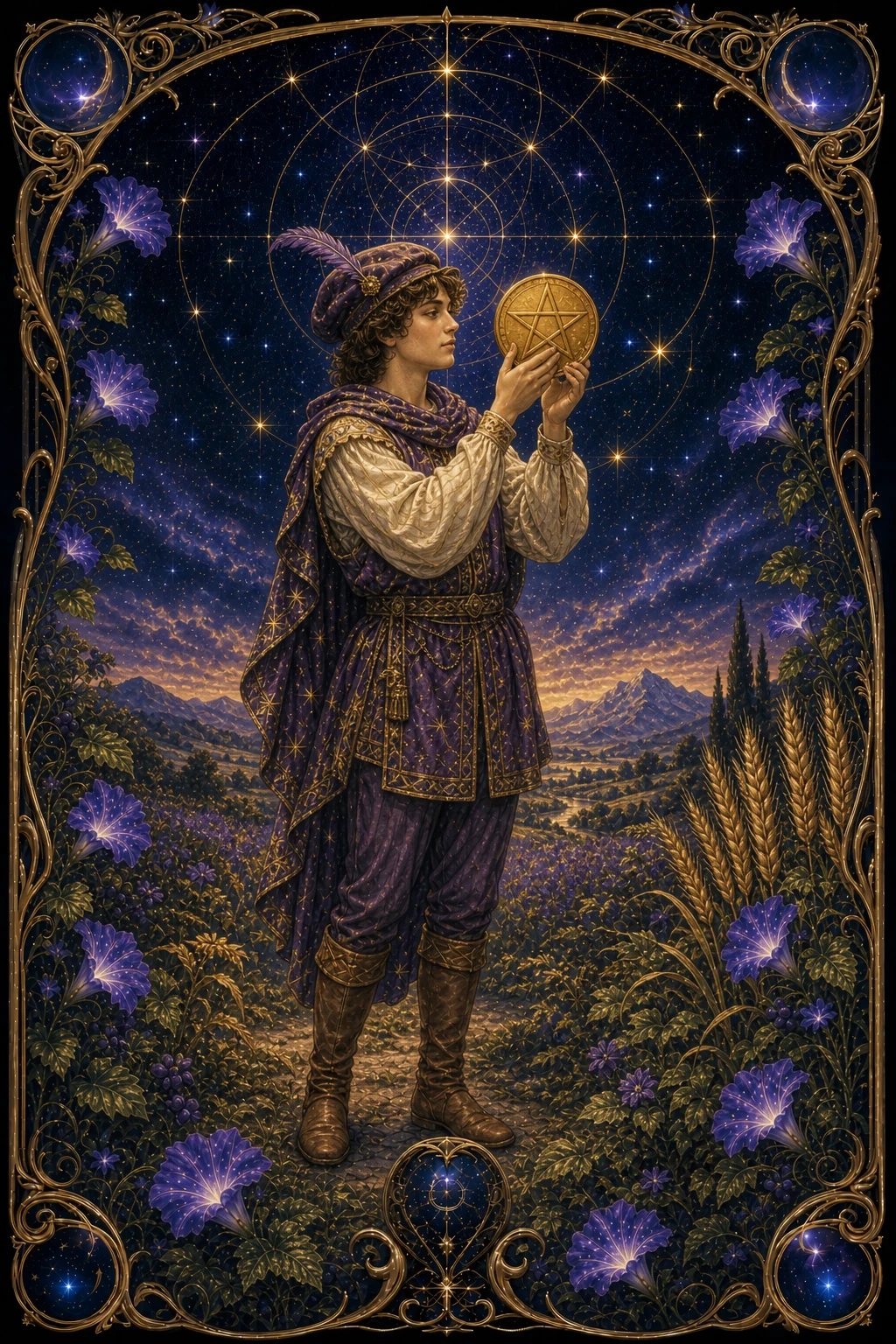 Page of Pentaclesstudy · manifestation · opportunity
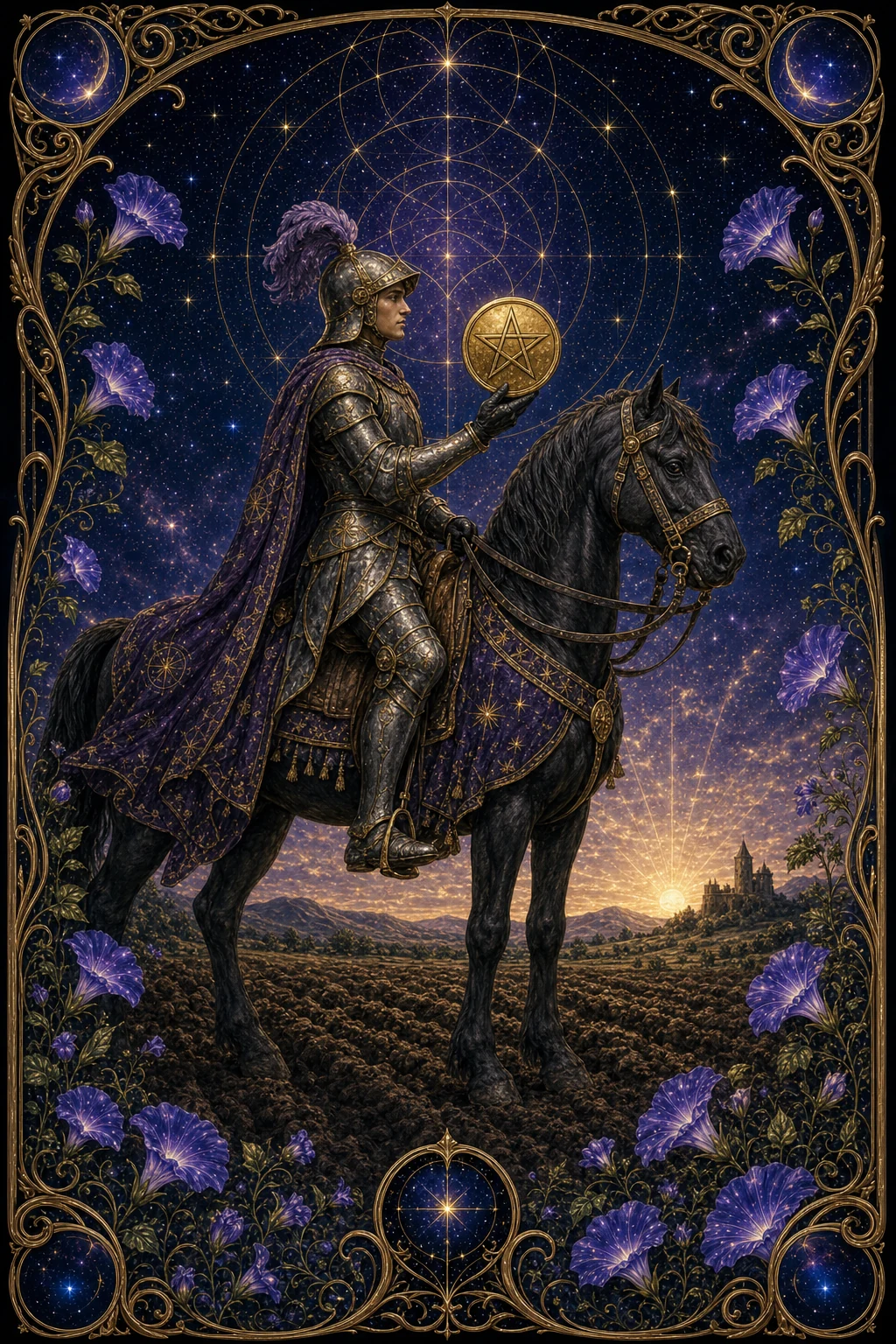 Knight of Pentaclesreliability · patience · routine
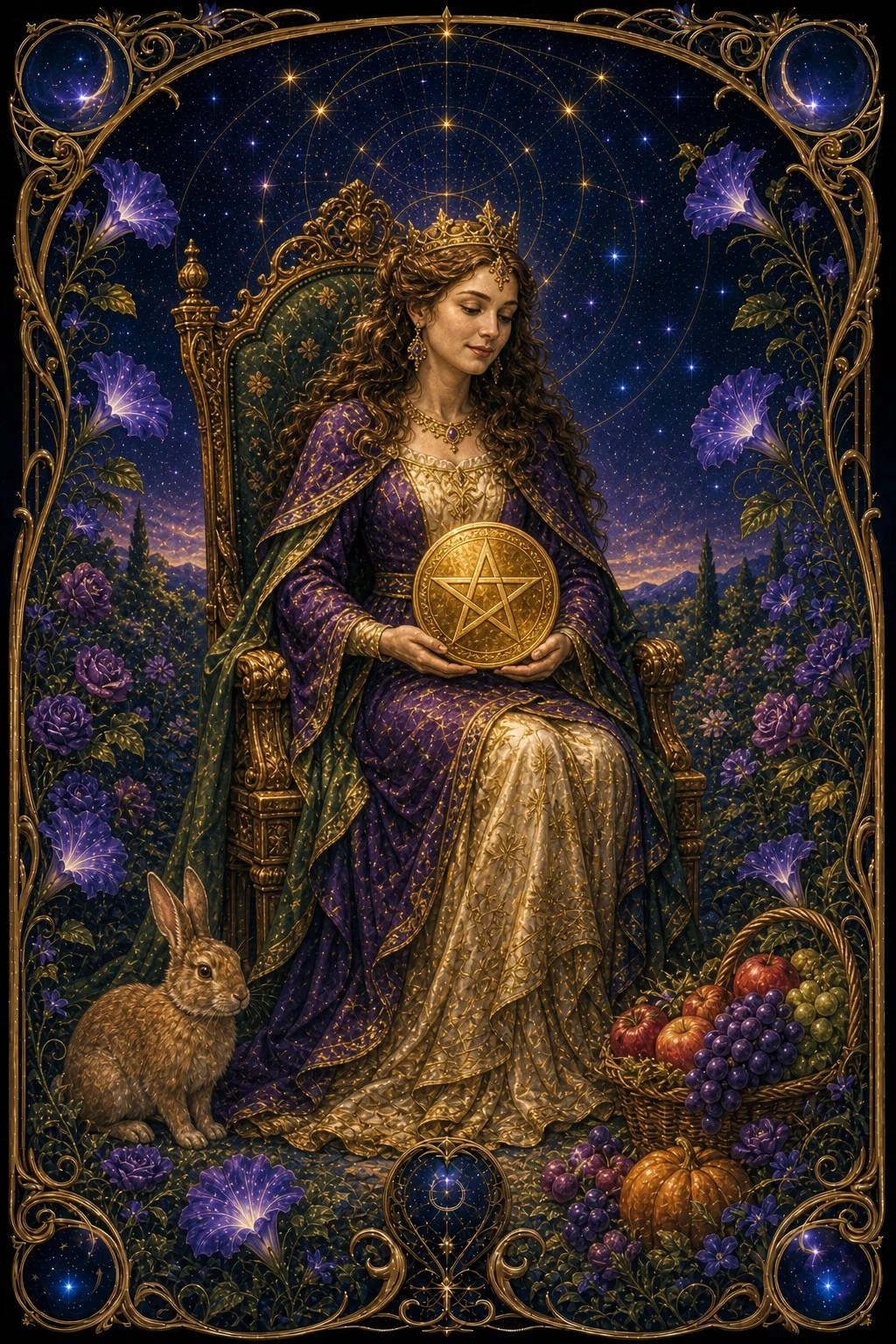 Queen of Pentaclescare · comfort · resourcefulness
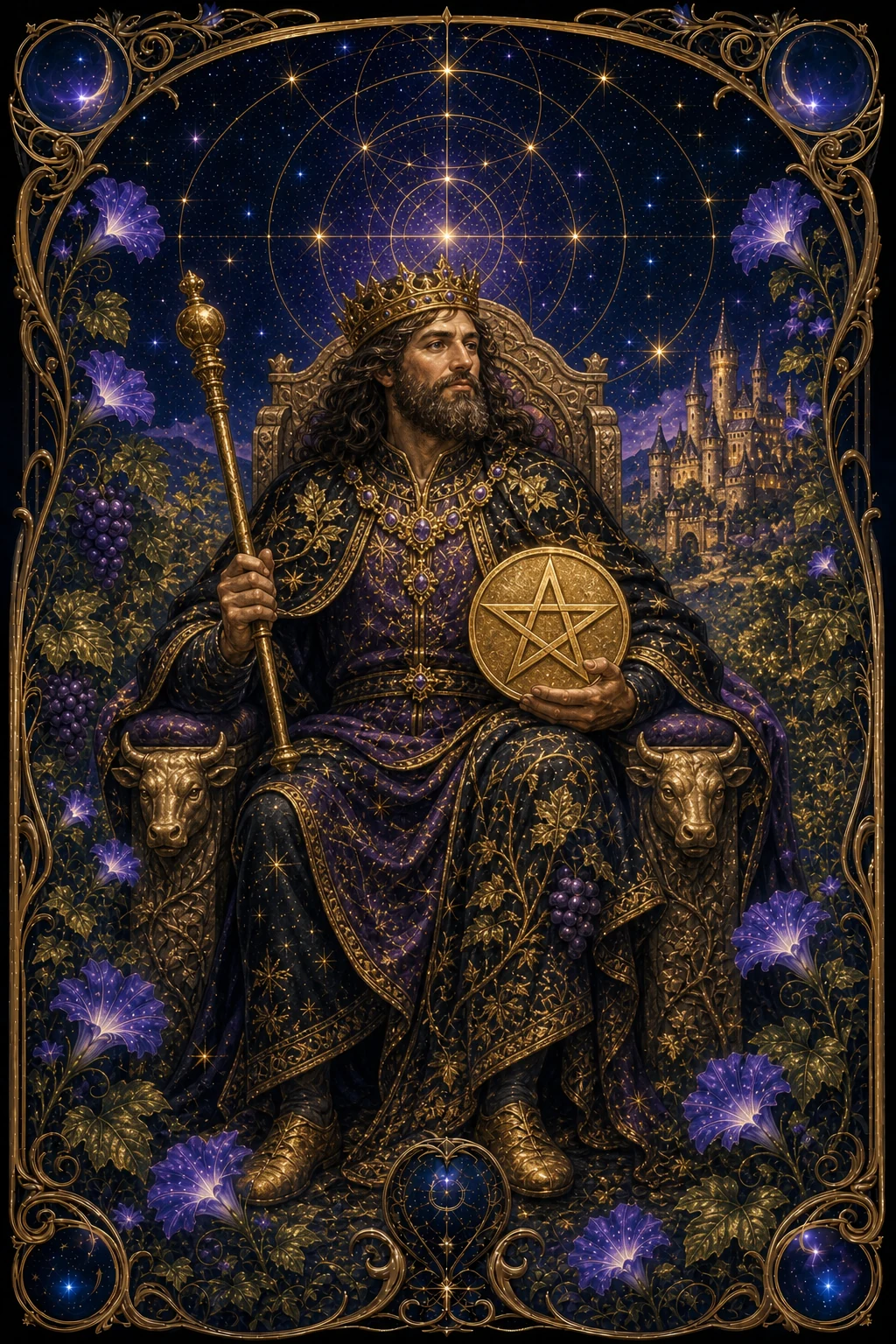 King of Pentaclesprosperity · security · discipline
Tarot Card Combinations
Cards are rarely read alone. When two cards land side by side, they modify each other — the Sun softens the Tower's wreckage, the Devil sharpens the Lovers' choice. Our tarot combinations library holds more than 3,000 pairings, each read as a single meaning rather than two separate ones. A few of the most asked-after pairs:
- The Fool and The Magician
- The Magician and The High Priestess
- The High Priestess and The Moon
- The Lovers and The Devil
- Death and The Tower
- The Moon and The Sun
- Strength and The Sun
Every card page also shows what that card means in each spread position — as feelings, intentions, advice, obstacle, outcome and more — and the full deck can be browsed visually in the tarot card gallery.
How to Read Tarot Cards
You do not need a gift, a lineage, or a velvet cloth. You need a deck, a question, and ten unhurried minutes. Everything else — spreads, reversals, the whole symbolic vocabulary — is scaffolding around one skill: noticing what a card makes you think of, and then taking that thought seriously.
Start with a better question
"What should I do about my job?" is too large to answer and too vague to reflect on. "What am I avoiding in the way I think about my job?" is a question a card can actually meet. The quality of the reading is set before a single card is turned; a precise, honest question does most of the work.
One card a day
For your first weeks, draw a single card each morning, read its meaning slowly, and write three sentences about what it raises for your day. This is the entire foundation. Only when the single card feels like a conversation rather than a quiz should you add the classic three-card spread — past, present, future — read as one continuous sentence: this is where it started, this is where it stands, this is where it leans.
What reversals mean
A reversed card is not the opposite of its upright meaning; it is the same energy under different pressure — turned inward, delayed, or asking for a harder honesty. Learn the upright meanings first, then let half the deck turn over. You will find the reversals are often the more interesting half of the conversation.
That is the whole method, and it is enough: one card a day, an honest question, a few written lines. Over weeks, patterns emerge that no single reading could show you.
Frequently Asked Questions
How many tarot cards are there?
A standard deck holds 78 cards: 22 Major Arcana, which trace the large movements of a life — beginnings, ordeals, reckonings, arrivals — and 56 Minor Arcana across four suits (Wands, Cups, Swords, Pentacles) that attend to the texture of ordinary days.
What does a reversed card mean?
Not the opposite of its upright meaning. Think of it as the same energy under different pressure — turned inward, delayed, or asking for a harder honesty. The Tower reversed is rarely gentler than the Tower upright; it is the same upheaval, met privately instead of publicly.
Can I do a free tarot reading here?
Yes. Draw a free daily card on the homepage — one a day, no account and no credit card needed — sit with its meaning, and use the journal prompt to reflect in writing. Sparkle Pro adds a daily three-card spread and your full reading history when you want to go further.
What's the difference between Major and Minor Arcana?
The Major Arcana are the deck's 22 archetypal cards — the Fool's journey from innocence to completion — marking chapters and turning points. The Minor Arcana are 56 cards in four suits describing life inside those chapters: ambition (Wands), feeling (Cups), thought (Swords), and work and the material world (Pentacles).
Are tarot readings accurate?
Tarot does not predict the future. It is a mirror for reflection: the cards give you language for what you already sense but have not said aloud. Used that way — one honest question, one card, a few written lines — it is remarkably good at clarifying what you actually think. Tarot content here is for entertainment and personal reflection, not professional advice.
How do I start reading tarot?
One card a day. Ask a real question, turn a single card, read its meaning slowly, and write three sentences about what it raises. Stay with upright meanings for the first weeks; add reversals and three-card spreads once the single card feels like a conversation rather than a quiz.
Draw Today's Card
One free card a day, with its full meaning and a journal prompt for reflection.
Draw your free daily cardNo account needed. Sparkle Pro adds a daily three-card spread, extended interpretations and your complete history — $8.99 a month or $59 a year.
Tarot content is offered for entertainment and personal reflection, not professional advice. See our disclaimer.